
Summer 2025 Seasonal Update
This post contains affiliate links. As Amazon Associates, we earn from qualifying purchases. That means if you click on one of the links below and choose to make a purchase, we make a small commission at no extra cost to you. Thank you for your support of this blog.
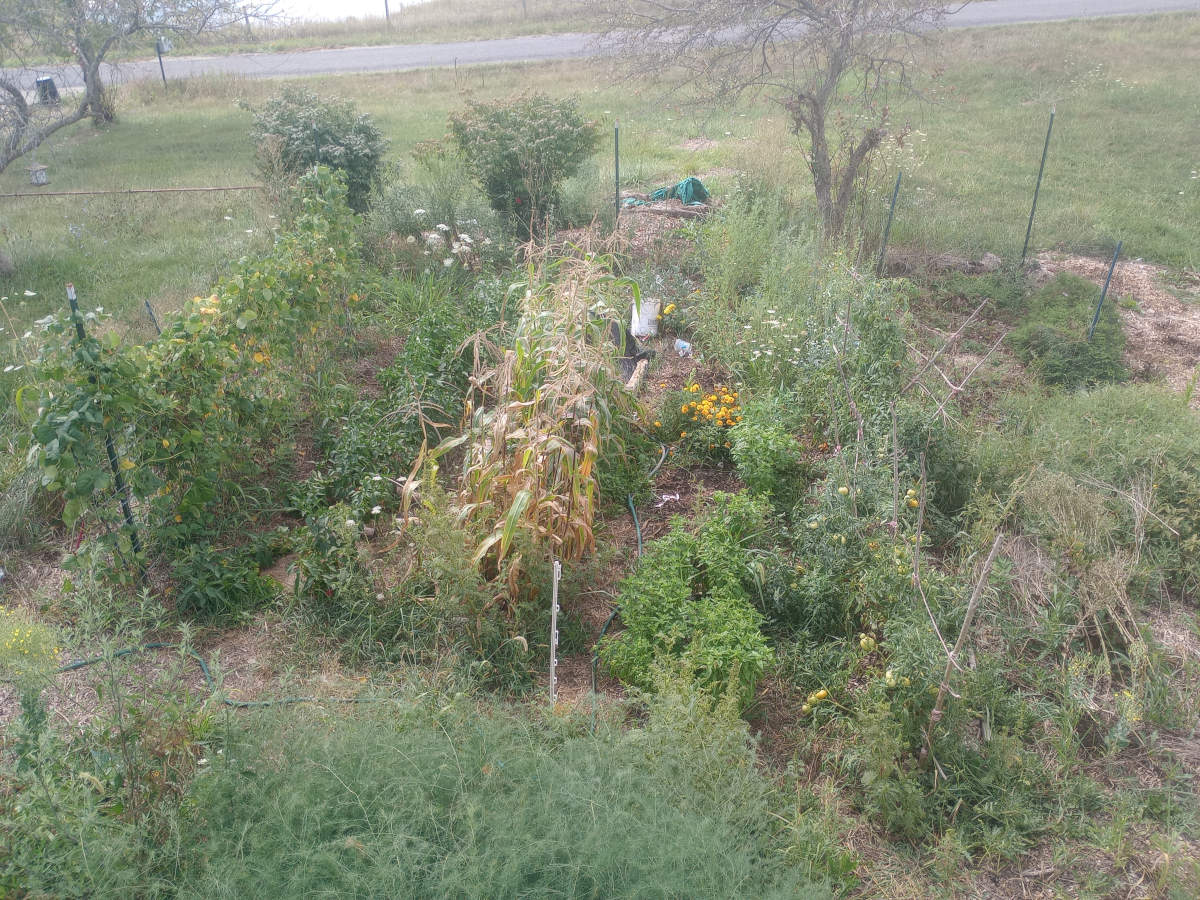
Here we are in this hot and dry month of August. The garden has plenty of weeds but is also producing some goodies, including a steady stream of ripe tomatoes that are finally hitting the kitchen after a cold spring and some deer interference gave them a rough start. We bring you a recap of our farm, garden, and kitchen progress this summer.
On the Farm: Low-tech Cheese-making
We admit that this one is a bit of a cross-over to the “kitchen” section. But really, sometimes it’s hard to say where the “farm” stops and the “kitchen” starts.
Last summer, our cows produced overwhelming amounts of milk and we found ourselves unprepared to make full use of it. This year, we came into the season of plenty armed with the knowledge that, armed with just a big pot, a knife, our basement fridge, and some plastic buckets . . . we too could make hard cheese!
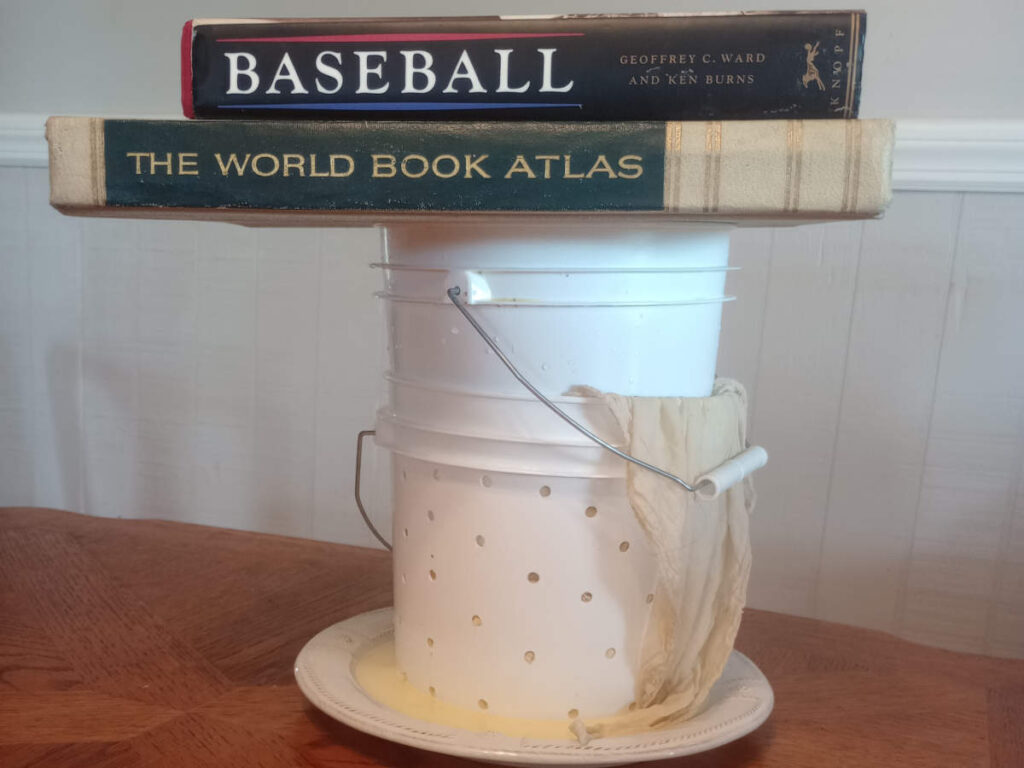
We have basically zero specialized equipment, but we’ve found that cheese-making is still more than possible. In fact, the most notoriously expensive and specialized piece of “cheese-gear,” namely a cheese press is (apparently) not all that essential. We simply use plastic gallon buckets (like these), one inside the other, with the cheese in the lower one and water in the top one to give it some weight. With the judicious addition of a few heavy books on the top upon occasion, it seems to work just fine.
We’ve also found that cheese-making is not nearly as labor intensive as one might imagine. Of course it’s another “thing to do” but generally you just need to be around enough to “do something” to your developing cheese every hour or so. The individual steps only take a few minutes each.
Thus, we’ve discovered the process of making this time-honored homestead food fits quite naturally into the rhythm of a summer day at home. We should also point out we are not nearly as intense about making our cheese as the man who wrote our cheese book wants us to be. For example, we interpret “stir continuously for 30-60 minutes” as “be around the kitchen for about an hour doing other things and stir it every five minutes or so.” Seems to work just fine so far.
Cheese-making especially fits well into your day when you own a cow. For milk just happens to come out of a cow at the perfect, slightly warm temperature to start fermenting it into cheese. We can simply pour the whole day’s yield of milk into our big pot and get it started right away, skipping over the tedious first step most recipes will include of heating your big pot of milk slowly and gently to around 90 degrees Farenheit.
Using these simple methods, we’ve been trying to make at least one 4-5 pound wheel of cheese each week, with the goal of having a bit of a stock pile by the time winter comes and we no longer have enough milk to make cheese.
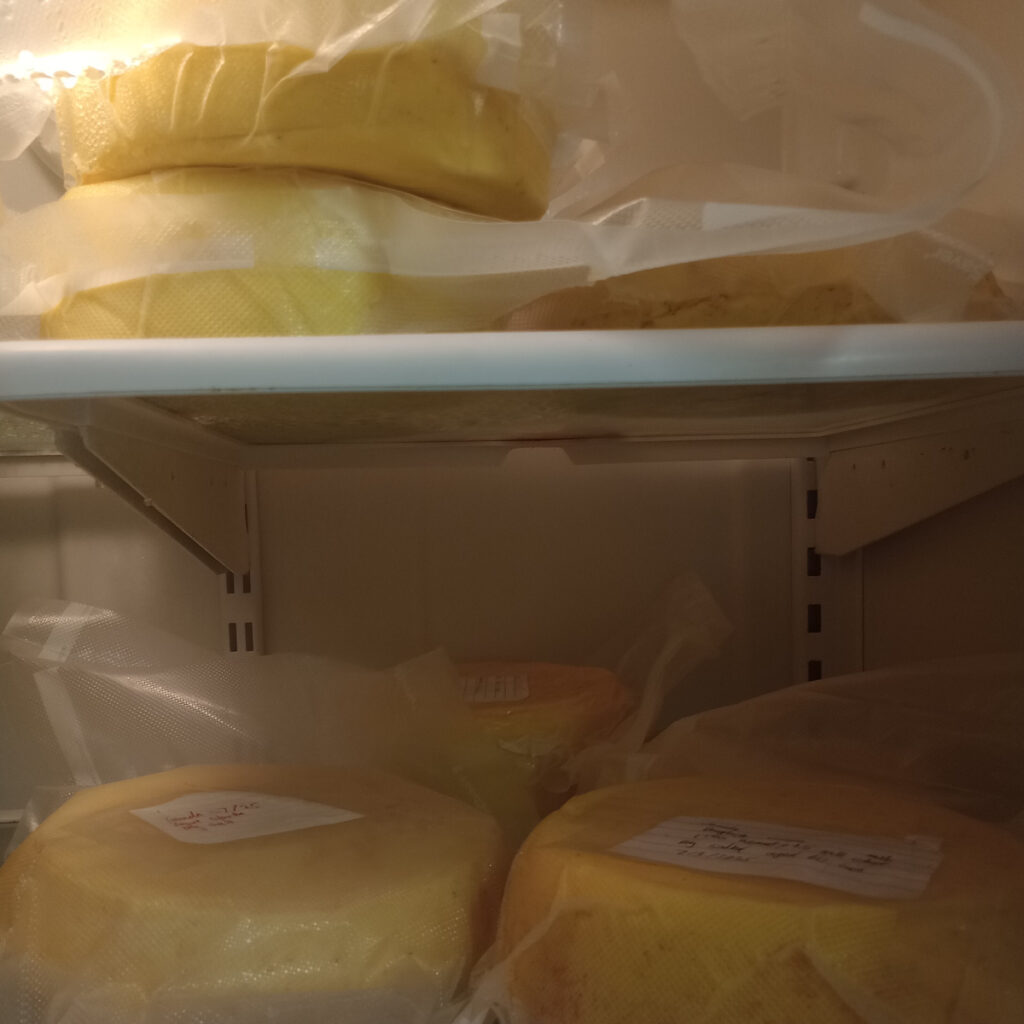
We are not (yet) cool enough to have a cheese cave and develop rinded cheese over many months. For now, we’re aging our cheeses by vacuum-sealing them and storing them in our basement fridge.
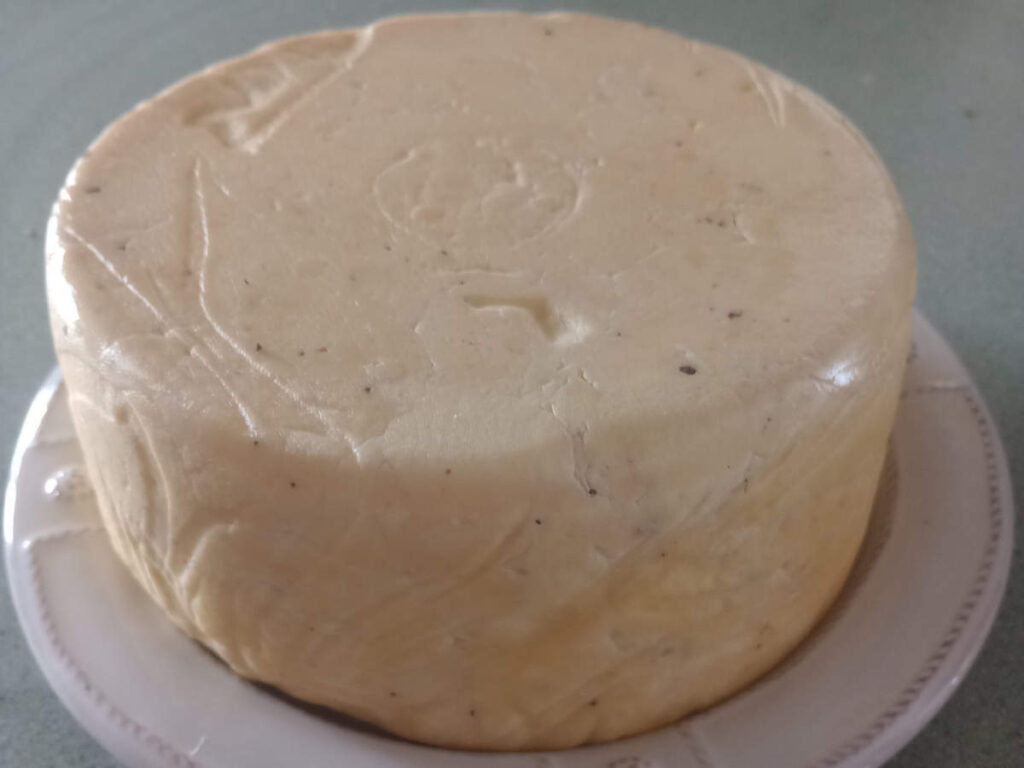
We’ve also discovered that you really don’t need to be too obsessive about how long you age your cheese. We’ve opened our very first wheels, at about two months old, and they’ve been delicious, but mild in flavor. We imagine the flavors will continue to develop as we work through our stash. It seems beautifully fitting that these longest-fermented wheels of cheese, which will therefore carry the greatest load of beneficial, immune-boosting bacteria, will naturally arrive at our table in the darkest months of winter when we will probably need them the most.
In the Garden – Fermented Seed-Starting Mix
Our garden season has been a bit hit or miss this year. We’re bringing in a record-breaking (for us) harvest of bell peppers, but our dreams of zucchinis and cucumbers have been tragically cut short by some evil bugs.
A gardening innovation this summer was to start cool weather crops for the fall inside, in the middle of summer. It definitely felt counter-intuitive to be starting things inside in order to protect them from heat rather than cold. But we’ve seen much better germination that when we’ve tried to start things outside in the heat of summer. Now we’re just waiting for things to cool off enough to set our baby beets, cabbages, and broccolis out.
We experimented with inoculating our seed starting soil with good bacteria. Anybody who’s started seedlings inside a few times has probably at some point dealt with the complications of “damping off” where unfriendly bacteria takes over and kills off the seedlings at a young age.
After this happened to us, we became meticulous about attempting prevention by sterilizing our soil and containers. Even these efforts were not completely successful, and it still took a good bit hydrogen peroxide spray to keep some suspicious fuzzy spots at bay long enough to give our plants a chance.
However, sterilizing everything did seem a bit counter-intuitive. As any raw milk drinker worth their salt will know, sterile environments are actually less well defended against unwelcome bacteria than environments that are populated with good bacteria. Think about it. If you empty an environment of any bacteria whatsoever, it’s ready to be a home for . . . whatever happens to want to move in first. Hence one reason why raw milk is better than it’s pasteurized alternative.
But back to seed starting. We decided to apply this same principle. Instead of sterilizing the heck out of our soil and hoping for the best, we sterilized the heck out of it, and then inoculated it with some good bacteria by stirring in some whey we had lying around from a batch of cheese (see above).
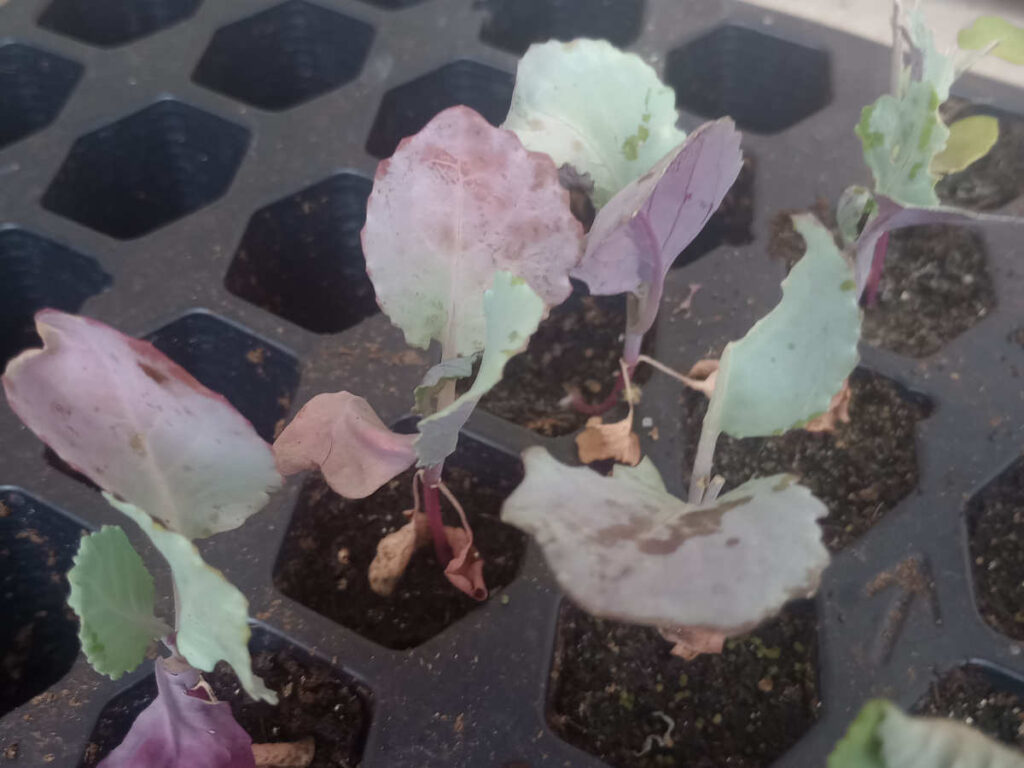
Of course there are many variables in gardening, and who knows if this is what did the trick, but our new plants certainly seemed to thrive without any extra measures. Now they are outside waiting to be planted, and we’re just trying to defend them against the caterpillars that have descended upon them out of nowhere.
Oh gardening. . . It’s so rewarding when it works out! But it seems that it’s never quite as easy as you hoped.
In the Kitchen – Bread and Milk
In reading various works of children’s literature to our children, we’ve come across a common theme. The main characters always seem to return home from a day of busting crime or exploring fairyland to regale themselves with a heaty bowl of bread and milk. This popular supper from a bygone era piqued our interest when we found it was so universally enjoyed. Although honestly, “soggy bread” didn’t sound all that appealing so we let the idea drop at that point.
What made it irresistible was stumbling across the following passage by Mr. William Cobbett, the contributor of our latest “Homesteading with the Masters” quote:
“Skim-milk and bread (the milk being boiled) is quite strong food enough for any children’s breakfast, even when they begin to go to work; a fact which I sate upon the most ample and satisfactory experience, very seldom having ever had any other sort of breakfast myself till I was more than ten years old, and I was in the fields at work full four years before that.”
William Cobbett A Cottage Economy
At this point, we simply had to give it a try. In a display of ignorance of the basics of life that must have had Mr. Cobbett rolling in his grave, we turned to the internet to find out how exactly to make this ubiquitous dish. Well, it turns out to be as easy as it sounds. You pour milk (warm or cold) into a bowl, tear up pieces of bread, and soak them in it. Add sweeteners and mix-ins of choice. And done.
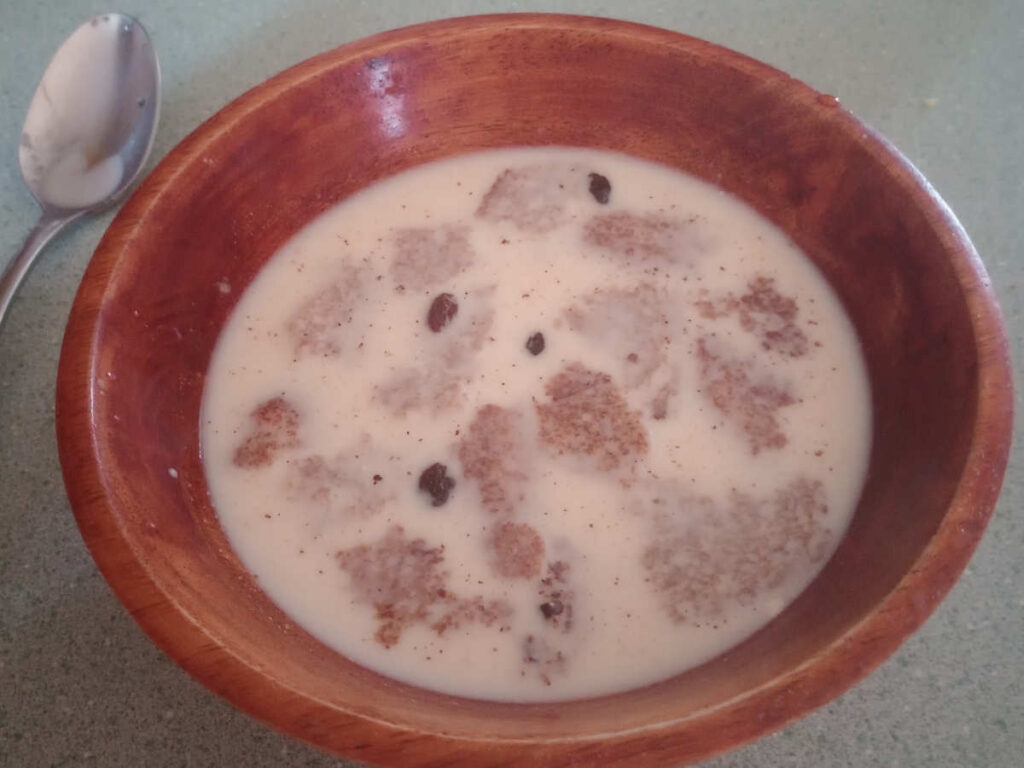
We wouldn’t necessarily eat it every day, but it’s actually surprisingly good. What’s more, it met with the approval of three out of four children. The best way to describe it would be as a “less hyped up” version of grocery-store breakfast cereal. Our favorite things to mix in are a drop of vanilla and maple syrup (added to the milk), maybe some cinnamon or nutmeg, and a handful or raisins. We’ve also made an “egg nog” version with egg- yolks blended into the milk. With farm fresh raw milk (and we do use whole milk not skim) and whole wheat homemade bread, it’s really just as much a breakfast of champions as our friend William Cobbett promises.
Let us know what you think if you give it a try, or if you’re already a habitual bread and milk consumer, we’d love to know your favorite ways to eat it!


Love hearing about your adventures in the garden and kitchen! They always make me chuckle and think, “Why, even I could try that!” (I hope that’s the response you’re going for!) But then I remember you are a nice young family and my energy seems to wane year after year these days. Keep up the great research and writing! And do send the next episode soon!
Thanks! Glad you enjoyed! And yes, I hope you do feel encouraged to try some of these things!