
Spring 2026 Seasonal Update
Greetings from Friendly Beasts Farm, where winter and early spring of 2026 have been a whirl of activity that left little time for blog updates.
We’ve welcomed several new additions to the farm. The most significant was not an animal, but a human baby! Our fifth daughter is simultaneously a great blessing and a great impediment to timely blog posting.
But on to the farm, garden, and kitchen update of the season!
On the Farm: An Addition and Subtractrion
The most surprising new arrival of the season falls in the realm of farm updates.
Scroll down for a picture.
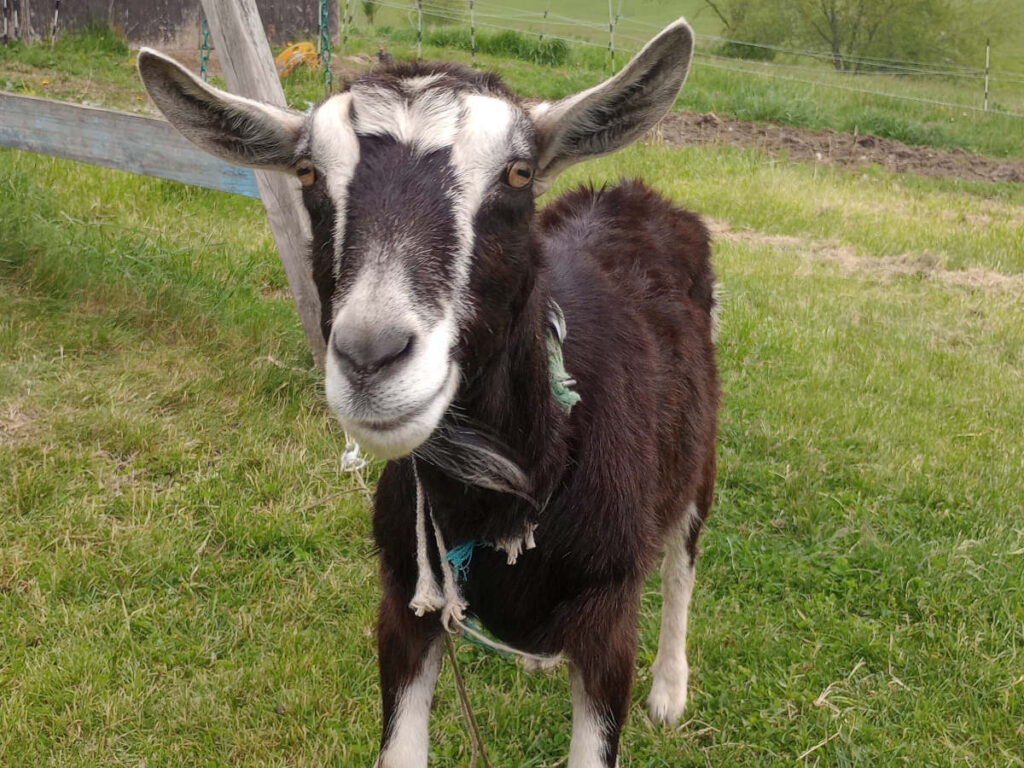
We know, we know . . . we swore we would never own a goat again.
Buckle up for a story which is guaranteed not to have been exaggerated in any way.
It all began when a member of our local farmers group was getting ready to enter a monastery. Among the worldly goods of which he must dispossess himself before entering were three sheep, (which we wanted), and a goat named Ivy, (which we did not want). In the future monk, we met a relentless negotiator. He refused to part with the sheep unless we took the goat off his hands too.
We considered various options for passing off this surplus goat on an unsuspecting bystander. That is, until Matthew realized that a former-pet-turned-dairy goat might be the perfect gateway farm animal for our children. We fantasized about how cute our daughters would be running around with a goat, forgot all our resolutions never again to own goats, and agreed to take her.
Now we must share a couple of further details about this goat which will help to make sense of the story that is about to unfold. First, she was ten years old. Second, despite being ten years old, she was purely a pet. Her previous owners had never tried to breed her. In the fall, she had taken matters into her own hands, escaped, and returned bred.
We never found out what strange creature had proven irresistibly attractive to our Ivy. We can only speculate that it must have been strange indeed. We draw this conclusion from the appearance of the incredibly scary looking “kids” who arrived the day after she came to our farm.
We first suspected that Ivy was in labor when we noticed a small foot sticking out of her. Several hours later, a small foot was still sticking out her. We looked a little closer and realized it was a hind leg.
Uh oh.
It was at this point that we realized that fate, which had handed Matthew the surprising role of “goat owner” just a day before, now thrust him into the even less likely role of “goat midwife.” Our elation when he quickly freed the baby turned to consternation when we saw what the rest of it looked like. Imagine a cross between a goat and something you might find in a seedy space bar in a galaxy far, far away (minus saxophone). We were slightly relieved when the two babies did not survive more than a few minutes past birth.
“Oh well,” we thought, “We are (sort of) sad, but this is actually perfect because we didn’t really want more than one goat anyway, and now our girls can get on with milking Ivy without any kids to complicate things.”
By this point we should have realized that no aspect of Ivy-ownership was going to live up to our expectations. It seems that an old goat is just as incapable as a dog of learning new tricks. Ivy had never produced milk in her life and she didn’t intend to start at the ripe old age of ten. After a week of fruitless efforts, we could say she had a very nice personality. As a dairy animal, she was completely useless. We assigned her the job of cleaning up weeds in hard-to-mow parts of our yard.
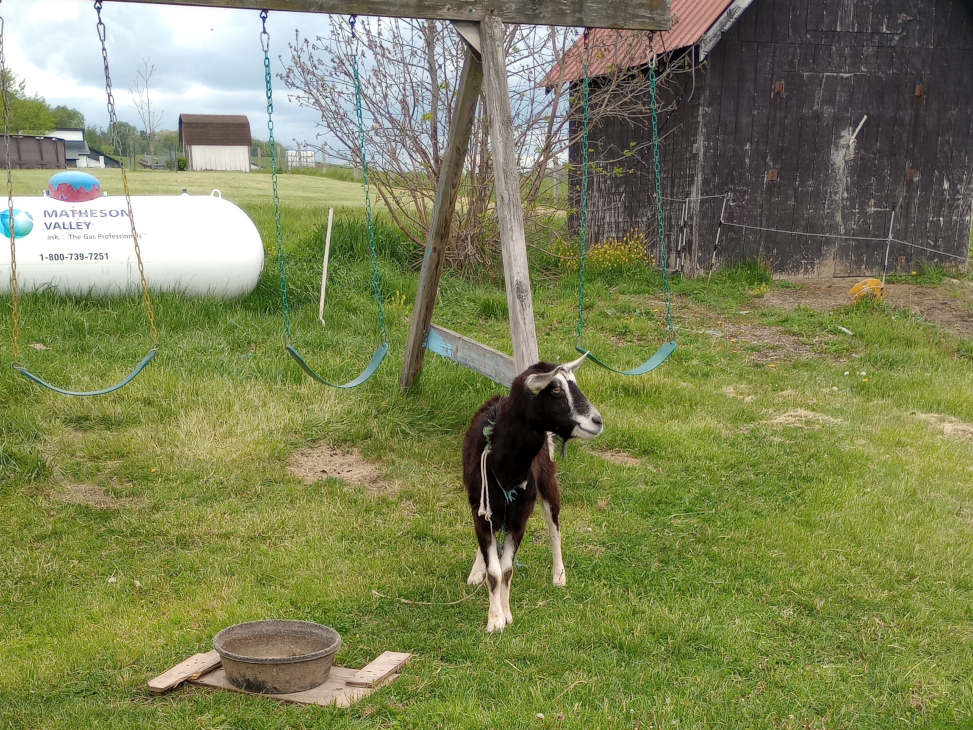
It was our (African) priest who provided a fitting bookend for a story that began with a budding monk. His excitement at the prospect of eating (yes, eating!) this ten year old goat may have been matched only by our enthusiasm for the idea of having her taken off our hands.
It’s a satisfying ending. We can say that, even better than a loving home, we gave Ivy one of the most noble purposes a goat could dream of: food for a shepherd of souls.
In the Garden
With a spring whose temperatures have fluctuated between “unseasonably warm” and “unseasonably cold,” it’s been difficult to get small annuals started.
It’s a good reminder of the benefits of perennial food crops. While annuals must be babied through the delicate seedling stage every year (often with disastrous results . . . at least for us . . .), perennials keep coming back on their own.
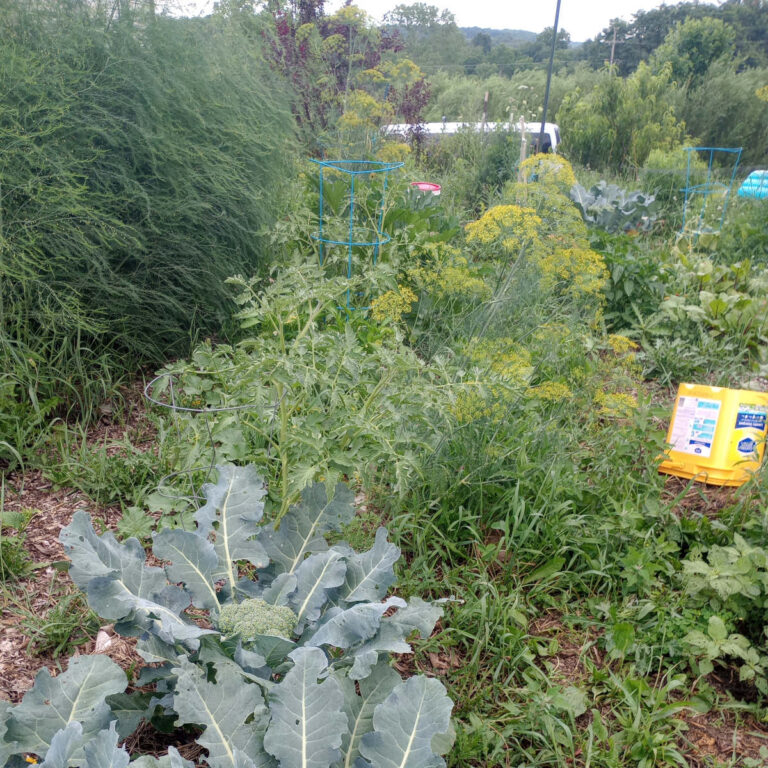
Our four-year-old asparagus bed is proving our best source of fresh vegetables this season (dandelions, of course, are also on the menu, but we must admit that asparagus is much tastier).
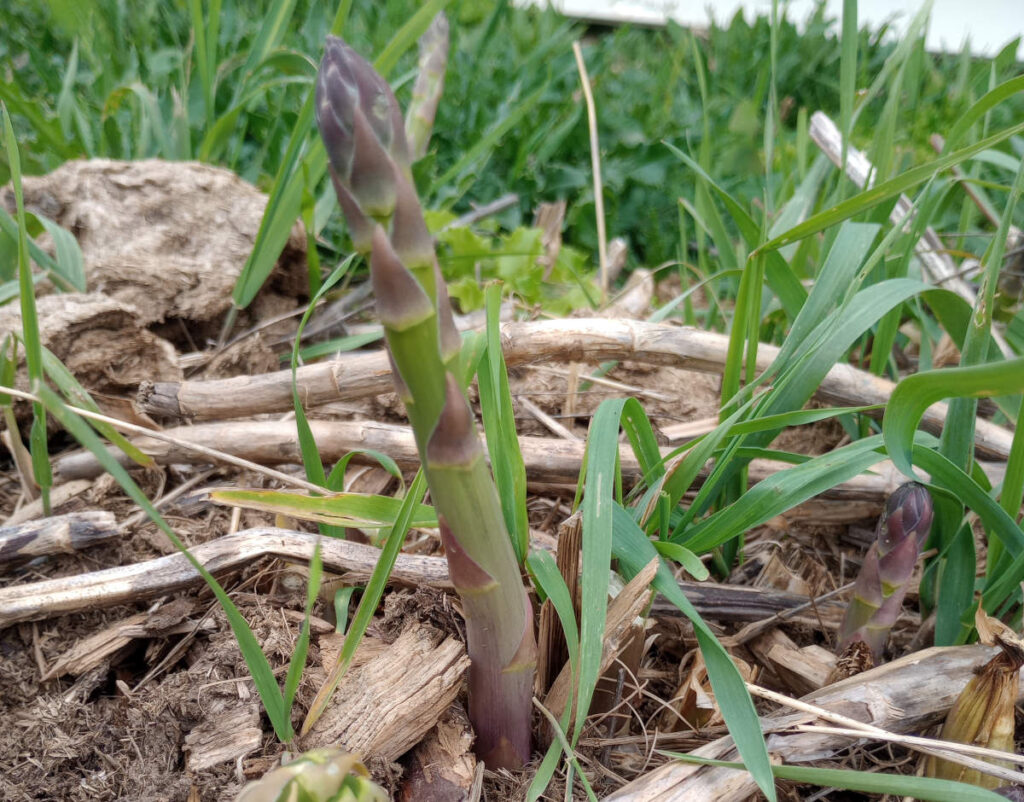
Encouraged by its success, we have been focusing on expanding our perennial plantings, with more asparagus, strawberries, and plum and peach trees all on the “new addition” list.
Kitchen: Farm Kitchen Meets Great Outdoors
In the realm of the farm kitchen our most interesting adventure this spring has been back on the subject of eating small ruminants.
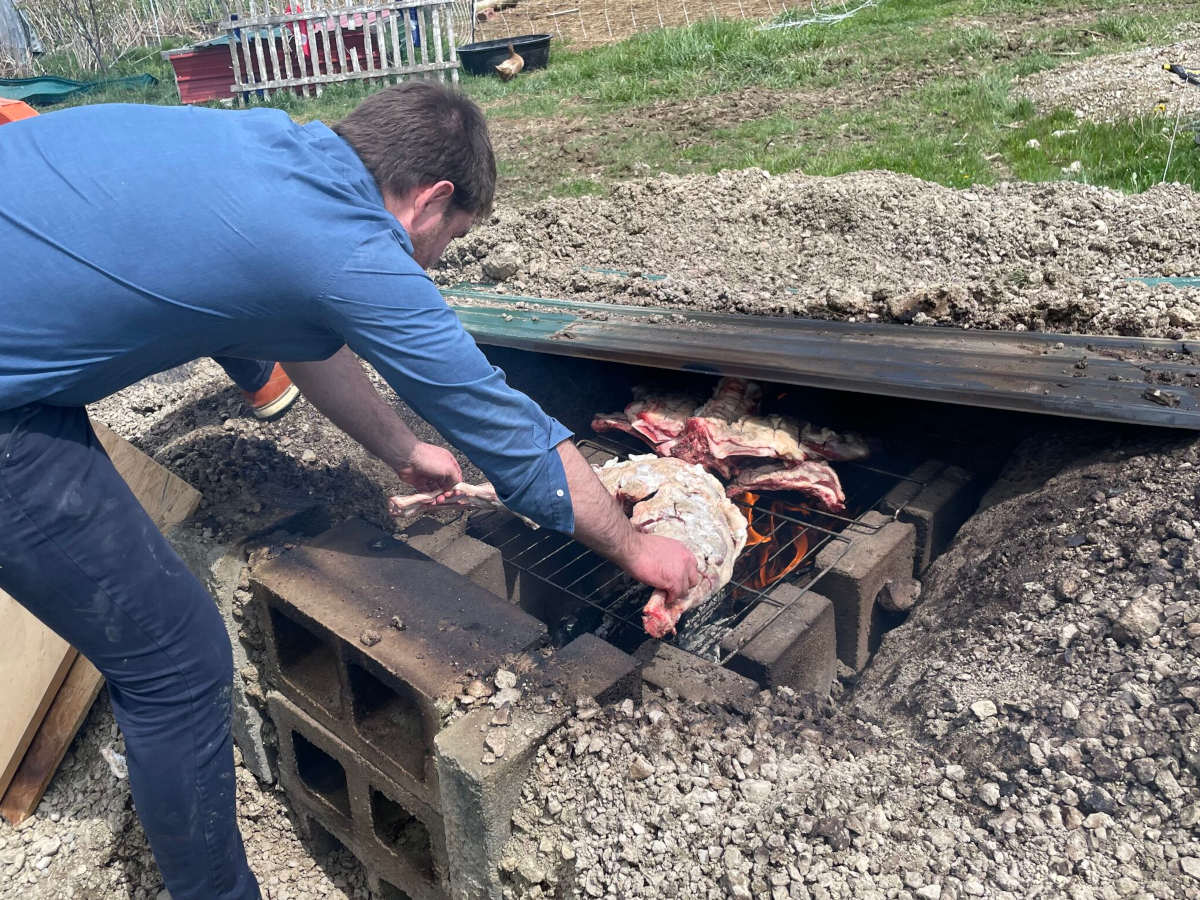
The occasion of our daughter’s First Communion was one that we felt could be fittingly celebrated by our first “whole animal” roast. A lamb was the obvious choice of victim. Making up with ingenuity what he lacked in experience, Matthew took on the task of figuring out how to cook this extra-large piece of meat.
A pile of dirt left over from our driveway excavation, and some sheet metal left over from our barn build, were the perfect materials to create an outdoor oven.
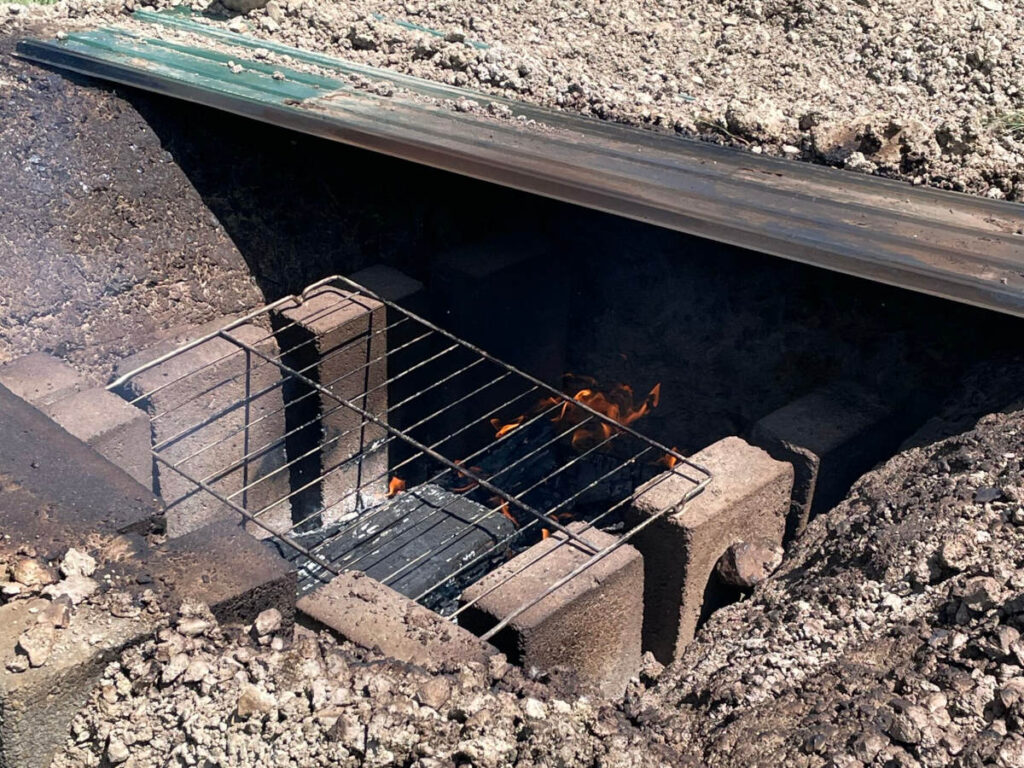
The plan was to let a wood fire cook down to embers, add the lamb, and close the roof over with the sheet metal so it could cook slowly for a few hours.
All well and good. The hitch came when he opened up the roof to inspect the progress. The sudden in-rush of oxygen caused the fire to leap quickly back to life. In a near-disastrous moment, the flames spread instantly to the meat. In that instant we realized that the liberal coating of lard applied to the lamb had made our meat both highly flavorful and…um…highly flammable. For a few minutes our lamb roast teetered on the edge of becoming a lamb cremation. A sprint to the kitchen produced a wet towel, and several minutes of frantic flapping quenched the flames. Taste testers pronounced the lamb both “done” and “delicious.”
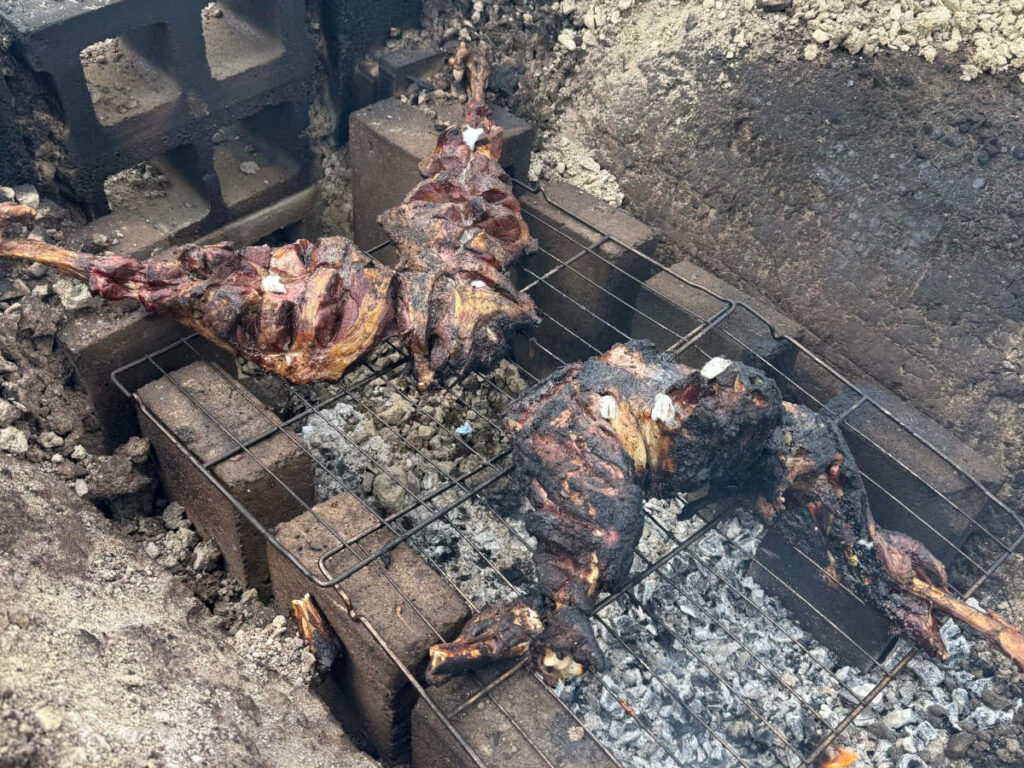
Other than figuring out a better way to open the door, we have little to change about our outdoor oven design and look forward to eating lots more roasted meat.


Poor Ivy! But then, I would be a terrible homesteader. You two are absolutely intrepid! So innovative. 😉
Great job with the outdoor oven! Cinder block ventilation👍🏻👍🏻