
A Story About a Farm Part 3: In Which the Newbie Farmers Take an Immersion Course in Pig Butchery
This post is third in a series. Part 1, Part 2, Part 4.
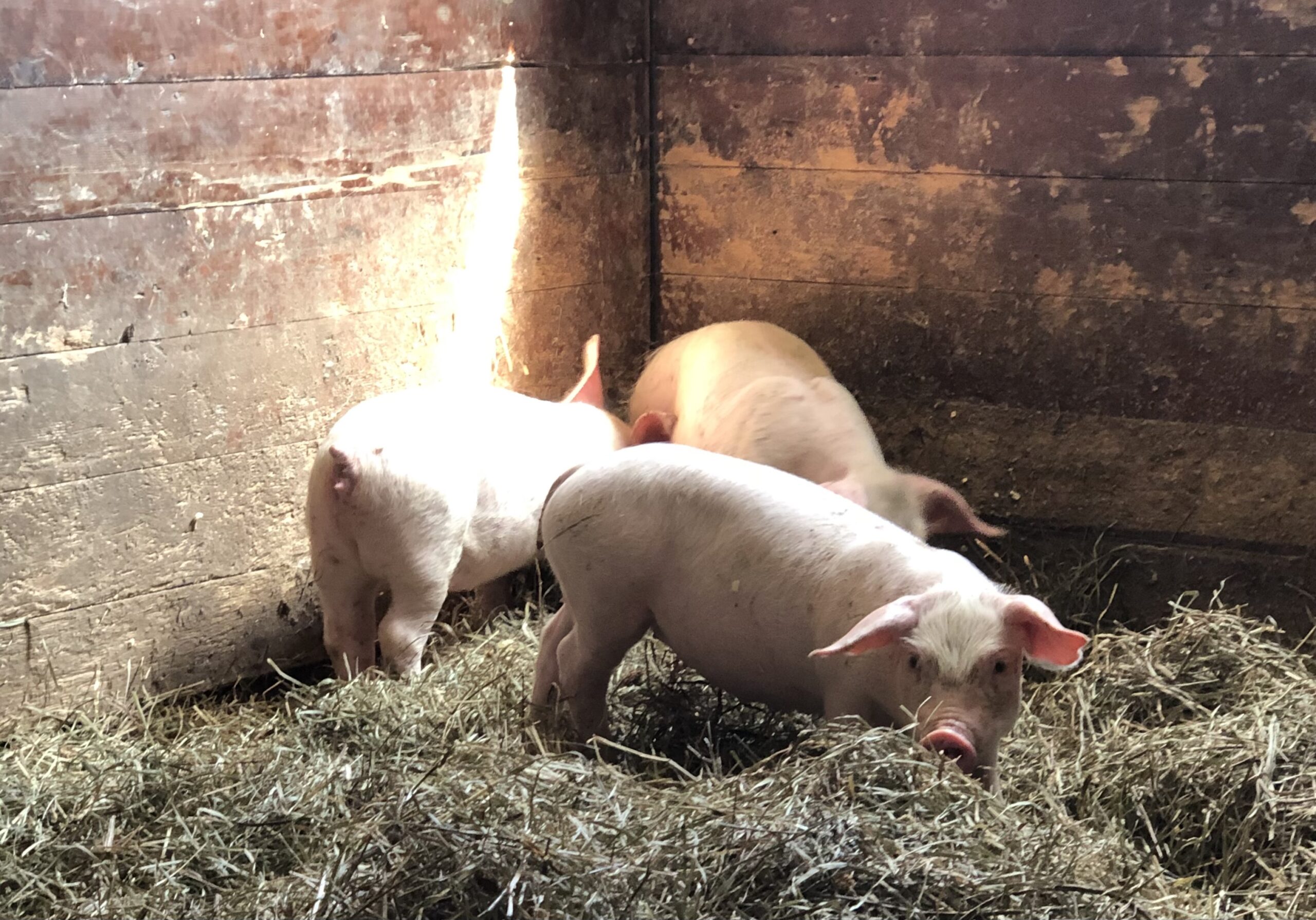
We were right about the prospects of pig farming making our lives more exciting. On day one, it hit the “driving-through-the-countryside-with-pigs-squealing-continuously-in-the-back-of-your-family-car” level of excitement. The sensation of being slightly out of our depth was reinforced by the discovery (after we bought the pigs) that local butchers were overbooked, and no one would be able to “fit them in” for at least a year.
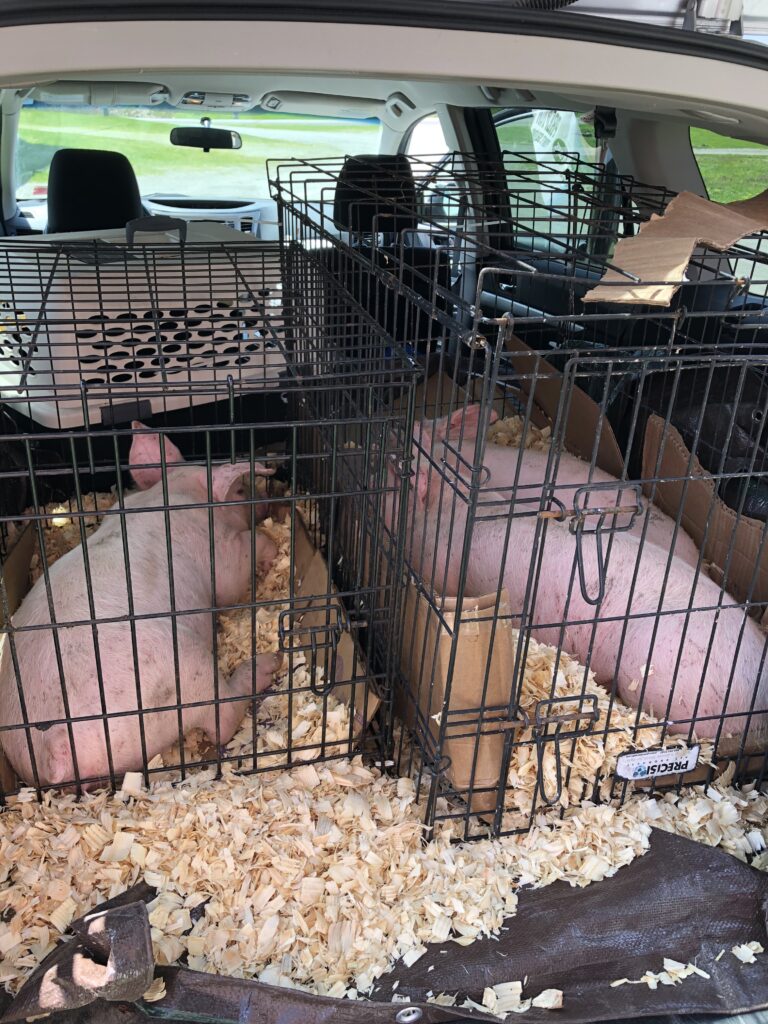
If butchering thirteen chickens had been daunting, butchering three pigs was a giddy peak that towered far beyond anything we had imagined ourselves undertaking. “Is this even humanly possible?” we wondered.
Still dimly hoping that a butcher would miraculously come to our aid, we meanwhile enjoyed the experience of having three growing piggies all our own. We even found (thanks to the internet), a mathematical formula for estimating how much they weighed. It involved measuring their girth and length, and then doing some kind of mathematical operation with these numbers to arrive at an approximate weight.
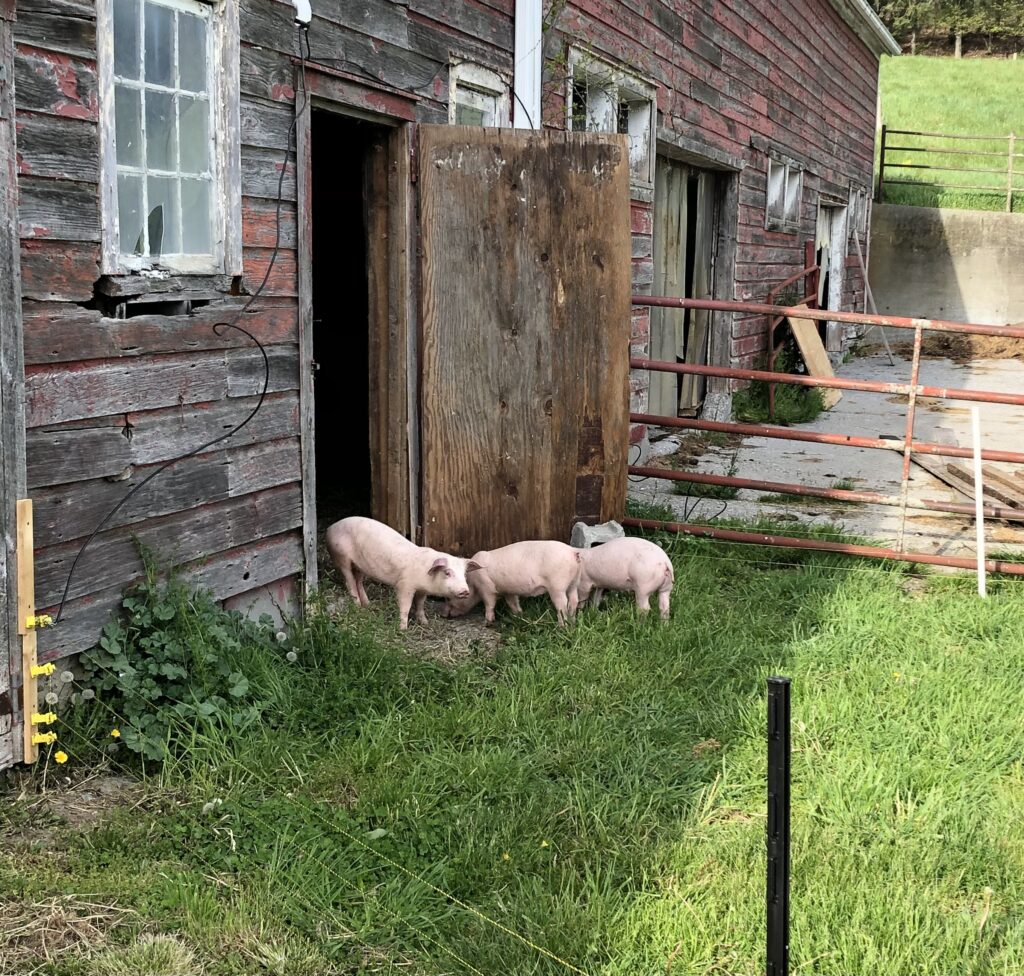
The easy part was the mathematical operation. If you’ve ever tried to take the waist measurement of a pig who doesn’t understand that it needs to stand still and cooperate, you’ll realize that estimating the amount of pork we’d be putting in our freezers became something of a sporting event (not to mention a fun challenge for visiting friends).
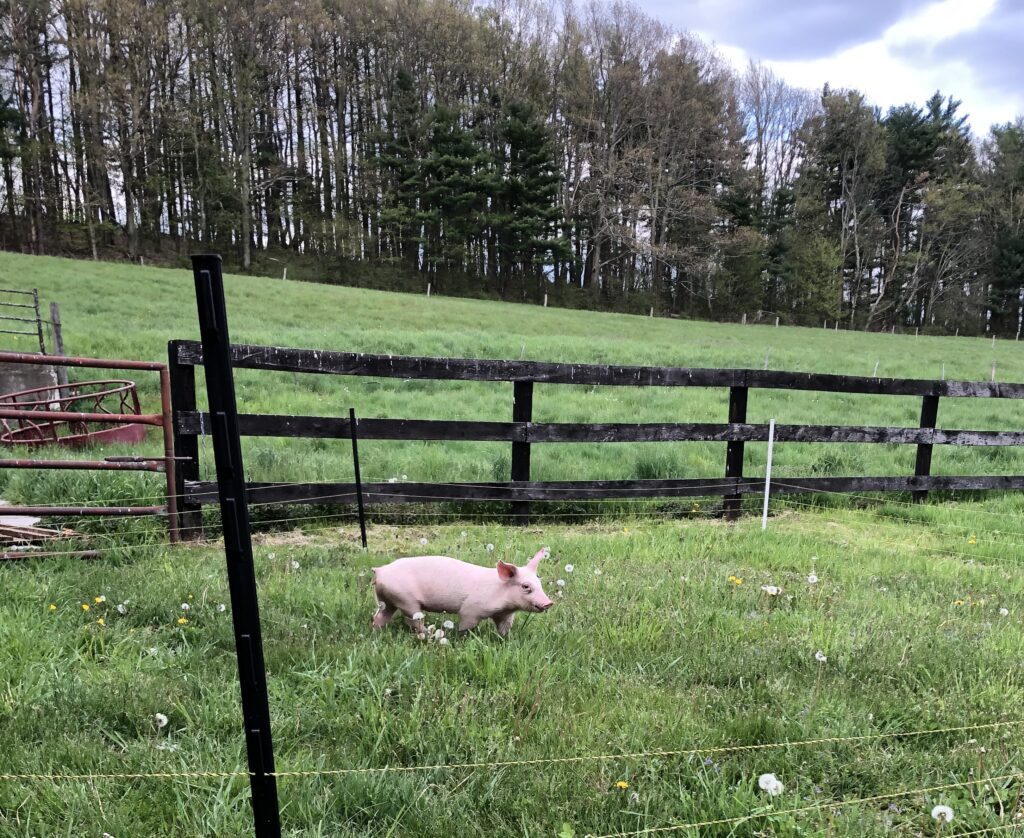
We also enjoyed showing off the pigs to friends and family, who were watching our farming efforts unfold with fascination and kind encouragement. Upscaling from chickens to pigs definitely boosted our farming credentials. But of course, we still had to bring the whole experiment to a satisfactory conclusion.
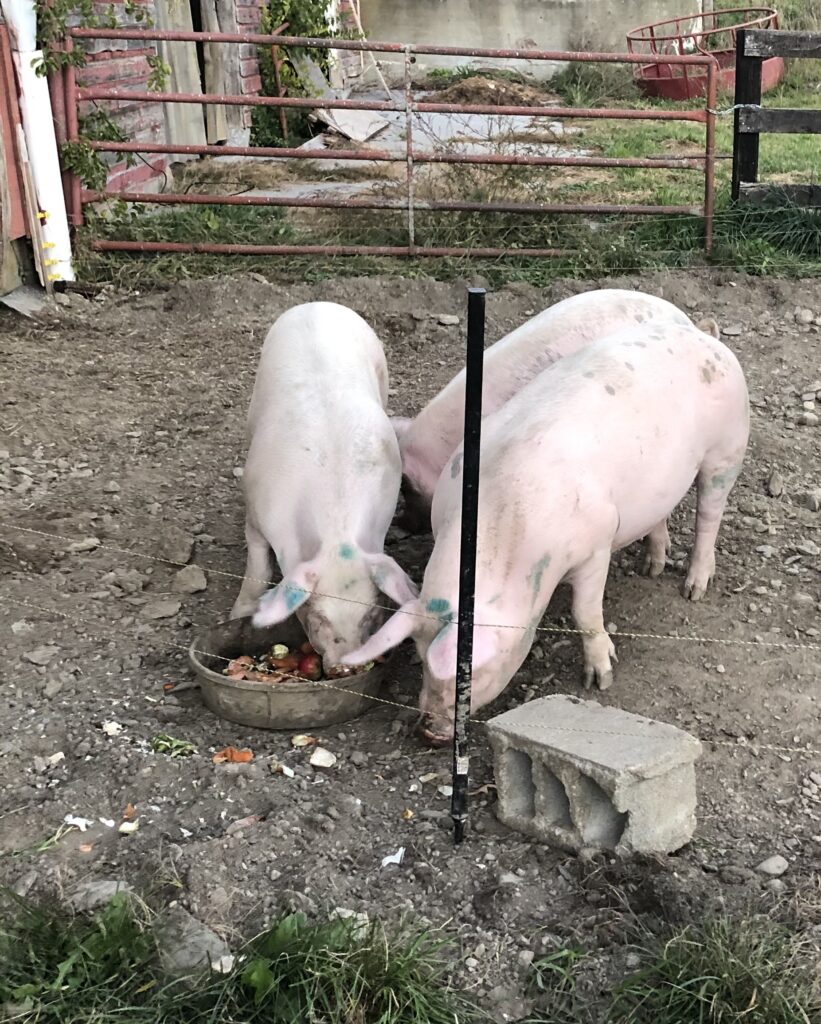
The good thing about our “unwilling butcher” situation was that it forced us to take a serious look into various aspects of home-butchery. We learned that the levels of stress hormones present in an animal at its death would affect the quality of the meat produced. Dying at home in a familiar environment wasn’t just better for the animals. It was also better for the people who would be eating them. We were so thoroughly convinced that even though a potential butcher did appear at the eleventh hour we decided we didn’t want him after all.
We spent several late nights watching videos, drawing up complicated lists, and ordering supplies. At least on paper, we were ready for the task. We even had a doctor and a priest among our group of helpers. We knew we had expert knowledge of anatomy on our side, as well as having our bases thoroughly covered in case anything went really wrong.
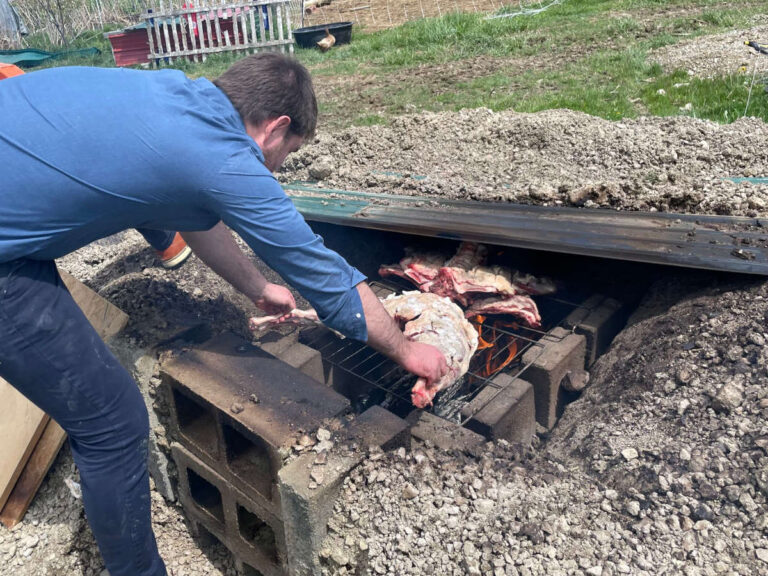
Our nights of preparation were not wasted. Butchering pigs turned out to be actually doable for people like us. It was also some of the most rewarding work we’d ever experienced. There is nothing like the shared labor of a day’s butchering set in the crisp beauty of fall in rural New York, a beautiful old barn with a slaughtered pig hanging from the rafters, and the butchers taking a late afternoon break to sip on whisky and feast on fried organ meats and onions.
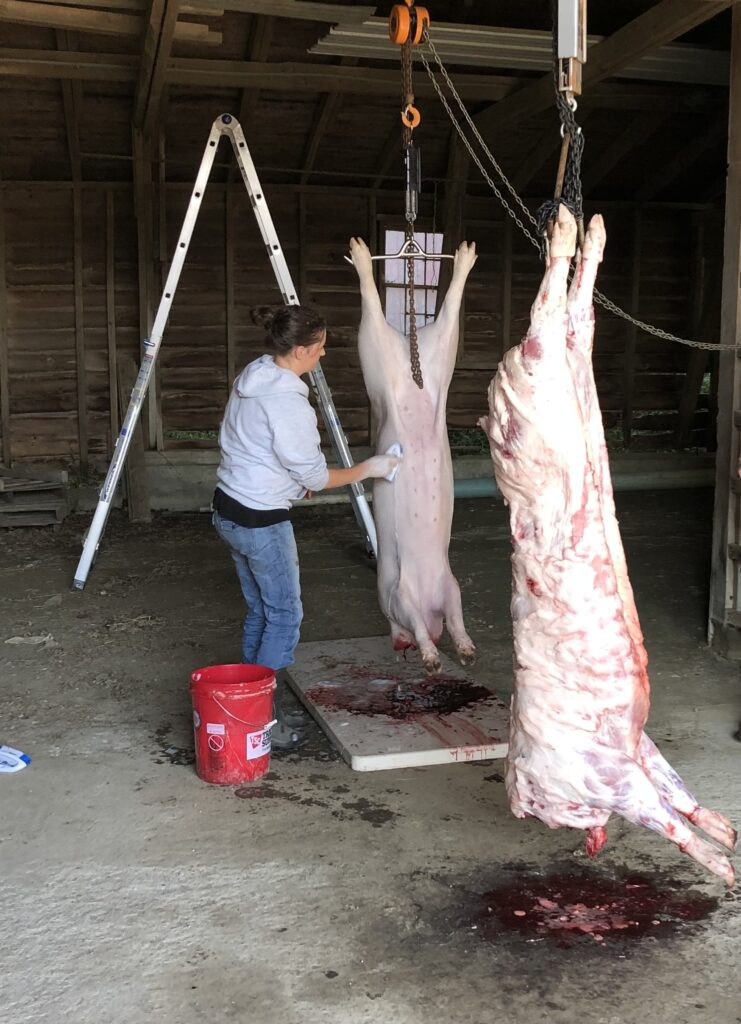
Of course there are more down-to-earth elements too. Like the scent that envelops you when you open up the insides of a lusty pig. Or the frustrating task of figuring out what on earth you should do with a dead pig’s head when it’s dark and you’re tired. We also had to compromise on a few of the highest ideals of artisanal pig butchering due to our own limitations. Tasks we were not up for included:
- Removing the hair from our pigs by dunking their 200lb bodies into giant vats of hot water to scald them and scrape the hair off (we just skinned them)
- Making (and consuming) blood pudding
- Trying to make something called headcheese which just sounded… unappetizing
- Cleaning the poop out of the intestines so we could stuff them with sausage
We clearly weren’t pros at butchering yet. But fond memories of our first pig slaughter will be with us for a very long time.
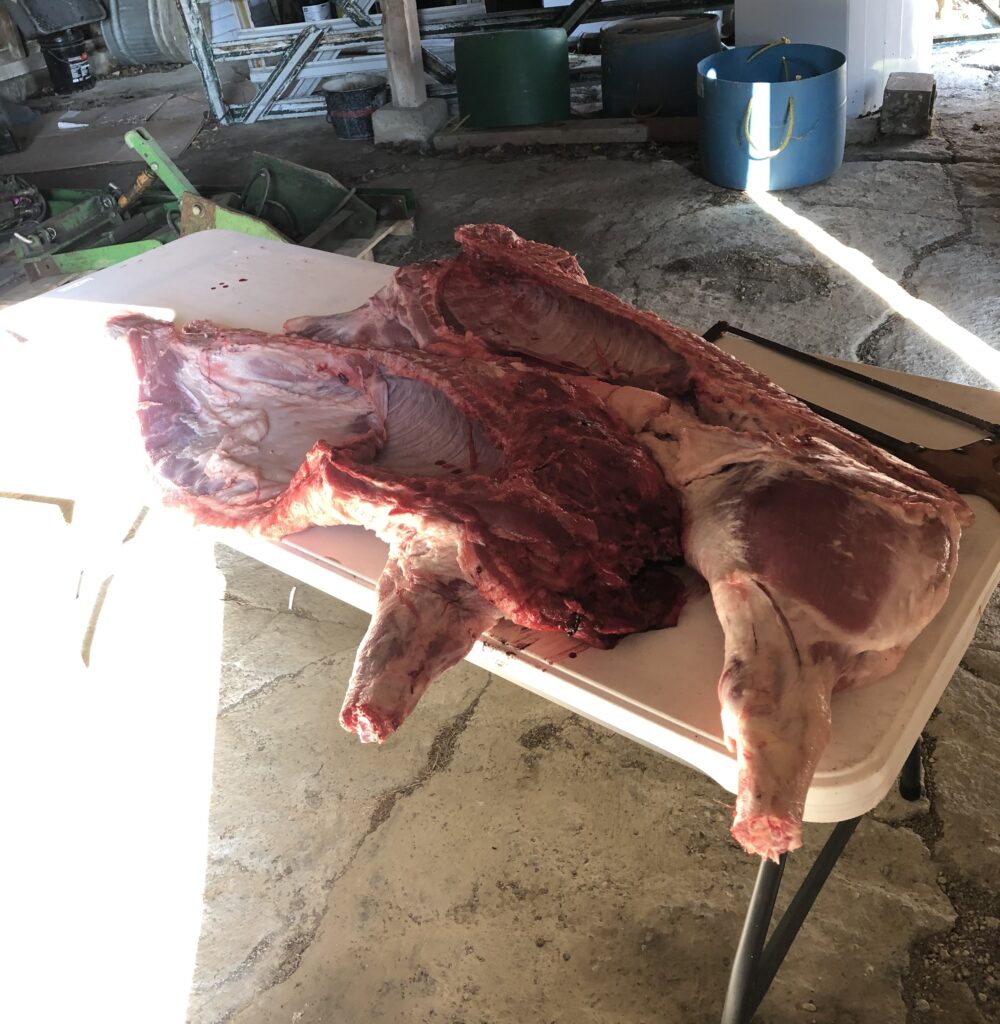
Less idyllic were the next few days and nights into which fell the time-consuming task of dividing up the gutted and quartered pigs into recognizable roasts, chops, sausage, and bacon. Each evening, we brought a giant chunk of meat into our small kitchen. There we remained absorbed until late into the night, trying to find various elusive roasts, which for some reason never looked exactly like the video we were watching. (Chops and bacon, at least, were obvious.) Our floors, countertops, and maybe even the walls and ceiling, became covered with a steadily encroaching layer of grease. But this story ends happily with freezers full of pork and (several months later) a Christmas ham that must have been the best in the world.
Our meat-production count now stood at two batches of meat chickens and three pigs. But while Matthew was taking to farming like a natural, his day job on the estate had become increasingly frustrating. There is absolutely nothing wrong with organizing fox hunts, garden parties, and carriage driving conventions for the New York’s social elites. But if you happen to know Matthew, it should not surprise you to hear that, despite being as charming as the best of them, he felt about as much out of his element in this role as Frodo Baggins did when traversing the plains of Mordor. It was time to move on. We began the search for a farm of our own.
To be continued…

Wow, what a challenge you have taken on! And what a great attitude of “finding God in all things.. Thank you for sharing your story, and so humourously narrated 🤗