A Story about A Farm Part 2: In Which a Lot of Chickens Die
This post is second in a series. Part 1, Part 3, Part 4.
Warning: if you are vegetarian you may not like this post.
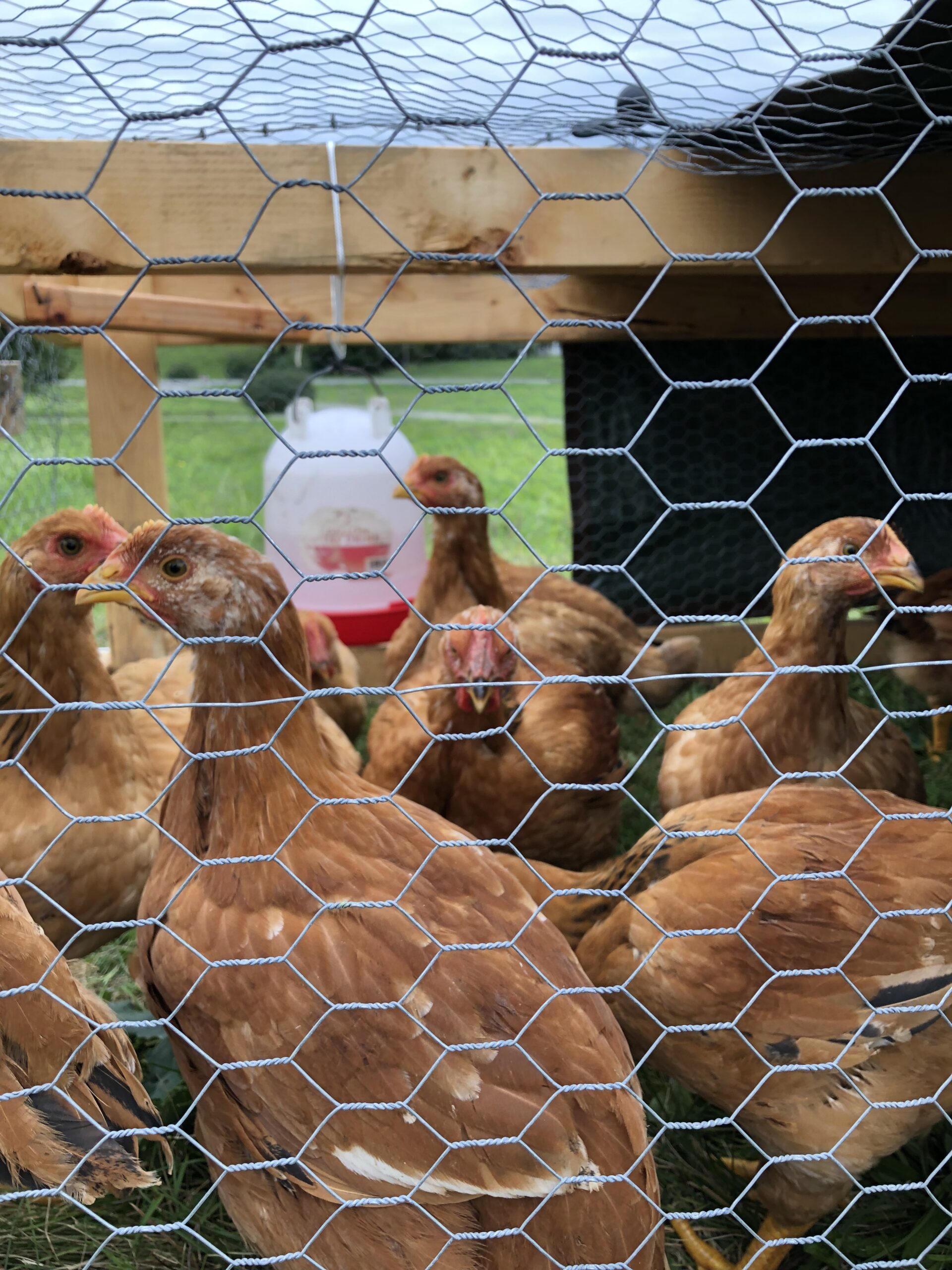
Pastured meat chickens (also known as broilers) are a popular pick for a beginning farming project. They certainly made the most sense for us. During deliberations Matthew did make a valiant effort to convince Frances to jump aboard a meat rabbit enterprise. From an objective standpoint, his arguments were probably very convincing. They were wasted on his wife. She had been the loving owner of a series of pet rabbits as a child, and she was not yet farmer enough to be enthusiastic about the idea of slitting the throats of bunnies as a way to get meat on the table. After some discussion, we agreed on meat chickens for the following reasons:
- They weren’t cute enough for anyone to feel bad about killing them.
- The timeframe for the whole process was only 8-12 weeks. If we ended up hating it, it would be over quickly and we’d never have to do it again.
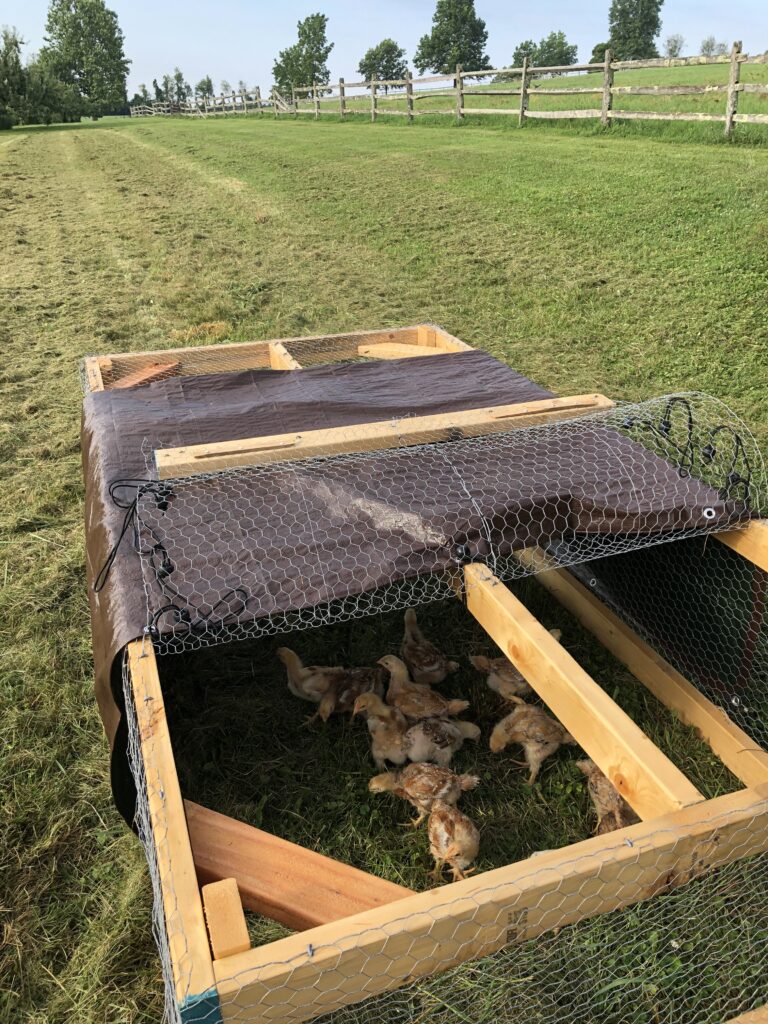
- The infrastructure needed was a moveable chicken coop that Matthew could easily build.
For most of history, if you wanted to start a brand new flock of chickens, the way to do it must have been to contact your local chicken lady and see what she had available. This is probably still the best way to start a healthy flock of chickens. But chicken ladies are better known for their layers than their broilers, and we didn’t know any, anyway. So we got our farm started with seventeen chicks that came in the mail.
Yes, mail-order chicks are actually a thing. The reason this slightly crazy idea works has to do with the fact that chicks are naturally adapted to take a few days after hatching to figure out a food source. (No one ever said chickens were bright.) If chicks are shipped shortly after hatching, they can survive in transit for a couple of days before eating their first meal at their new home.
A key element in the mail-order chick model is the smooth functioning of the postal system. This is not something that can always be taken for granted. We mentioned in an earlier post that our first batch of chicks had had an epic role handed to them by fate. In another sense, they were dealt a tough hand. They spent three full days in transit, while we made frequent checks for tracking updates.
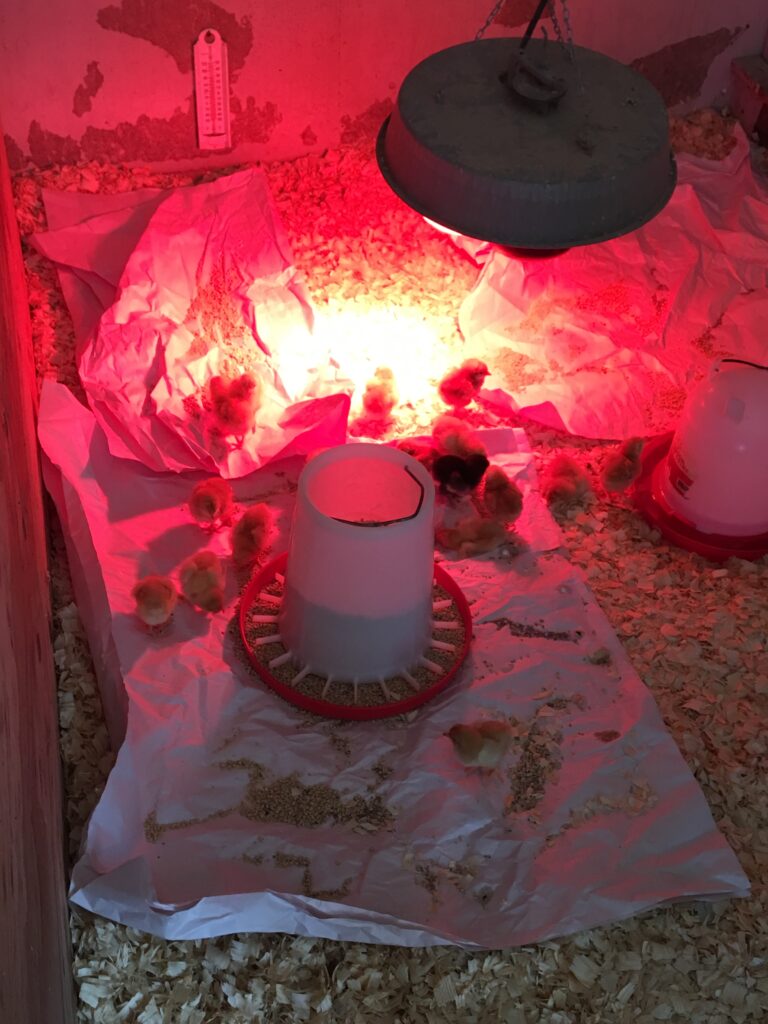
Three days is a long time to for anyone to be in the mail. It isn’t long enough to be an automatic death sentence for chicks. When we opened the box, most of the chicks actually seemed to be ok, although some were struggling. Despite our best efforts to perk them up by squeezing drops of water from paper napkins in the general direction of their beaks we couldn’t revive them. Four died in the first few days. It was a definite morale blow for our first ever farming project. But after we made it through the first days, our flock of (now thirteen) survivors rallied. Twelve weeks passed, and it was time to figure out how to kill them on purpose.
Butchering thirteen chickens is no big deal for a seasoned farmer. You could probably knock the task out single-handedly in about fifteen minutes if your last name happens to be Salatin. But if you don’t know what you’re doing it takes all day long (even with a crew of willing and equally clueless friends). You should especially plan on taking forever if you have no option but to take all the feathers out by hand. It was a day that involved a not insignificant amount of squawking, and a more-than-normal amount of contact with flying chicken excrement.
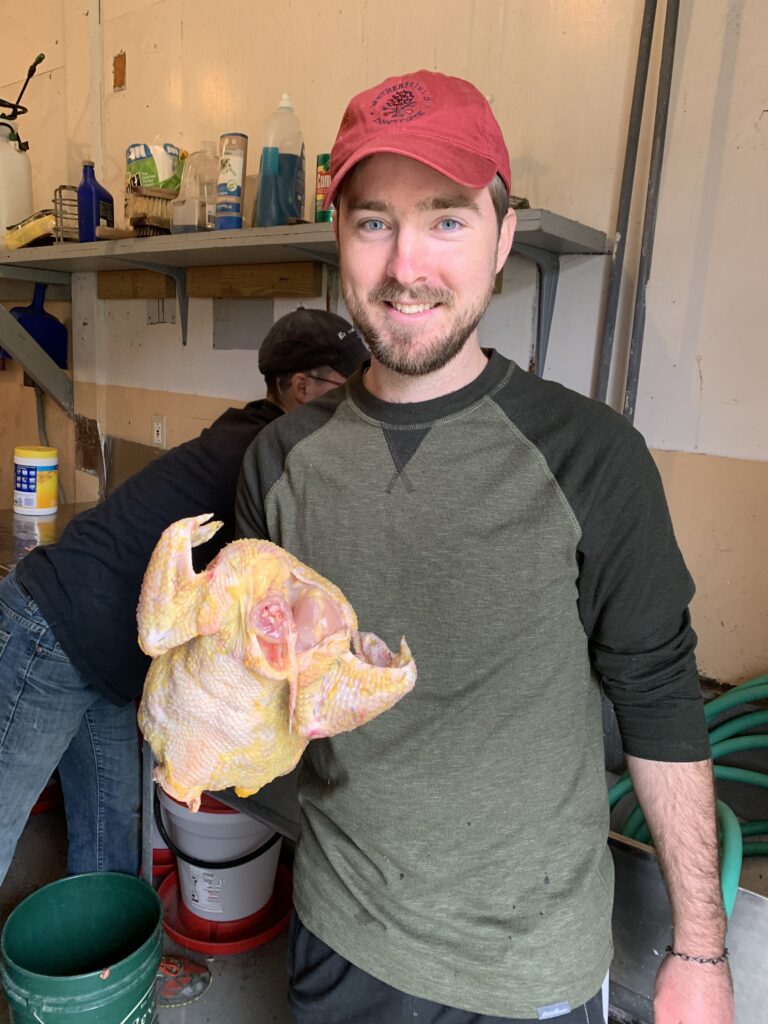
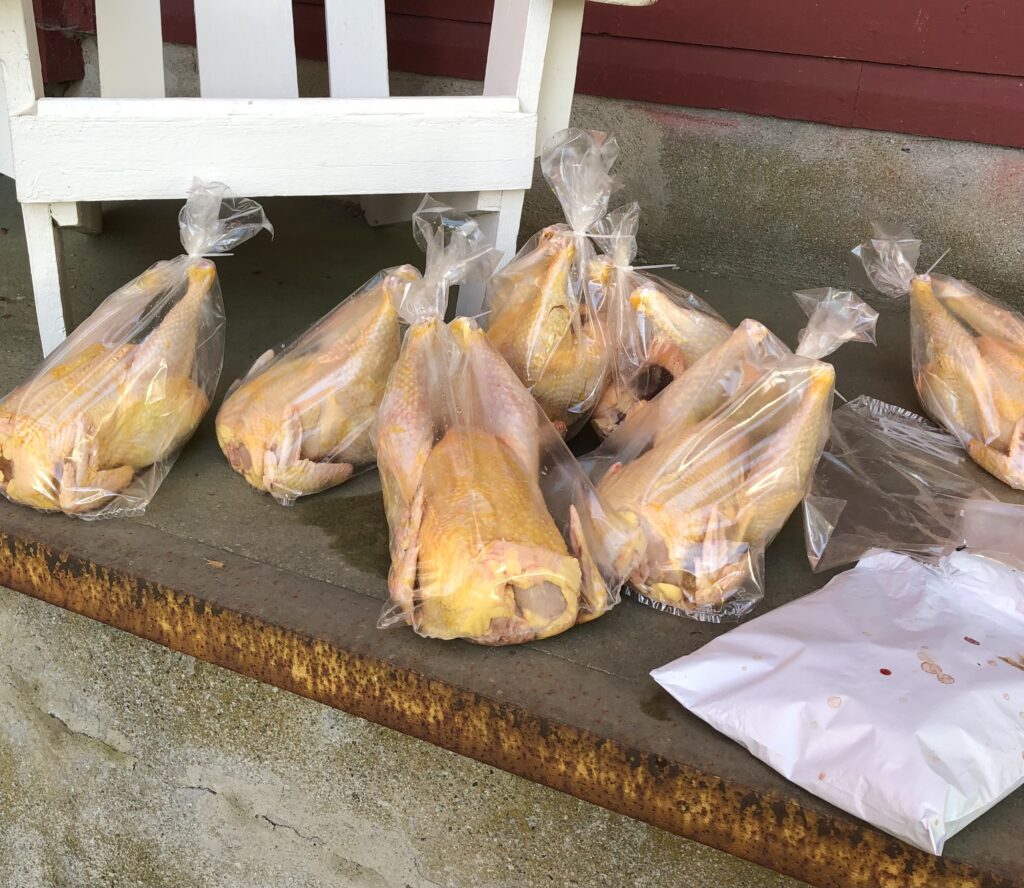
If you are not a meat-chicken farmer, you may feel slightly mystified as to how live chickens end up looking like the chickens you find at the grocery store. (Hint: whole roast chickens are upside-down. Mind. Blown.) Our attitude towards this question had definitely been one of mild bemusement. It was certainly fascinating to observe the transformation step-by-step. At the end of the day, we were both pleased and slightly amazed to see that our plucked and cleaned birds looked pretty similar to every other raw chicken we had seen. Comments like “Oh wow, it looks like a chicken!” may have been made. By late afternoon we had thirteen whole chickens shrink-wrapped and ready for the fridge. We could tally one farming success to our credit.
The endearing postscript to the story of our first flock of chickens is that we still had one surviving chicken. When we ordered our chicks we had been naïve enough to check the box that signed us up for the “tempting” offer of a free exotic rooster chick thrown in with our order. As a result, when we opened up the box, it contained one black chick that looked decidedly unlike its wilting yellow flockmates.
By the time we were ready to butcher the others, this black chick had rewarded our efforts by developing into a feather-footed, handsome black rooster, who still clearly did not fit in. It was at this point that we realized we had been slipped an entirely useless animal. He did not even have enough meat on him to be worth butchering (which would have taken us about four hours according to our painstaking and rudimentary methods). We finally released him into the barnyard where he befriended the cats and became something of a mascot figure until his mysterious disappearance several months later. Now we know that free exotic rooster chicks are really a way for hatcheries to unload their surplus stock on unsuspecting newbie farmers.
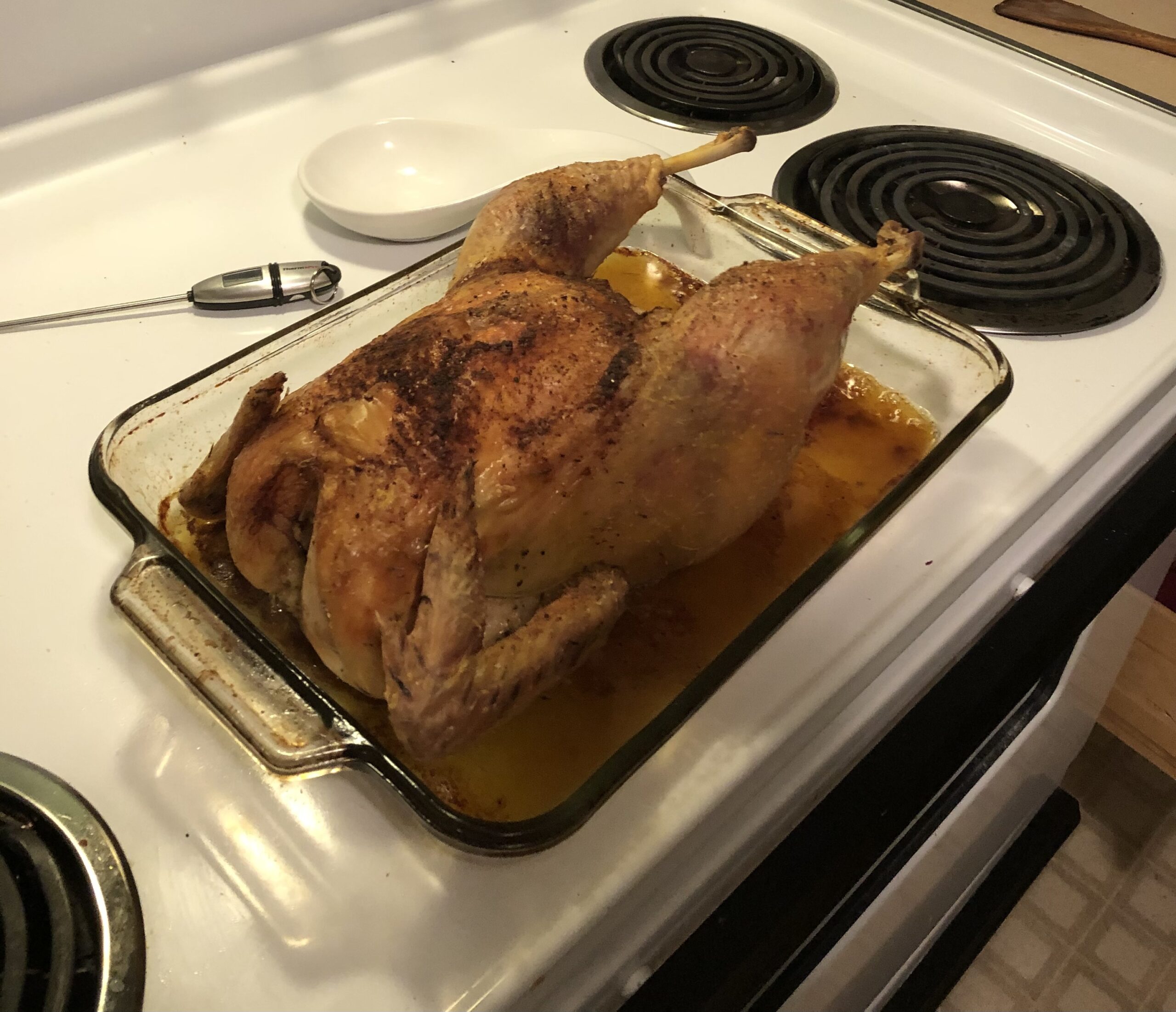
That winter, we settled down by the fireplace in our cottage over a few roast chickens and some home-brewed hard cider. We discussed what new farm enterprise we should launch in the coming season. First, we considered starting a giant garden. But we had successfully introduced enough alcohol into the hard cider to decide that raising three pigs in the empty barnyard near our house would be much more exciting.
To be continued…