A Story about A Farm Part 1: In which two town kids decide to try out farming.
This post is first in a series. Part 2, Part 3, Part 4
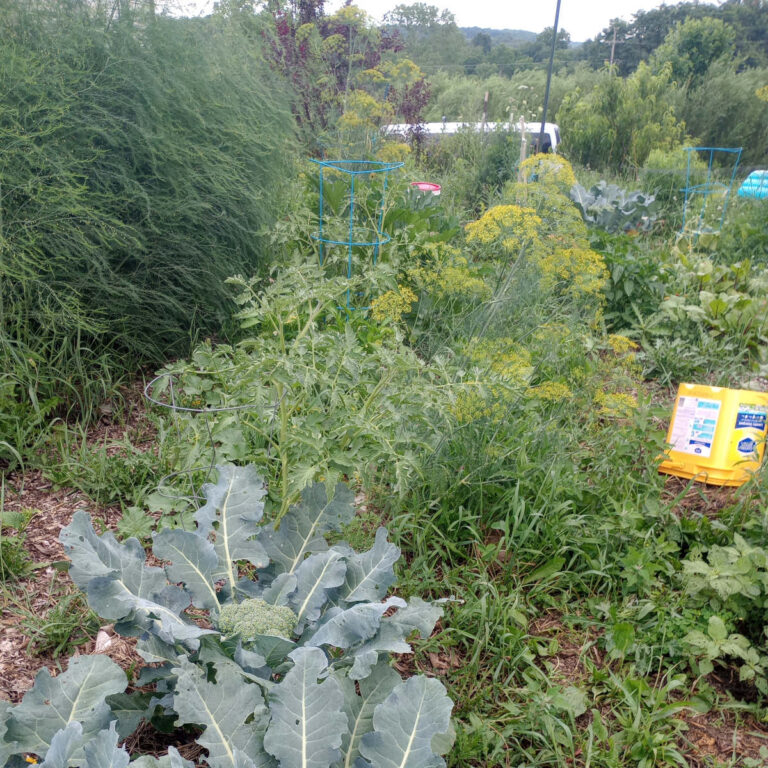
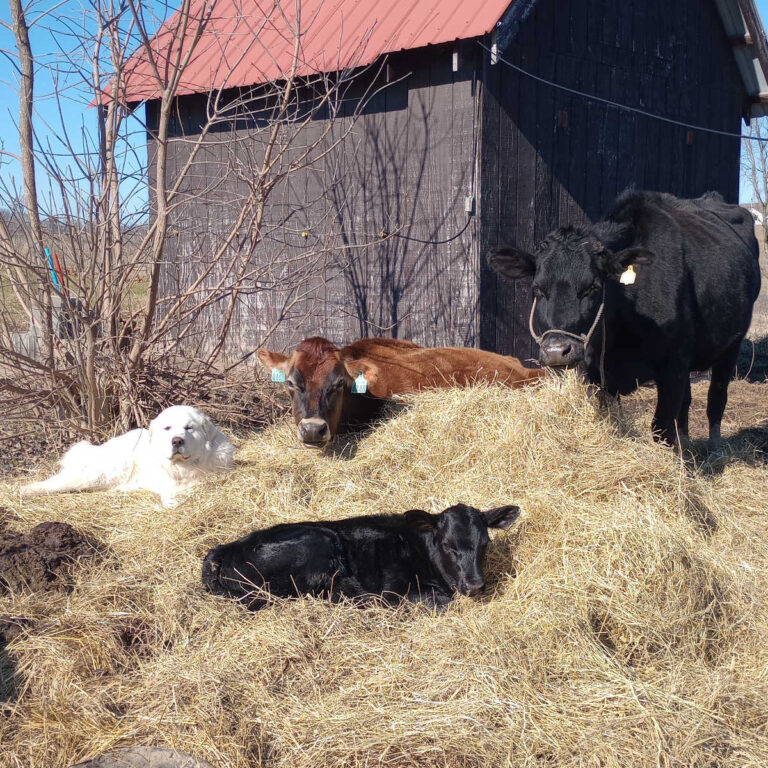
Suburbia boy from home-with-ban-on-pets meets English girl grossed out by chickens. Fast forward to several years after their wedding. They find themselves milking cows, collecting eggs, and in the thick of a life that involves daily handling of all kinds of animals. They even stick their hands inside the bodies of dead animals on a regular basis and do other weird things like making soup with chicken heads. It’s been a fairly major lifestyle change. If you’re curious how we made the leap from suburbia to small farm, read on.
Now, we don’t want to give the impression that we were by nature totally unsuited to farming. We both enjoyed the outdoors, and had become convinced that raising children on a family farm would be ideal in many ways. In her single days, Frances even told her friends that if she ever signed up for an online matchmaking service it would be farmersonly.com (she never actually did it). Sometime during the process of courtship and dating she set aside her whimsical notion of marrying a farmer and decided to marry Matthew instead.
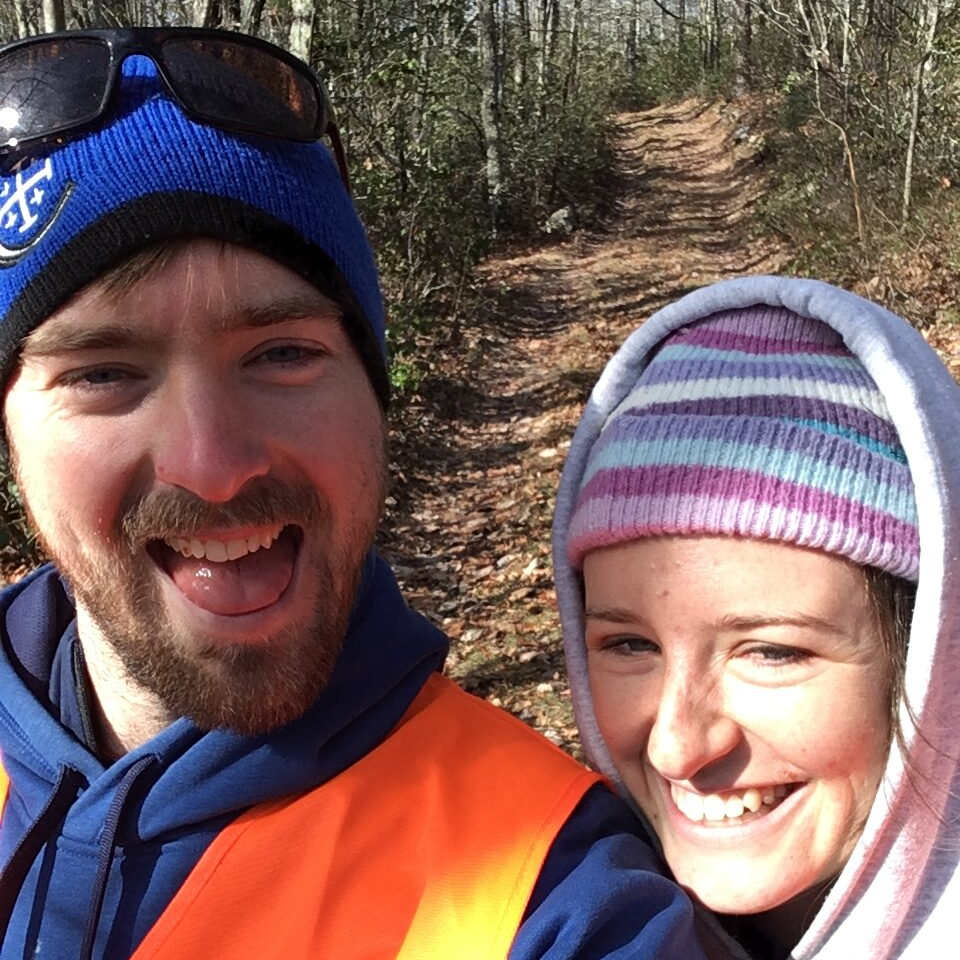
Little did she know that her dashing suitor was an even more complete package than she realized. His beardedness and general rugged manliness should have been the giveaway that he also dreamed of a simple country life. One day, the zippy Volkswagen Jetta of his bachelor days would be replaced by a tractor. (It should be noted that he still misses driving the Jetta.)
Despite the fact that we both held somewhat repressed dreams of the farming life, it took us a long time to talk about starting a farm together. The truth was, that in the years of our courtship and early marriage, the idea of farming simply seemed utterly unrealistic. We agreed that we would probably have a garden one day, and maybe even a home in the country when we were old and rich. It would take serious life upheaval for the idea of farming to emerge as a real possibility for our family.
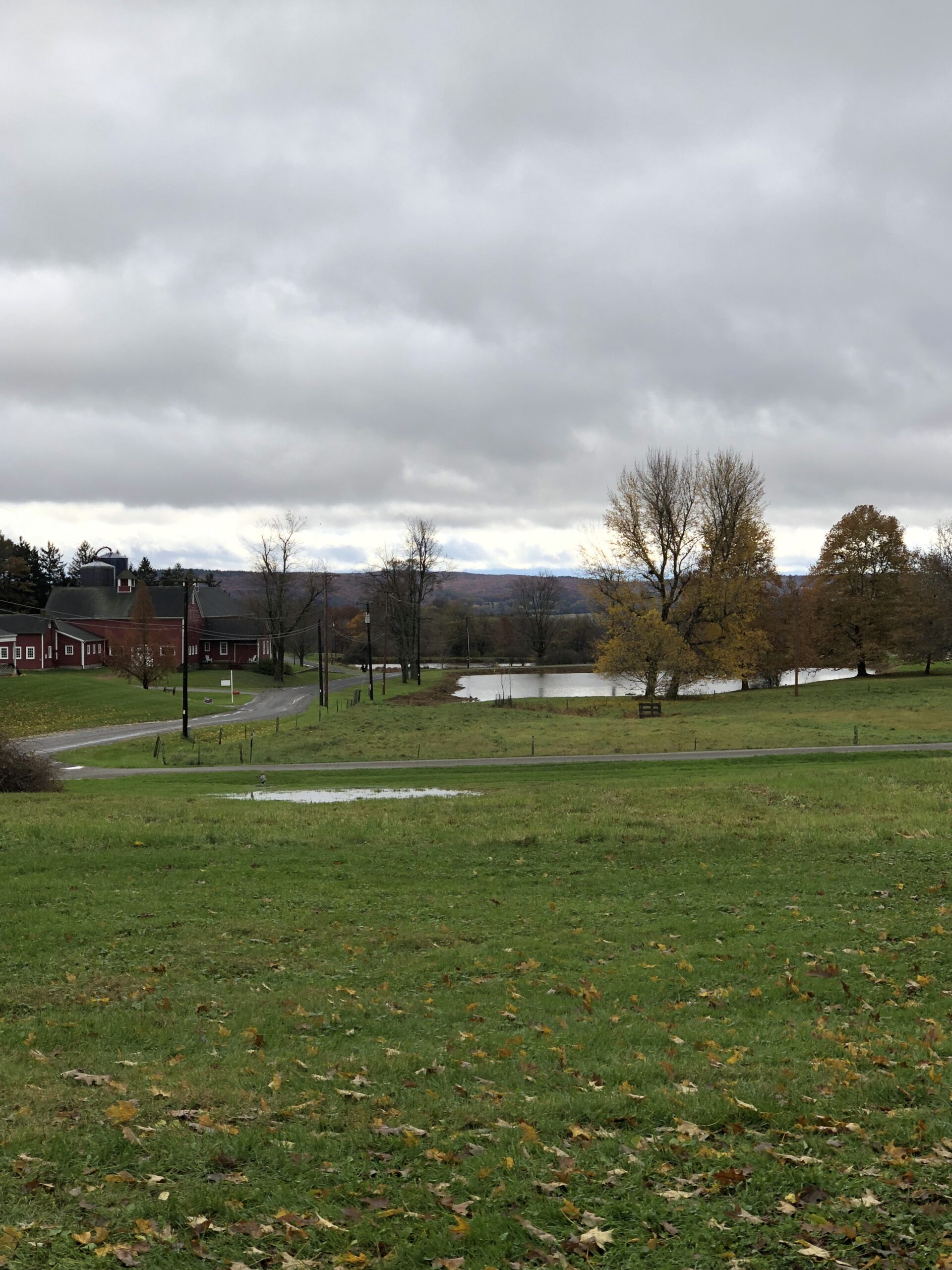
As it turned out, serious life upheaval was not too long in coming. A little over a year into our marriage, and following a series of astonishingly providential coincidences, Matthew received an exciting new job offer. In the space of a month, we found ourselves transported from our quiet life in small-town Virginia to the rolling hills of a 1000 acre historical estate in Dutchess County, New York. Here, Matthew took on the position of Program Director, and we settled into a cozy cottage that was provided for our housing on the estate.
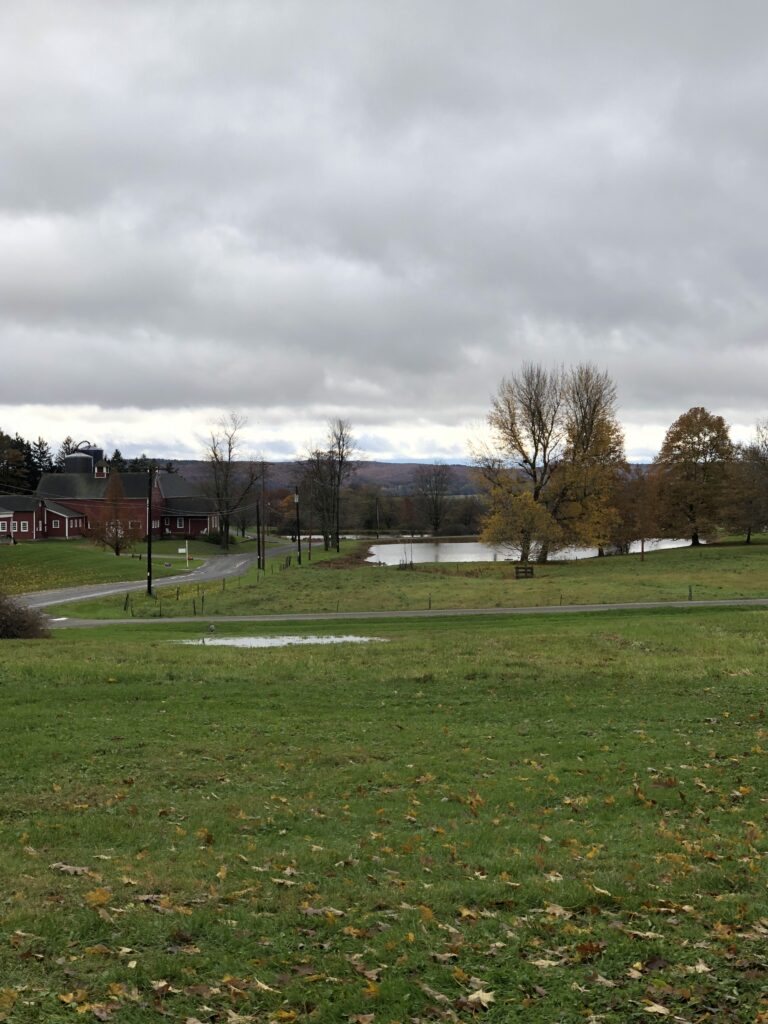
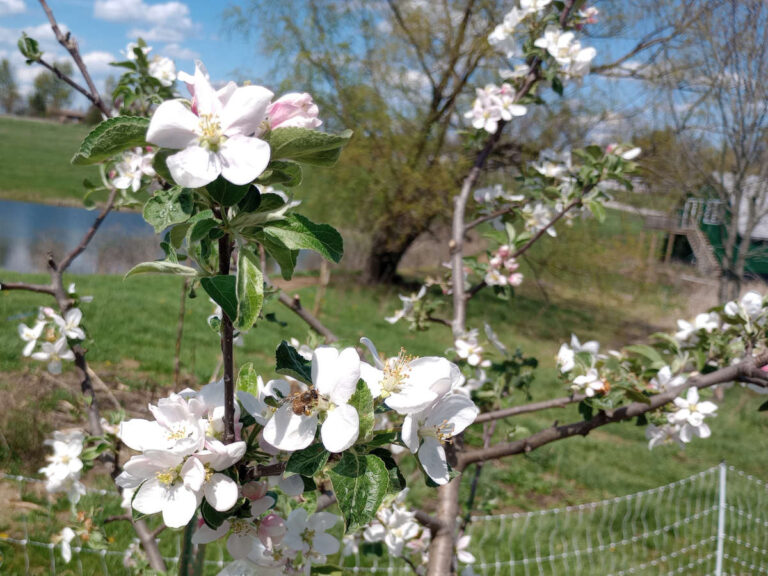
In this stupendous setting, our dream of becoming farmers rose to the surface. How could it not? The estate’s farm was largely dormant, but its remnants entered our lives all the time. We could pick fruit whenever we wanted from the orchard right next to our house. A short walk away was a shed full of laying chickens. The only other animals in that beautiful barnyard were cats and peacocks, but it wasn’t hard to envision a thriving farm filling those same empty spaces. In researching the estate’s history, we came face-to-face with its founder’s passion for Christian agrarianism. Our dinner conversations quickly developed to include topics such as “how cool farming is” and “what a good idea it is to raise children on a farm.”
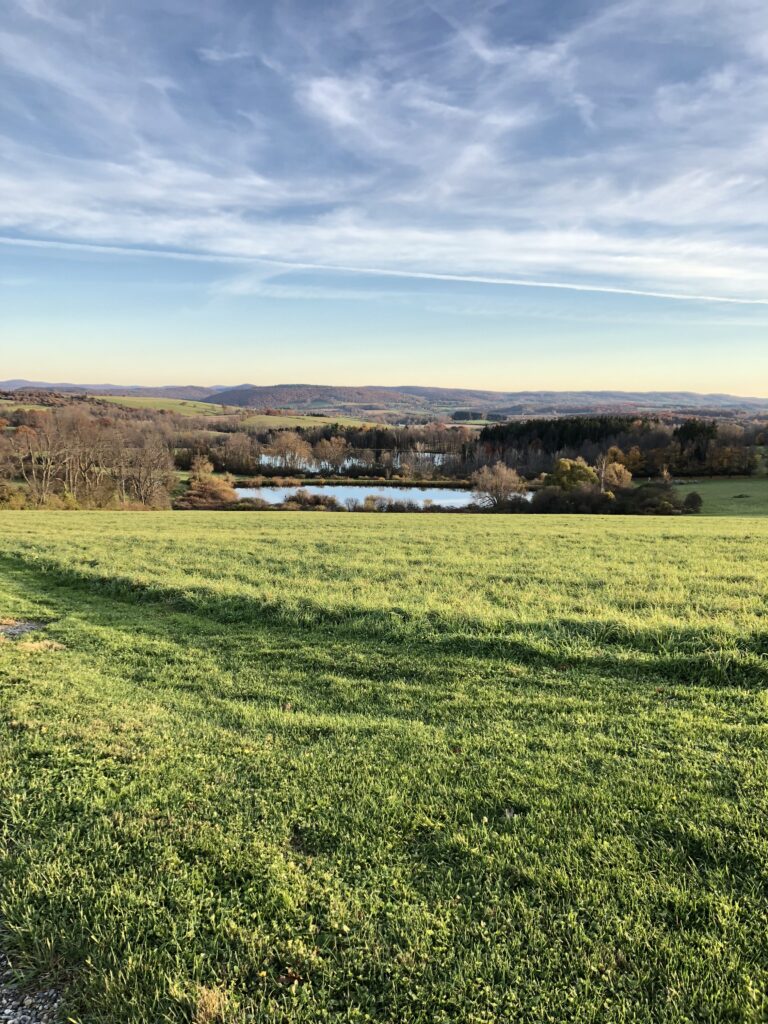
At this time, the leadership of the foundation that managed the estate was in a time of transition. The direction in which it would go remained unclear. As enthusiasm for farming took hold, we hoped that Christian Agrarianism could become a central feature of the mission for the whole estate. Matthew and his supervisor developed an exciting vision. The historic home could be the site of conferences centering on agrarian thought. Meanwhile the farm infrastructure could be used for training families in the many practical aspects of farming and homesteading.
Sounds amazing, right? Not everybody thought so. The introduction of this proposal led to a “difference of strongly held opinions” among the members of the board of directors. To keep a long story short, the “no’s” carried the day with a finality that left little room for hope of a reversal. It was a serious disappointment.
What would you do if your dreams of starting an agrarian community were dashed in pieces before your eyes? What we did was to head to a friend’s cabin in the Catskills for a long weekend. We packed Joel Salatin’s You Can Farm, which we had checked out of the library along with a couple of other inflammatory farming titles. While our one-year-old napped, we sat on the porch and read. We came home convinced that giving farming a try was not a completely stupid idea, even for an ordinary couple with a score of “zero” in the category of practical experience.
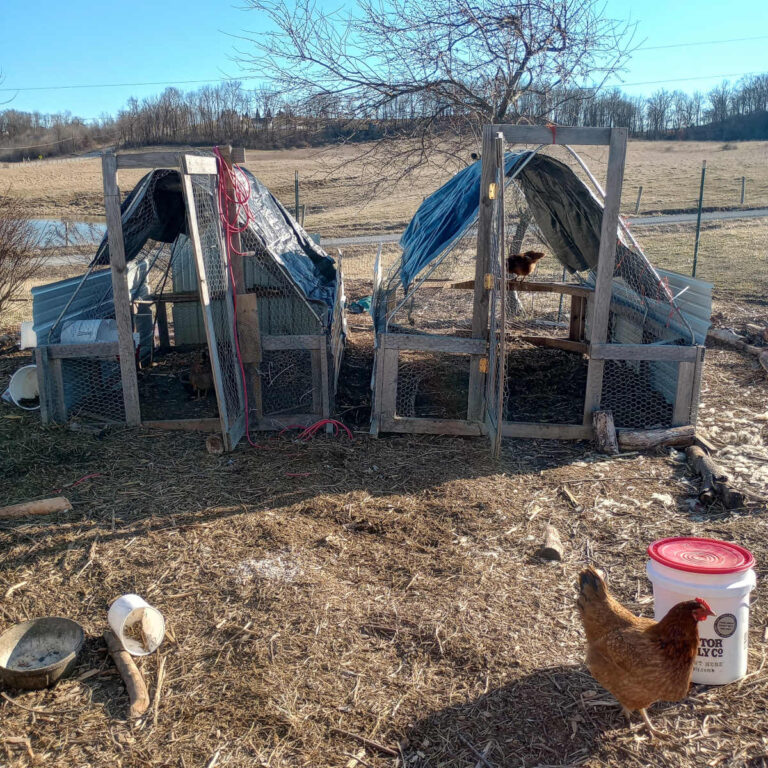
The exciting thing was that the way was open for us to increase our “practical experience” score at very little risk or expense. We still had access to a 1000 acre estate with empty farm buildings and fields all around us. Nobody would care if we started a few small farming projects on our own. It is hard to imagine a better situation for two people (and one toddler) to make their first foray into farming. Just a few weeks later, we were the proud owners of our very first flock of 17 meat chickens.
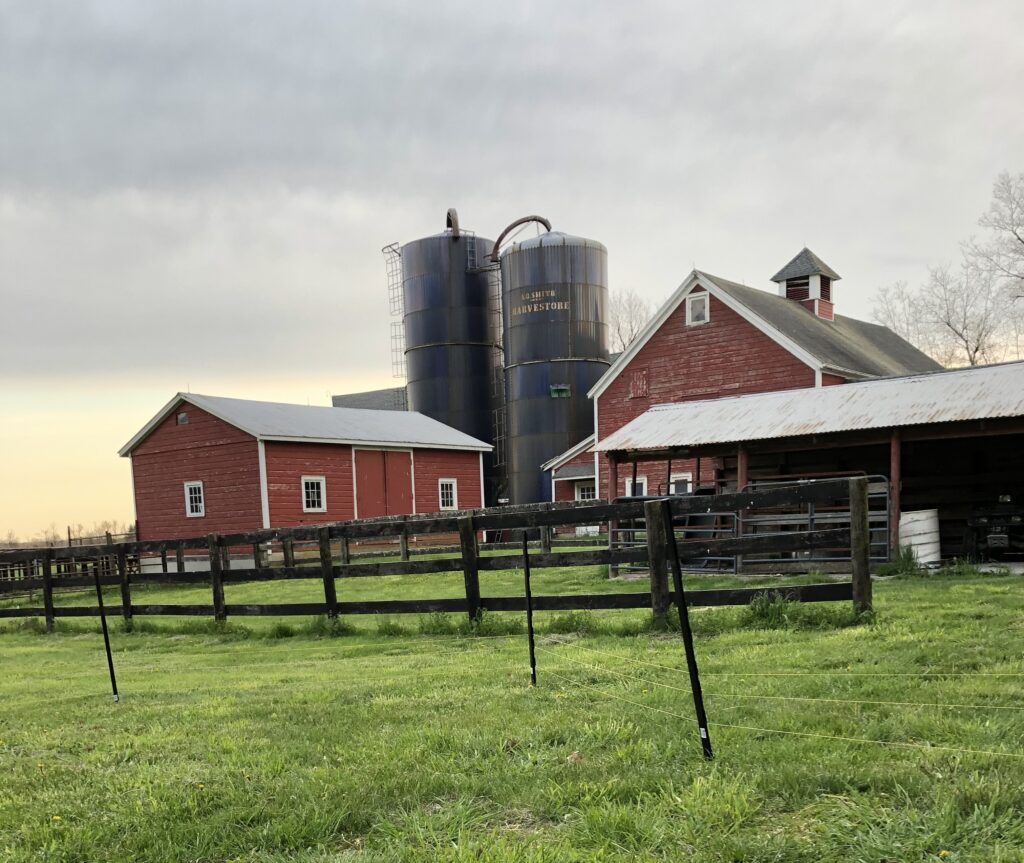
When that first batch of meat chickens arrived at their new home, they didn’t seem to appreciate how epic a part fate had handed them to play. If our lives were a movie, this moment surely would have called for a score involving some rendition of the chicken dance, but slowed down to a majestic pace, and with full orchestral backing. We didn’t start calling ourselves “farmers” just yet. But we had taken the first steps on the path to making our dream a reality.