
Three Machines for Staying Sane While Farming
Our last post discussed a quote from Farmer Boy, and the value of doing manual labor together as a family. If you missed that post, check it out here before reading on.
Philosophically, we are entirely in favor of the idea of physical work being worthwhile.
But ideals from over 150 years ago have to meet the reality of our lives in the 2020s.
While we do what we can to incorporate healthy physical labor into our lives, we also have to take stock of our situation, and the significant areas in which it differs from that of Mr. James Wilder (Laura Ingalls Wilder’s father-in-law).
First, we must recognize that Matthew has a full-time job outside of farming, which drastically limits his time available for threshing wheat by hand and other similar tasks.
Second, we have a total of zero hearty nine-year-old boys to help us with time-consuming and muscle-straining physical labor.
So we use various machines on our farm with the goal of increasing efficiency and generally not drowning under all the things we have to do.
Without further ado, here’s a list of our top three machines that we’d rather not have to do without.
1. The Pump
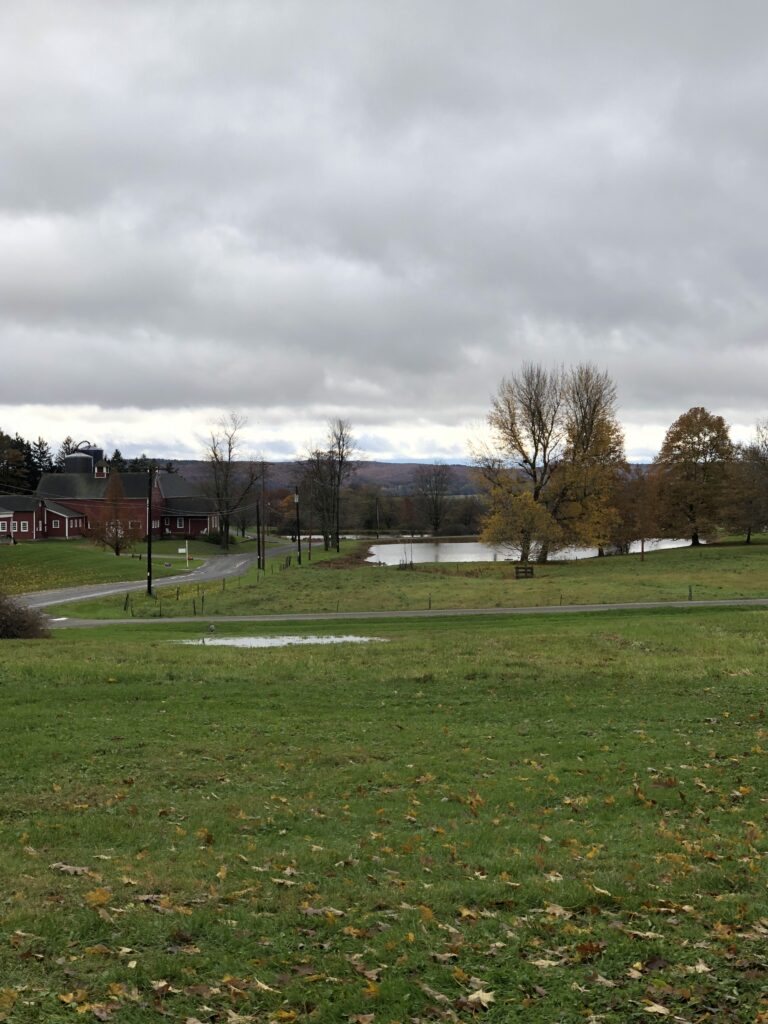
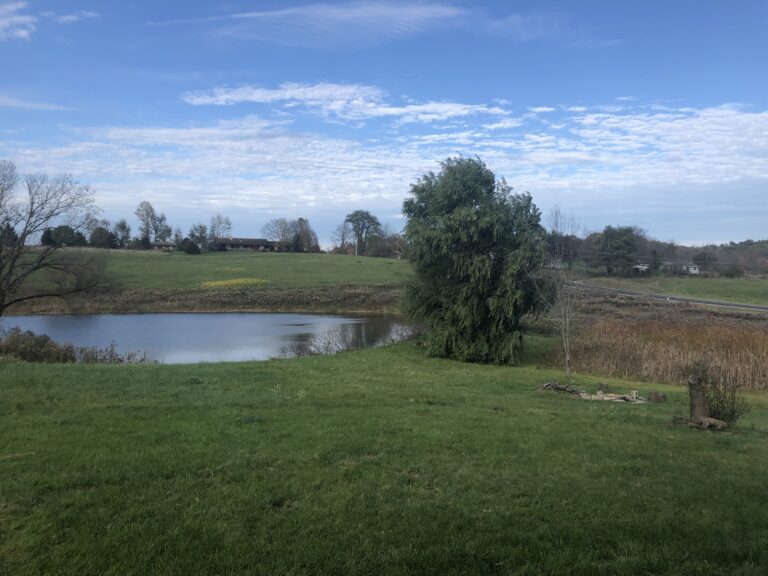
Our property is favored with the significant feature of a large and centrally located pond. Wonderful!
This pond is also located at the lowest point on the farm. Not so ideal!
We practice intensive rotation grazing, which means that we move our animals to new pasture every single day during the growing season. A consistent challenge that goes with this method is moving large quantities of water from the pond to various uphill locations where the animals can drink it.
Yes, large quantities of water.
Cows, especially lactating cows, drink a lot of water.
If you’ve ever breastfed a baby, or lived with someone who was breastfeeding a baby, you already know that lactation involves the consumption of a lot of water.
Now scale it all up to a production of 3-4 gallons of milk daily. Dairy cows producing this amount will gulp down around 20 gallons of water per day or more.
Hauling it all by hand in five gallon buckets might be a great way to keep in shape. Or even a good use of time for a few teenage boys.
Buuut multiply twenty gallons a day for our small herd of 2-3 cows, and you’re moving a LOT of five gallon buckets. You might even find yourself starting to trip over the rather large number of five gallon buckets you will need.
Add to this the fact that even Joel Salatin says that hauling water by hand is one of the quickest ways to kill a new farmer’s zeal for farming.
Annnnd enter our gas-powered pump.
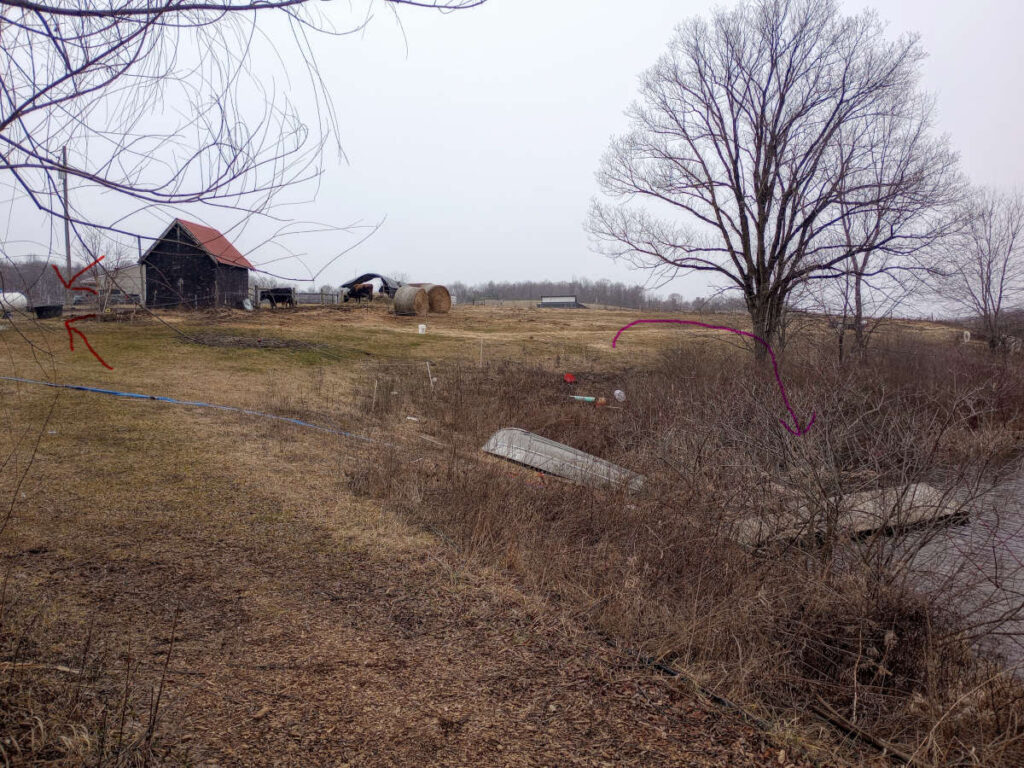
This winter, we’ve been using it to water from the pond down there to the big black stock tank up there by the shed:
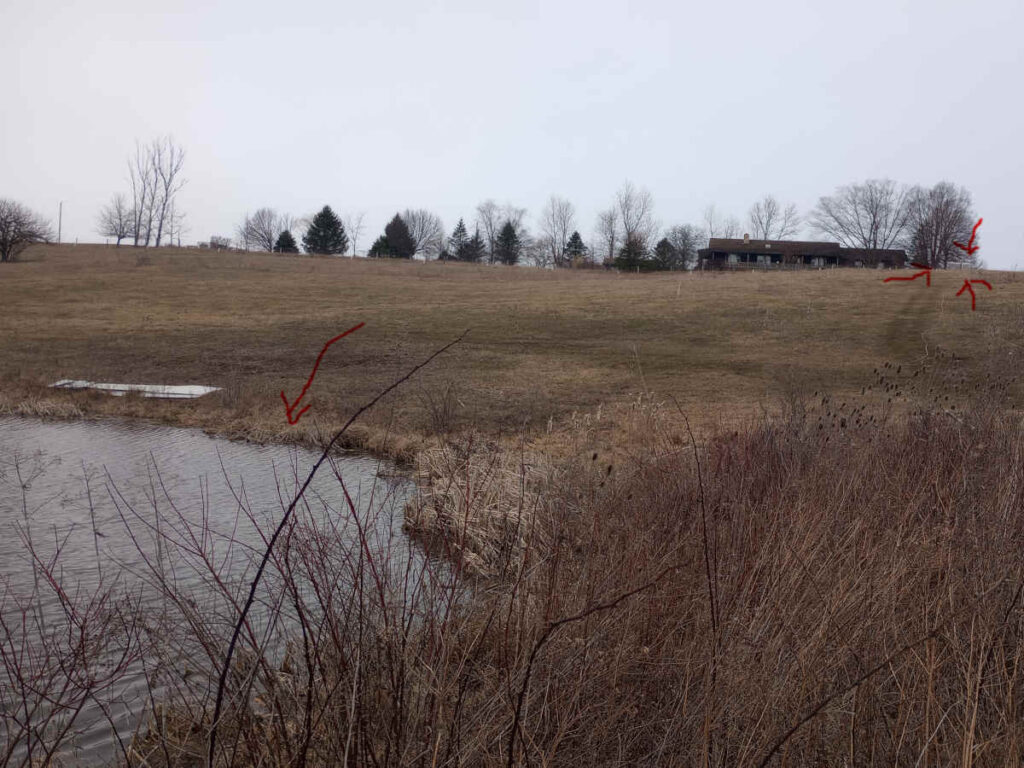
During the summer, we’re consistently moving water from the pond down there to those large holding tanks waaay up on the hill over there.
Imagine performing either transfer by muscle, sweat, and five gallon bucket. It would take forever. We’ve honestly never attempted it.
An additional plus to the pump is that if you have a dog willing to make tiny holes in the hose with her claws, you also have a sprinkler for your pre-water-hauling age children to play in.
Maybe if fuel becomes prohibitively expensive by the time our children are teenagers, we’ll engage them in hauling buckets of water. But for now, they can play in the “sprinkler.”
2. The Four-wheeler
Imagine that you, like us, are going to run a small farm alongside raising a family of small children and working a full-time job.
You may like the idea of using every small farm emergency as an excuse to take a walk through the field and enjoy some exercise and fresh air while thinking deep thoughts.
But speed of motion to any part of the farm is a serious life saver when you’re juggling several urgent needs.
Not to mention that driving the four-wheeler is fun, and chasing runaway cows around on your four-wheeler is not only very entertaining for your neighbors, but a good way to show the cows who’s boss.
James Wilder didn’t have the option of owning a four-wheeler. Maybe he would have considered it if he found out how much fun it is.
3. The Tractor
We started out farming with the idea that our small-scale regenerative methods would not require us to own a tractor. We didn’t plan on plowing up giant plots of land and planting corn, for example. We still don’t.
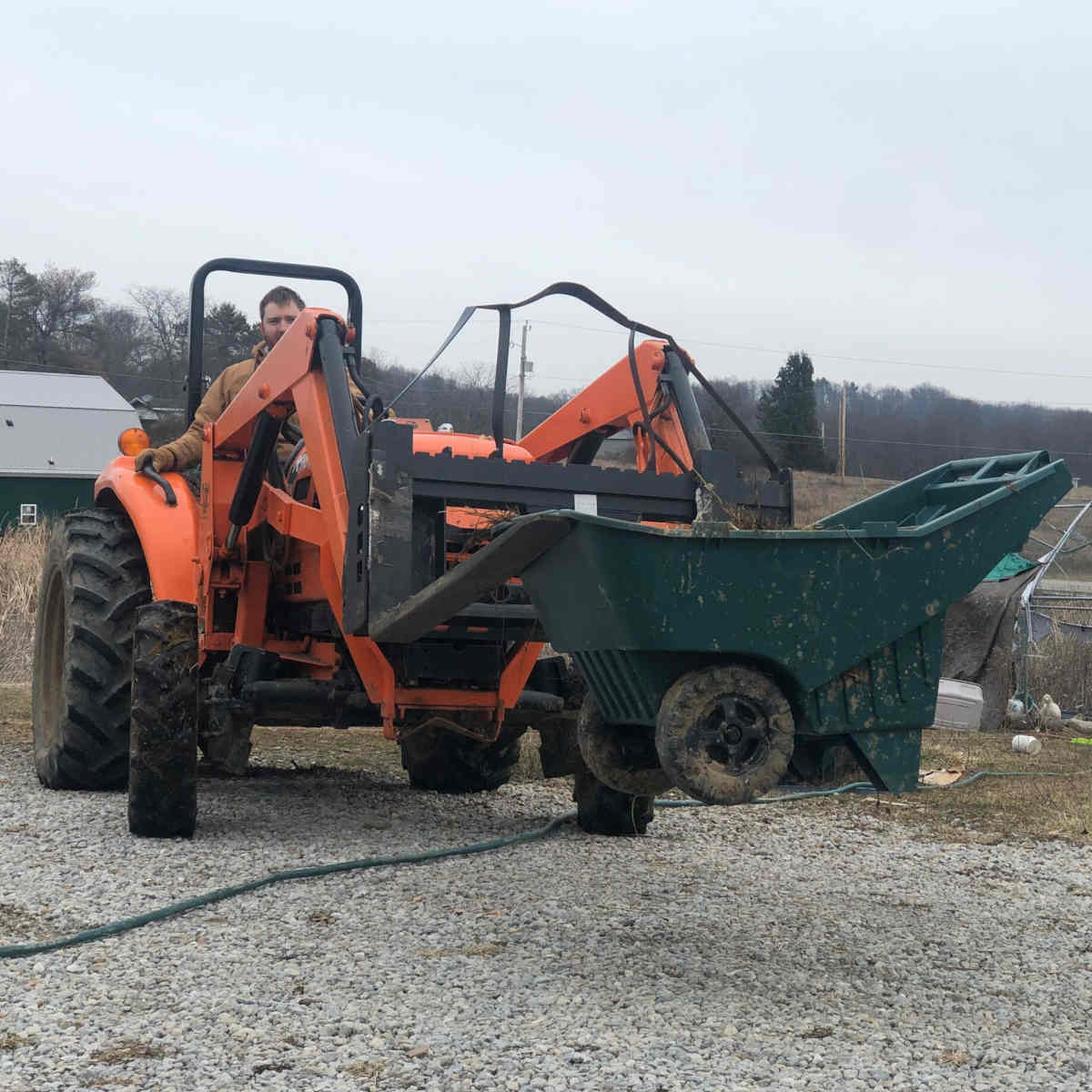
We could get by without a tractor. But we invested in a compact tractor about a year ago, and it’s not only saved us time, but made several important farm tasks possible.
What tasks, you ask? We’ll give three examples plus a bonus.
A. Moving large quantities of arborist wood chips around.
We watched the Back to Eden gardening documentary two summers ago, and were promptly sold on the idea of building our soil by adding large quantities of wood chips. You can get your hands on these wood chips for free if you can find an arborist who needs a place to dump them. Through pulling over to hail crews at work and other such desperate measures, we were able to connect with a few small-time arborists and string together a moderate supply of woodchips.
But in an exciting turn of events, about a month ago we finally succeeded in convincing two of the biggest local arborist companies that our property was a convenient place to empty their truckloads of woodchips.
The result:
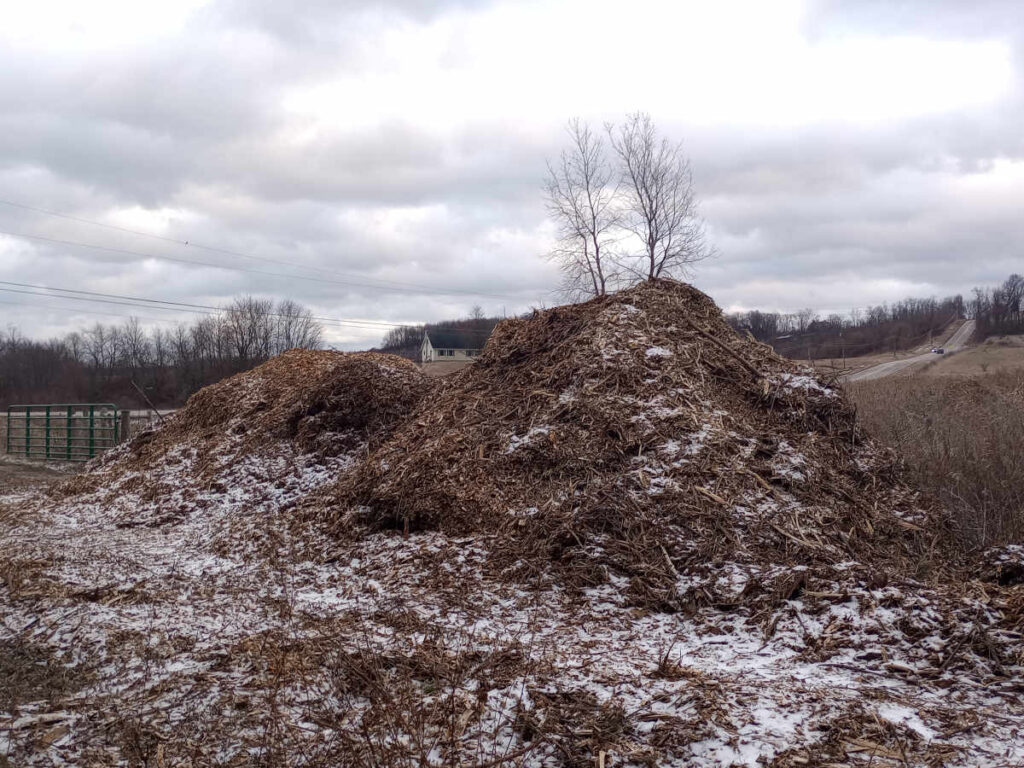
We stand by the statement we made to the arborists that they could not give us too many wood chips.
Nevertheless, we’re glad of our tractor. Distributing this Mount Everest of organic matter to the various parts of our farm will be no small task.
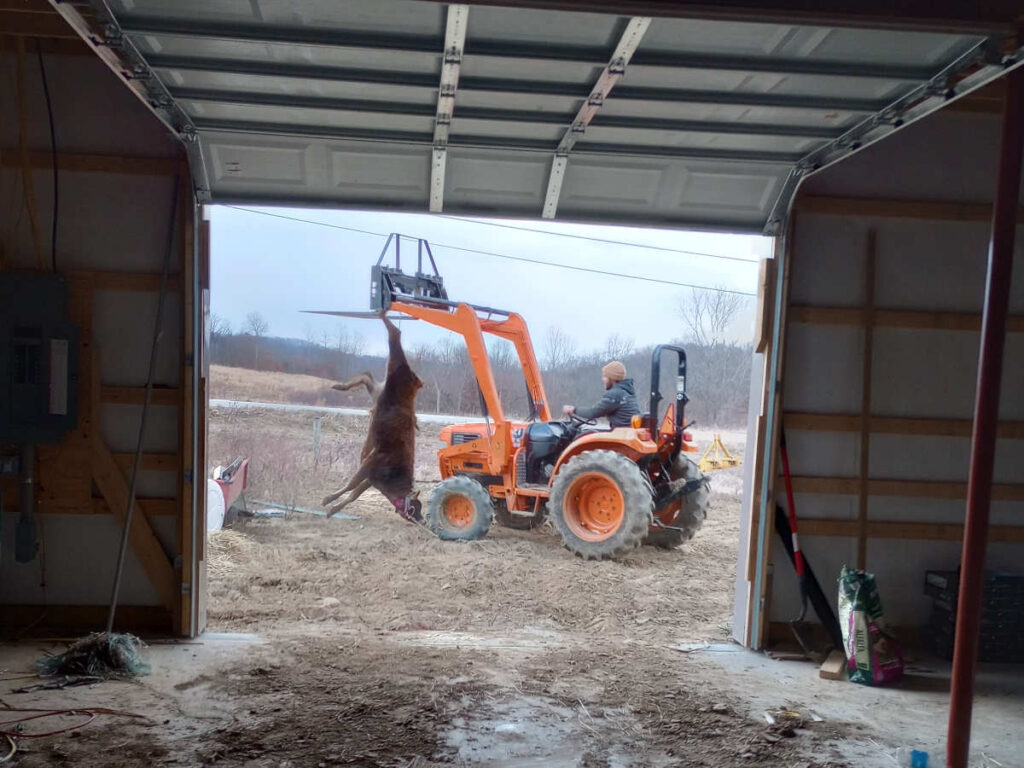
B. Butchering Beef
Bovines are large, heavy and not-very-maneuverable-when-dead (or even alive, actually, if they decide to be uncooperative). After slaughtering an animal of such daunting proportions, the task of moving it to the area in which you intend to transform it into recognizable chunks of meat presents a significant logistical problem. We have found that it can be done with enough strong men and a tarp.
But owning a tractor makes this job doable when your butchering day is not also a family reunion.
C. Moving Giant Hay Bales
You may have driven past fields of large round hay bales your whole life, and never thought about how big and heavy they are. They are extremely big and heavy. They are also the most cost-effective way to feed cows in the winter (and lactating cows eat a LOT of hay). But you really do need a tractor to put one of these round bales where you want it to go.
And finally, the bonus. . .
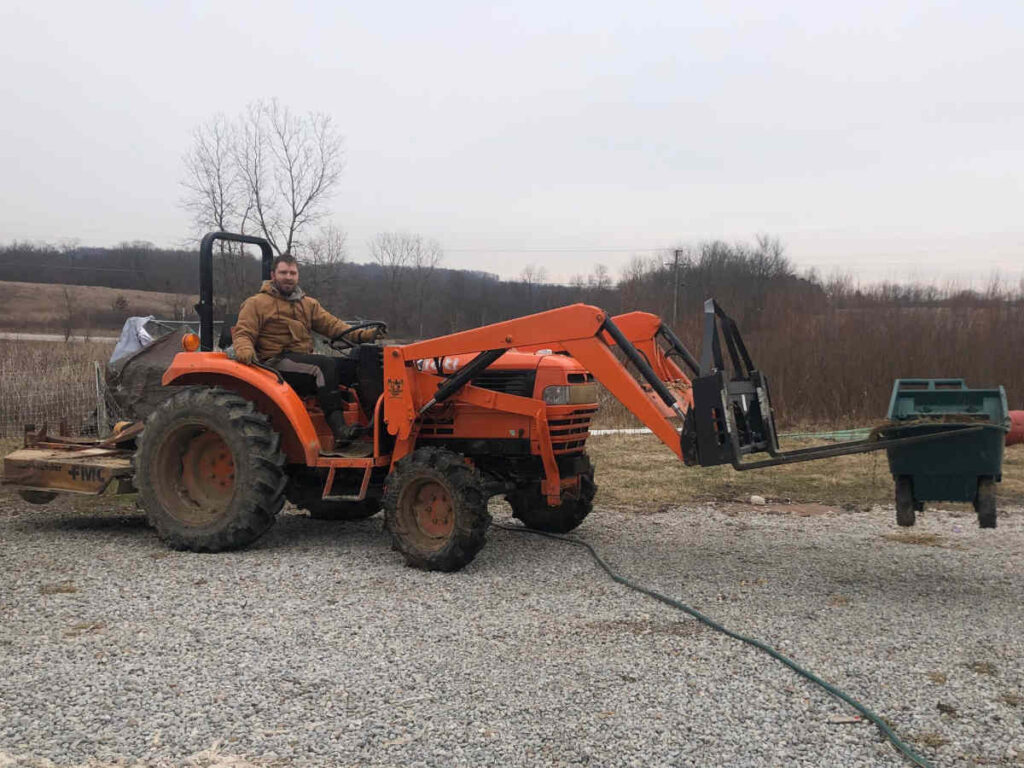
If you have the tractor out anyway, why not save yourself the effort of dragging that wheelbarrow full of frozen-solid cow manure over to the garden?
Don’t I Really Need All this Fancy Equipment??
We wonder how we ever did without each of these machines on a regular basis. But we’ll also issue the disclaimer that we don’t think a small-scale farmer strictly needs any of them to get started. We started with exactly none of them. It took several years for us to decide which machines would be most helpful and take the leap into actually owning them.
There’s also a hidden bonus to getting by without your future favorite machine for as many months or years as it takes you to screw yourself up to make the purchase. When you finally get it, you’ll have a very gratifying idea of exactly how much work it’s saving you.

Such exciting times for you all!! So neat to read about your challenges, progress, and adventures!! So inspiring and incredible!! Matt looks right at home! 🙂