Our Animals Did What? A Post in Which We Vent our Frustrations with a Side of Theological Musings
The 99-1-9-10 Law of Animal Management
It’s time to start introducing our readers to some of the animals that make our lives more rich, exciting, and interesting.
We’ll start with a general discussion of animal management expectations.
In three years of farming, we’ve had some illusions thoroughly shattered. One of these is how our animals might respond to our efforts to give them amazing lives. We now expect them to rebel against us if at all possible.
Being mathematical experts, we’ve quantified this expectation into a rule that we’ll call the 99-1-9-10 law of farming. It goes like this. Imagine that the animals have 99 possible choices of things to do that you are ok with, and one possible course of action that will really make you peeved. In about 9 out of 10 cases, they’ll do the one thing that annoys you with an almost uncanny regularity.
That’s right. You can give your animals a great life, with 99 options of possible things to do that will make you smile benignly over them. And they’re good options too. We’re talking about fresh grass to eat, space to walk around, fresh air and sunshine.
But what happens if you (carelessly or naively) leave the door just slightly open to one possible activity that will have you rolling your eyes heavenward and asking “why?”?
Will they content themselves with the 99 options that are conducive to their flourishing and your happiness? After all, there are so many great things they can do. Why would they push the boundaries anyway?
According to our very precise and scientific methods, nine out of ten of animals surveyed said that they would choose to peeve the farmer if at all possible. They also expressed a hope to corrupt the rare members of the herd that are too stupid to find opportunities for rebellion on their own.
Let’s illustrate this principle with some real life examples: animals to which we have attempted to give a great life and who have rewarded us by behaving totally unreasonably.
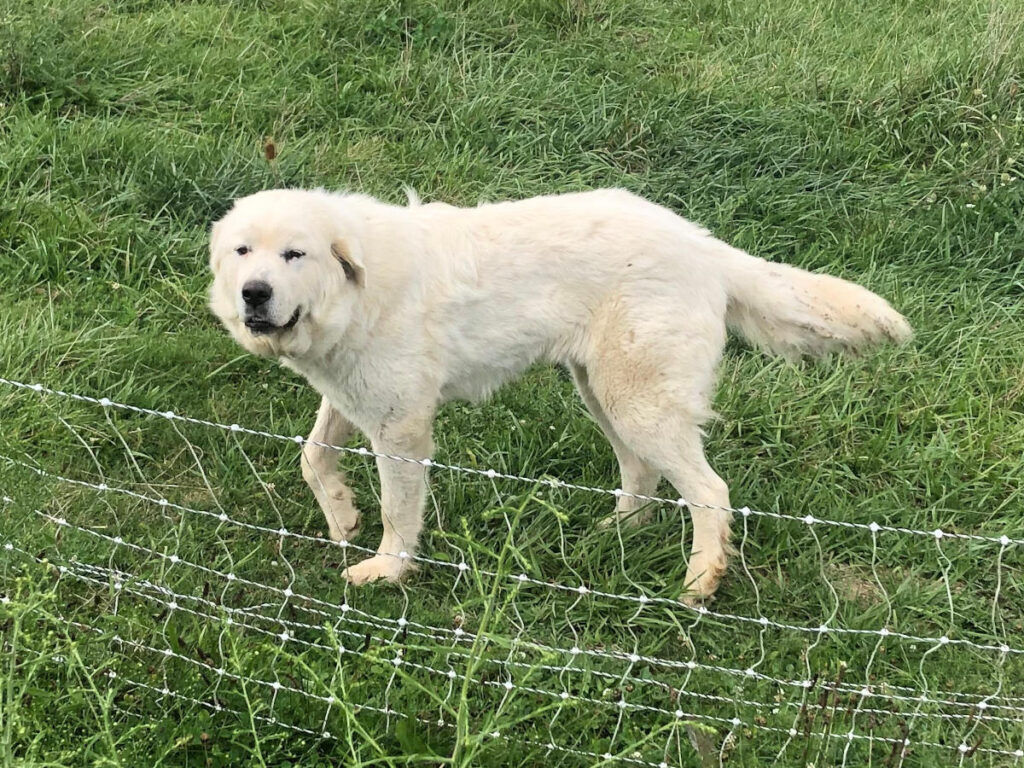
Tilly the Farm Dog
Meet our not-so-trusty farm hound, Tilly! She is beyond excited to be introduced. She’s fluffy, white, extremely friendly, and completely irresponsible.
What a great life for a dog! The free run of about ten acres, and a pond at her disposal. Sure, there’s a few flaws in the fence, but why in the world would she try to get out?
Consider the following scene.
Tilly, romping through the pasture: “Freedom is mine. I can do whatever I want.”
A disembodied voice is heard: “But remember, Tilly, with freedom comes responsibility”
Tilly: “Huh?”
The ensuing antics included (but were not limited to) chasing the refuse truck up the street and checking out our neighbor’s construction site. We had no choice but to confine Tilly to a much smaller section of our property that we could fence more securely.
Quality of life = lower. Reprehensible party: Tilly.
The Sort-of-Free-Range Chickens
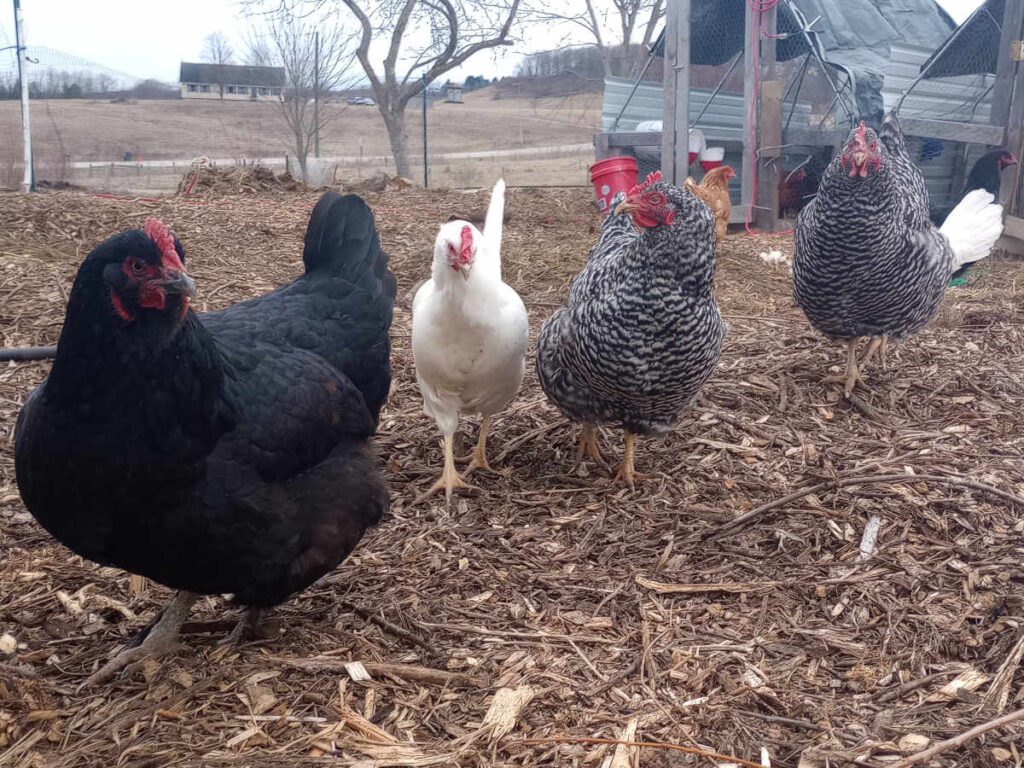
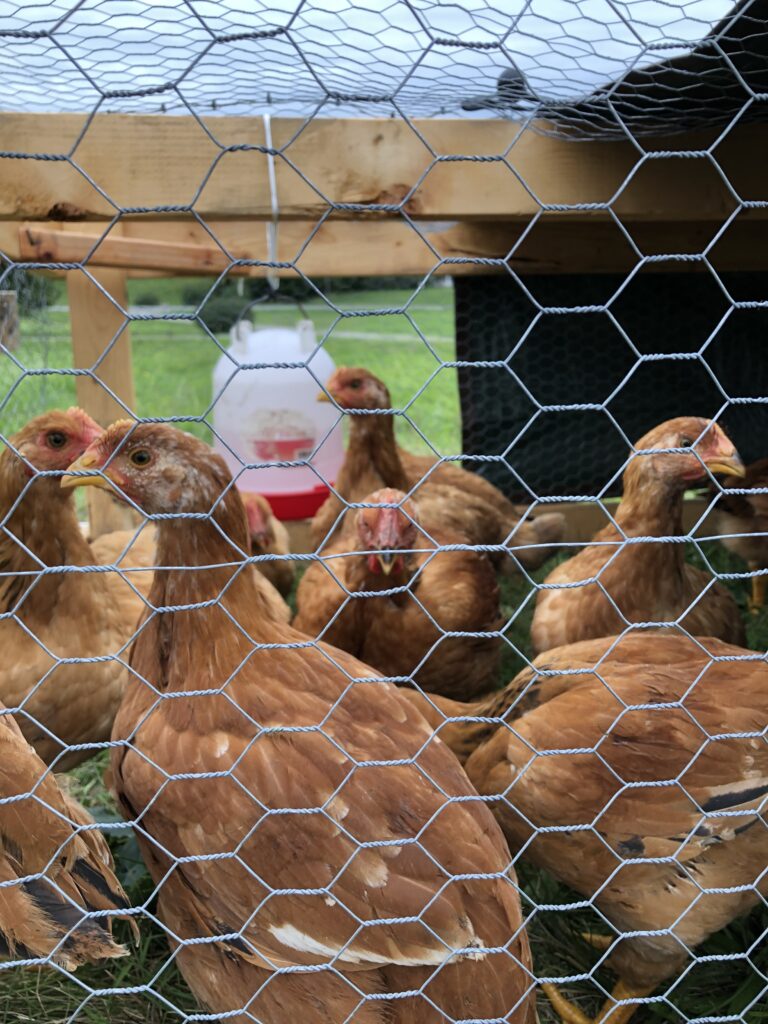
What could be a more quintessential farming scene? Happy free range chickens spread out through the pasture, snacking on bugs, and scratching in the dust.
We’ll illustrate the problem we ran into with a graphic:
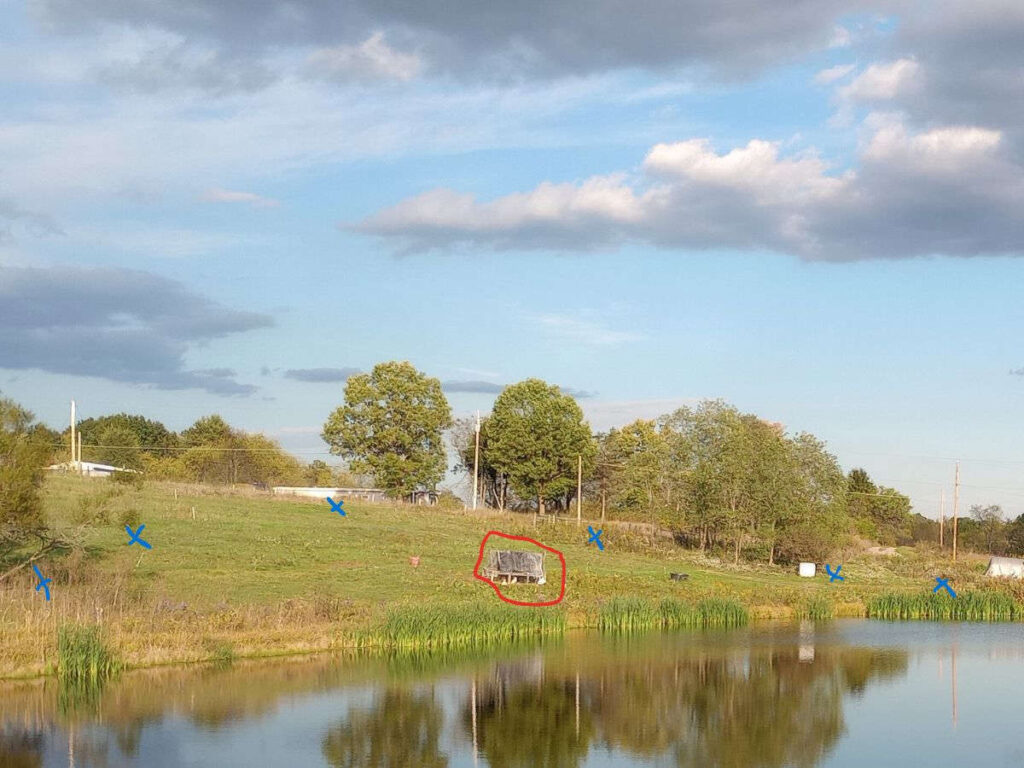
Blue x’s: Where we actually found eggs.
Free-ranging chickens and actually being able to benefit from them laying eggs have not turned out to be compatible concepts on our farm.
The solution? Confinement.
We do give our chickens free run of our pasture during the afternoons and evenings, but we keep them shut up in the mornings until egg-laying business is taken care of. In other words:
“You can stay in there until you’ve finished laying your eggs!”
They could have had it so much better. But really, animals won’t actually do what you want unless you force them.
The thing is, animals (apparently) don’t have the capacity to think along the lines of: “I could squeeze through this tiny hole here, but since it is abundantly clear that my owner doesn’t want me to, I won’t.”
“Cluck, cluck, this feels good” is about the extent of a chicken’s possible train of thought, and even that is overly generous to the intellectual capacity of chickens.
“And We like Sheep Have Gone Astray”
Perhaps the theologically inclined among our readers may have already realized that these stories reflect another story, but one about people. People who lived in a real, perfect paradise. Who could enjoy the delicious fruits of any number of wonderful trees. To them was forbidden the fruit of just one tree.
And what one thing did they do?
It’s not an uncommon objection that it was “unfair” for Adam and Eve, along with their descendants, to be banished from the garden for just one sin.
But one good thing about dealing with animals on a daily basis is that it can help to shed some small light on God’s dealings with men. In fact, metaphors where God is the farmer and people are the animals are some of scripture’s most famous.
Perhaps our struggles with controlling our animals can help us to see why human beings for their own good had to be removed from that wonderful paradise. They had to lose some of their freedom, because they could not be trusted to use it well. They were incapable of enjoying everything that their Maker wanted to give them.
On a more personal note, it’s sobering to consider how our own sins, large and small, interfere with our ability to live the fullness of God’s plan for us. They are about as unreasonable and pointless as a dog escaping from a perfectly good farm in order to run up and down the road barking.
It’s not them; it’s us
In the final analysis, of course, all our problems with our animals are really our own fault.
It’s our fault for having unrealistic expectations. For forgetting that they do not have the ability to choose between right and wrong. For being hoodwinked (albeit subconsciously) by Disney into imagining that animals have any trace of an ability to act reasonably.
The truth is that animals by nature are not capable of handling freedom with grace and dignity. They also don’t tend to listen to your explanations about how they should do better in future (unless your name happens to be St. Francis). You must physically restrain them, to a greater or lesser extent, to get them to do what you want them to do.
The art of farming has to do with restraining them not too much . . . but just enough.