

Winter 2025 Seasonal Update
Wondering how the Friendly Beasts have been faring this frigid winter?
Read on for our highlights of the season. We’re sharing one success (or prospective success) from the farm, the garden, and the kitchen.
On the Farm – Feeding Hay in a Frozen Field
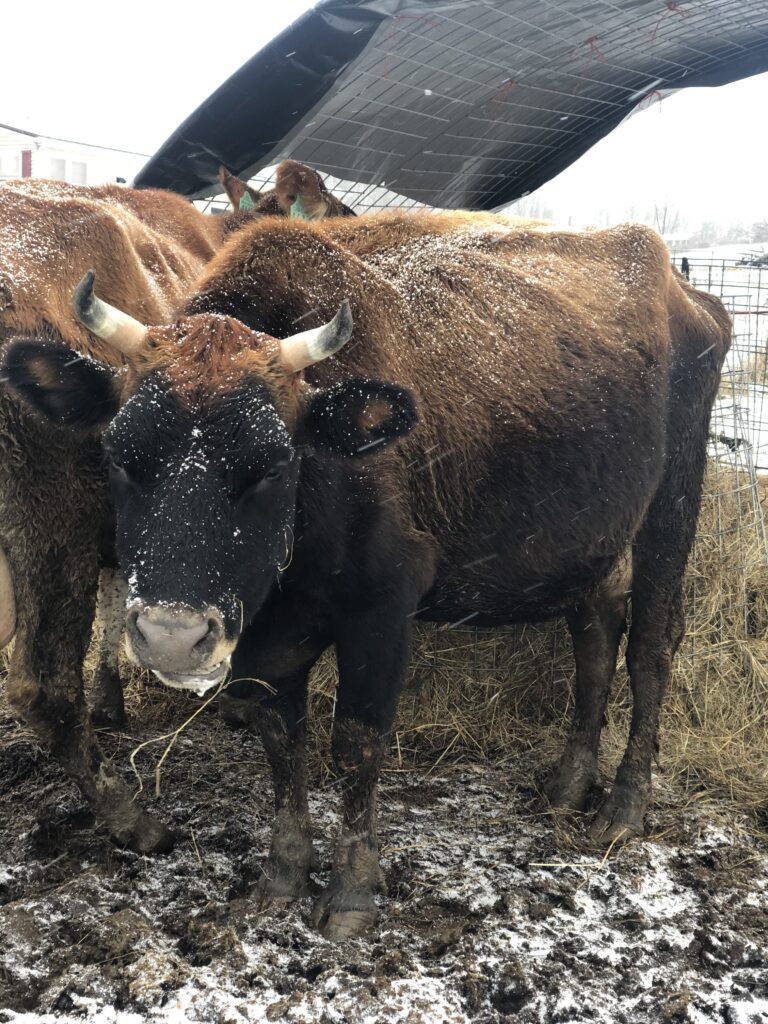
During spring, summer, and fall, we move our cows every day to fresh pasture. But in the winter, once the grass has stopped growing and they’ve eaten all that’s left, we feed them hay.
The phrase “feed them hay” may sound simple. But providing large quantities of hay to (even a few) large animals throughout the winter actually requires a pretty high level of strategic thinking. It may not quite be at chess-grandmaster-level, but it’s probably somewhere close.
You must keep your animals fed and happy, prevent them from wasting hay, and all the while protect your dormant pasture from turning into a mud bath as they tramp up and down. Add to these complexities the fact that a large round bale of hay weighs about 1000 pounds, and the act of positioning one perfectly is, in itself, a lesser known art form. You can begin to see why “feeding them hay” is still a challenge three years into farming.
If you spare a thought for the farmers in very cold weather, it may only be to pity them. But we’re here to tell you that freezing temperatures actually make our lives easier. A solid month of frigidity this winter has been nothing less than a gift. First and foremost, we’ve had grounds to compete for bragging rights over how cold we were while doing our morning chores. But it’s also meant that our ground is so hard that we aren’t afraid of ruining the pasture. The cows could do jumping jacks on it three times a day, and it would be just fine.
When the ground is more “mushy,” our strategy has to emphasize damage limitation, by keeping the cows and their hoofprints to a relatively small part of the farm. The cold has allowed us to feed hay by spreading it on the ground throughout our pasture. The cows can enjoy lots of space, they’re spreading their manure around, and any hay they leave behind adds organic matter to our soil.
Even with the ground frozen, there is still some strategy involved in the winter feeding of hay. We’ve learned that cows cannot be given free access to a big bale of hay. They are basically 800 pound two year olds. They don’t seem to have a problem with throwing their food all over the floor, going for a walk in it, and then taking a nap on it. It also doesn’t seem to have dawned on them that right on top of your day’s supply of food is not a great place to take a dump. Surprisingly enough, once they’ve done all these things, they no longer want to eat the hay. So we do have to be a bit strategic if we’re going to spread hay on the ground and leave our cows to eat it in a way that is anything close to efficient.
One great thing about cows is that despite their large size, they are one of the easiest species of animal to contain. One strand of electric fencing is usually enough to keep them in their place.
What’s been working well is putting a big round bale in the field, and running a strand of fencing around it (inserting moveable fence posts into solidly frozen ground makes this part of the process extra fun). Twice a day we pull large chunks of hay off the bale, and place it on the ground where the cows can reach it. We also run a single strand of electric fencing over the hay that’s on the ground. That way the cows can reach it to eat, but their impulses to sit on top of it or use it as a toilet are reigned in.
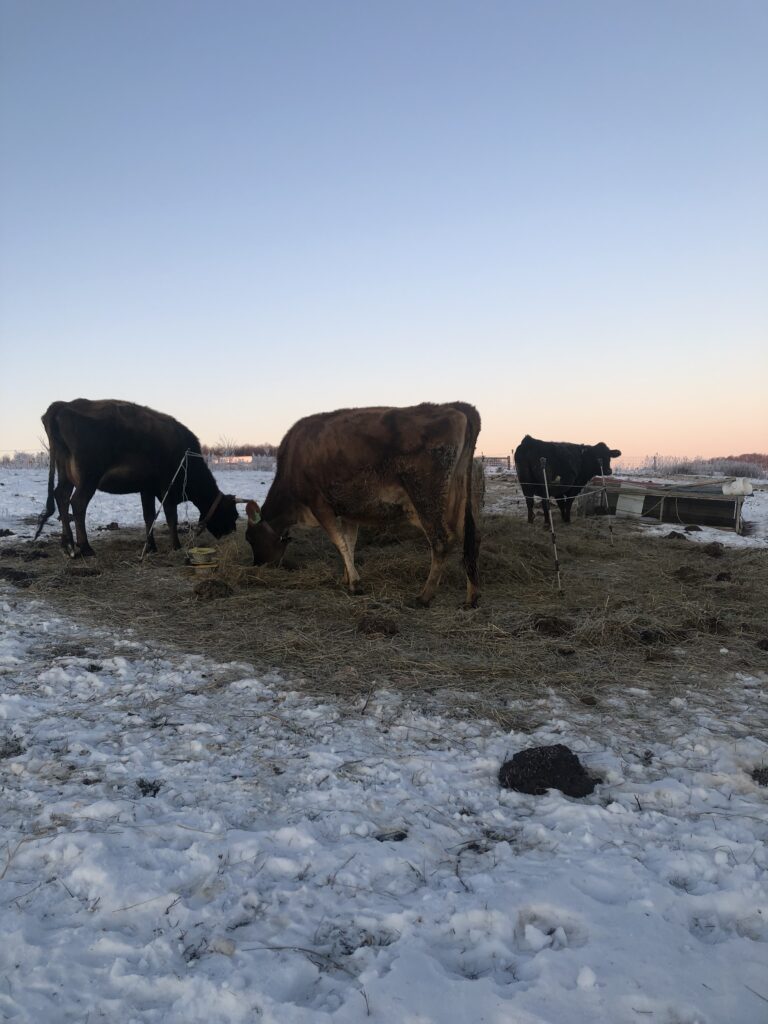
To summarize: organic matter for the pasture, lots of space for cows, little wasted hay, and cold weather bragging rights. It’s one animal management strategy that we’re loving this winter.
In the Garden – Winter Sowing
We preface any and all gardening information shared on this blog with the disclaimer that our gardening “philosophy” tends to heavily favor, well, abandonment. Our ideal method is to stick seeds in the ground and come back later to collect our harvest. We prefer plants and systems that align as closely as possible to this ideal.
If a plant requires the gardener to spin around three times under a full moon before watering it with sweat… it might not make it here.
That’s not to say we haven’t tried complex methods and ambitious plants. But I think those pepper plants might have died because somebody breathed on them wrong while watering them. And when you’ve been watering a plant with your sweat, it’s frustrating when it dies anyway.
So what could be going on in a minimalistic gardener’s garden in the dead of winter? Surely we’re not trying to start our own plants from seed?
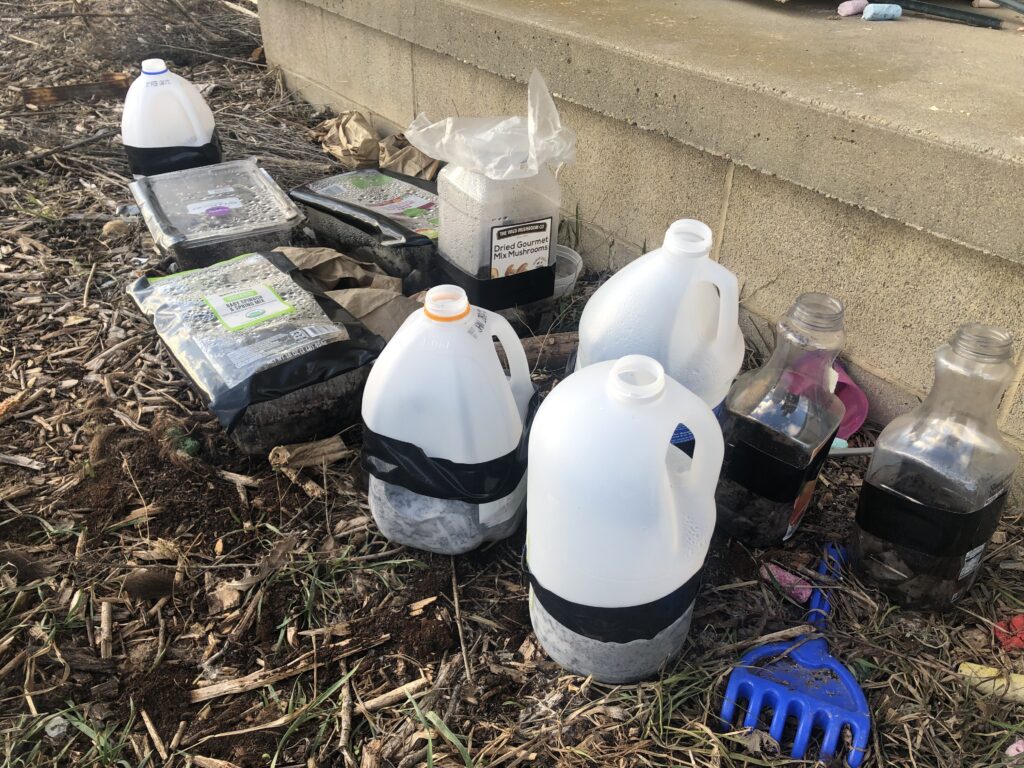
Well, poring over delicate babies in indoor seed trays is a bit much when you have a thousand other things going on. But fill some used plastic containers with soil and seeds and heave them out into the elements for a few months? We can do that! It’s called “winter sowing.”
A little back story.
Our seed starting efforts have not always been uniformly successful. In fact, last time we tried to start seeds, we were uniformly unsuccessful. That’s right, every single seedling we tried to start indoors in 2023 fell prey to some kind of fungus and died. No exceptions.
In 2024 we did not attempt to start any seedlings inside. This was partly because we had a new baby and partly because we had a despairing sense that no seed we ever started would culminate in a living plant ever again.
But hope springs eternal, so here we are in 2025, trying again.
But with a difference!
The winter sowing method involves starting your seedlings outside, during the winter and spring months, in empty plastic containers such as gallon jugs.
The idea is that being exposed to cold temperatures and a cycle of freezing and thawing will not harm the seeds, but will make them strong and hardy. As the weather warms, the seeds sprout when the conditions are right for them. Then, the plastic containers will work as mini greenhouses, protecting baby plants from cold, wind, and unruly livestock, until the gardeners are ready to set them out in the garden.
Since the seeds are out in the sunshine, they should not be subject to the kind of fungus that wiped all of our plants out two years ago. Another great thing about this method is that you can just plant seeds as you have time throughout the winter and leave them outside to sprout at the perfect time. It’s easier than trying to do it all in one mad rush.
If you, too, would like to try out a method that may or may not spell the end of all your seed starting woes, you can find more detailed instructions on the Winter Sowers Facebook Page, here.
We’ll be updating with a post later in the year to let you know how it’s worked for us.
We have discovered one drawback to this method so far.
When you get your milk from your cow, you don’t have a plentiful supply of plastic gallon jugs. So yes, we were the crazy people at the coffee and donut hour, swooping in to seize each orange juice and milk container as it was emptied.
One man’s trash is another man’s treasure.
In the Farm Kitchen – Raw Milk Pumpkin Smoothies
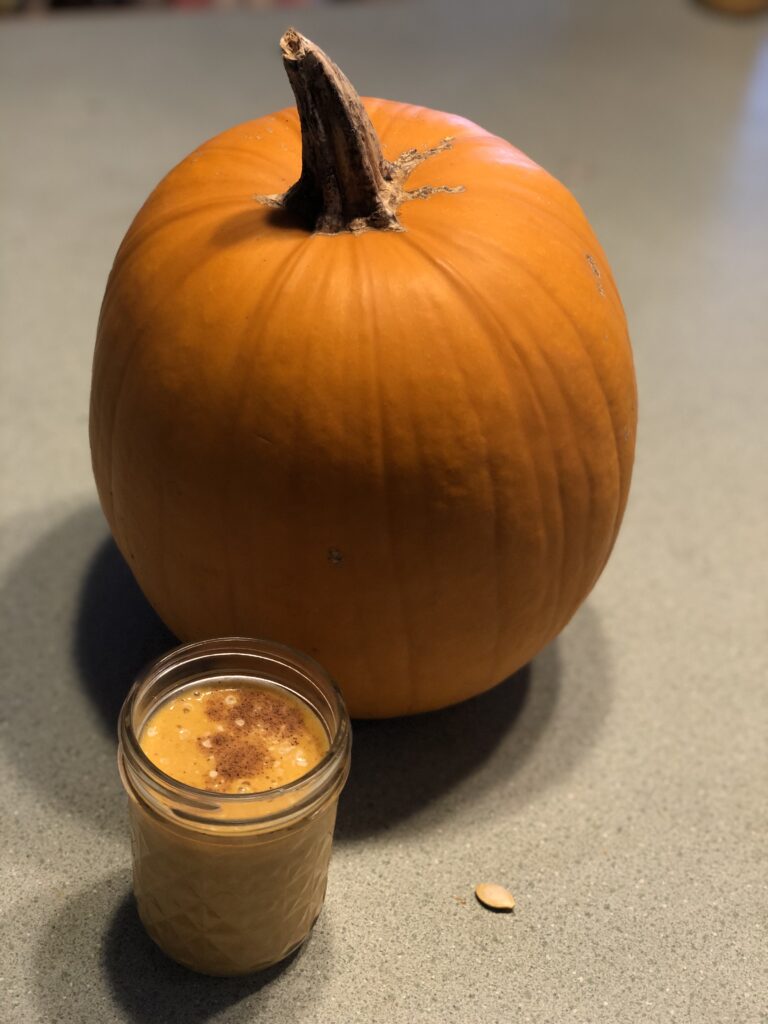
What do you do with lots of pumpkins and milk?
Blend it all up into a delicious pumpkin smoothie!
Our gardening advice may be unproven, but our recipes are tried, tested, and enjoyed by our family.
If you’re thinking the ideas of “pumpkin” and “smoothie” do not seem like a likely match, we’d be with you. But if you like pumpkin muffin batter, you’ll like pumpkin smoothies too. Surprisingly delicious, this creamy concoction is a great use of our raw milk and our pumpkins, both of which are in plentiful supply this winter.
As a side note, we’ll point out that pumpkins, and winter squash in general, are a fantastic fit for our stick-a-seed-in-the-ground-and-walk-away gardening methods (see above). Not only this, but they also store well via the throw-it-in-a-box-in-the-basement-and-forget-about-it method. Thanks to this high-tech procedure, we’ve actually had spaghetti squash make it all the way through until the following spring.
And who doesn’t want to be eating spaghetti squash for months on end??
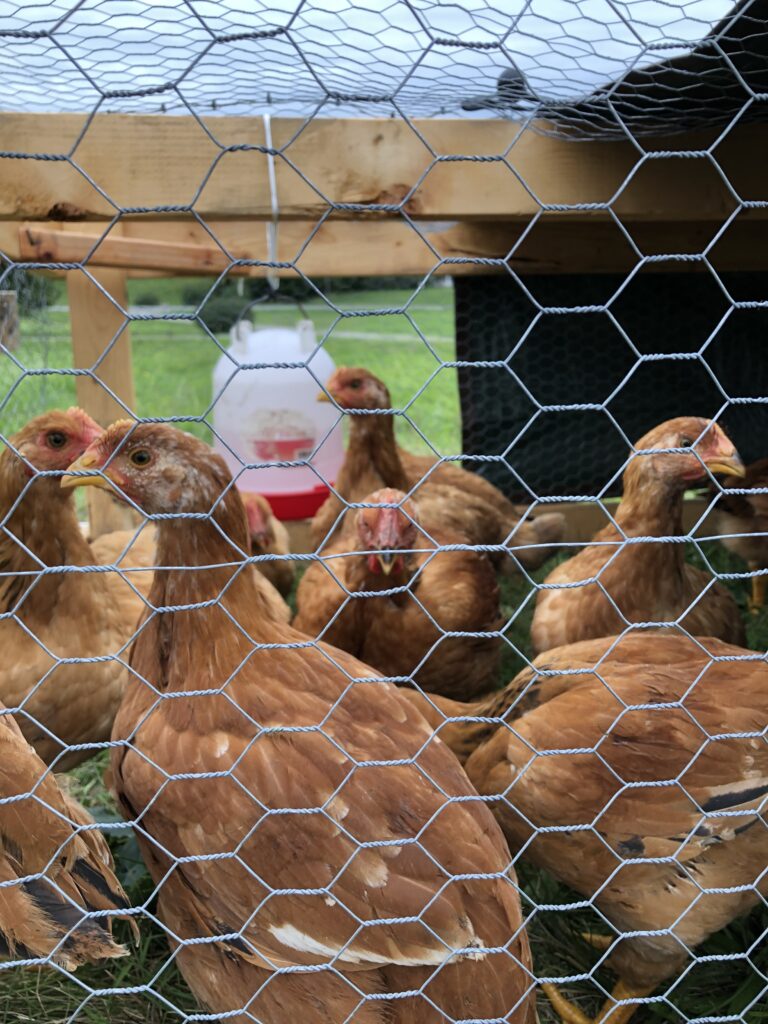
Anyway, it’s highly satisfying to have the whole family enjoying a dish that is about ninety percent home-produced, so we’ve been enjoying lots of pumpkin smoothies this winter. Not to mention it’s one of the yummiest ways we can think of to start your day with a vegetable. The only thing that could make it better is a few egg yolks, but our chickens have been slacking so we’ve had to do without.
You can find our full pumpkin smoothie recipe here.
And when you work this hard on raising your own food, you have to keep score so:
Home
Pumpkin – 1.5 cup
Milk – 4 cups
Total: 5.5 cups
Away
Maple syrup – 1/4 cup
Coconut oil – 1/4 cup
Vanilla and spices – 1 TBS
Dates: 4
Total: 1/2 cup and change
It’s a win for the home team




This is such fantastic post! It’s like we’re right there! Great points here and you make it sound like this is within reach and that’s inspiring!