What Should You Do if You See a Leg Sticking Out of Your Heavily Pregnant Cow?
Funny you should ask.
We found ourselves asking the very same question earlier this week, and in a slightly flustered tone.
But fear not, gentle reader, for at risk of ruining your excitement, we’ll tell you ahead of time that this is a bovine birth story with a happy ending.
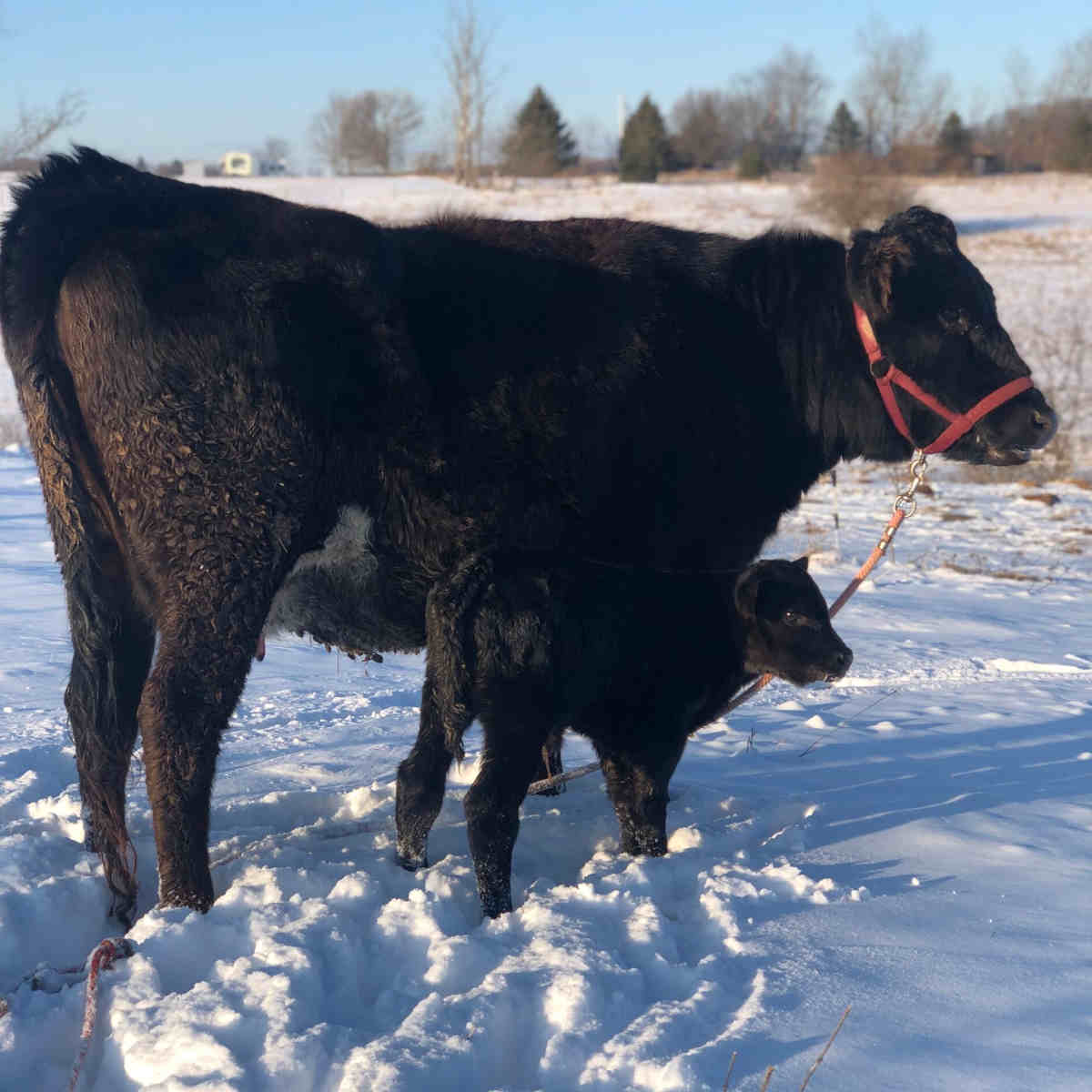
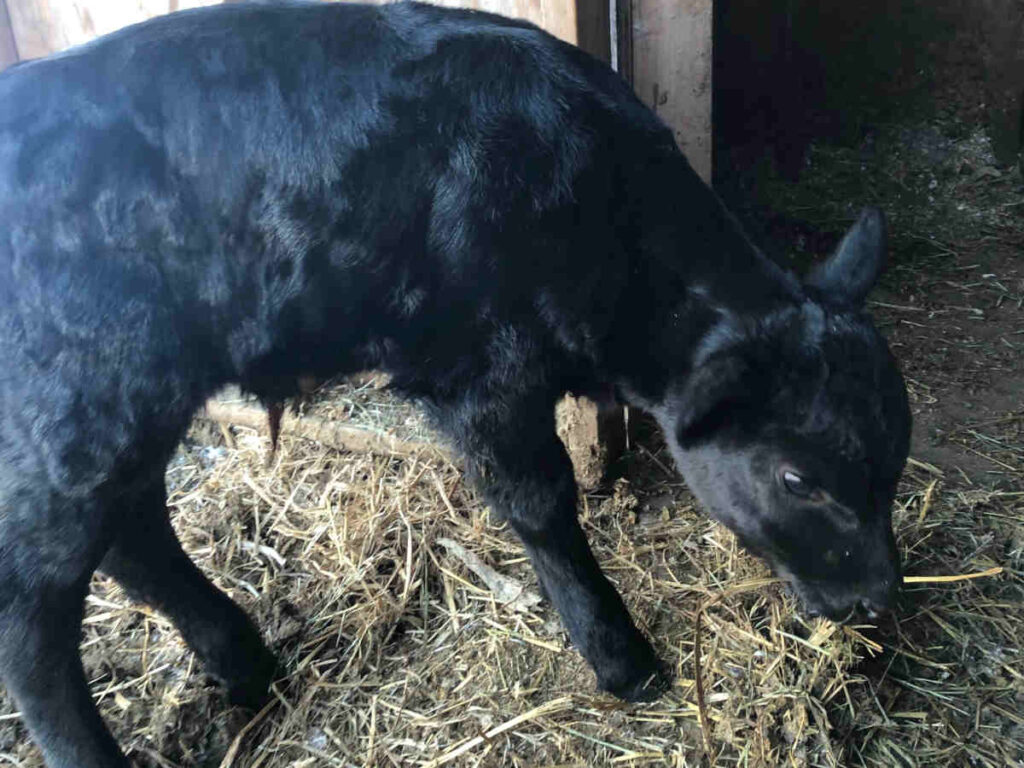
Here we are to announce the safe arrival of Martha, our brand new Angus-Dexter-Jersey-Friesian (mutt) calf!
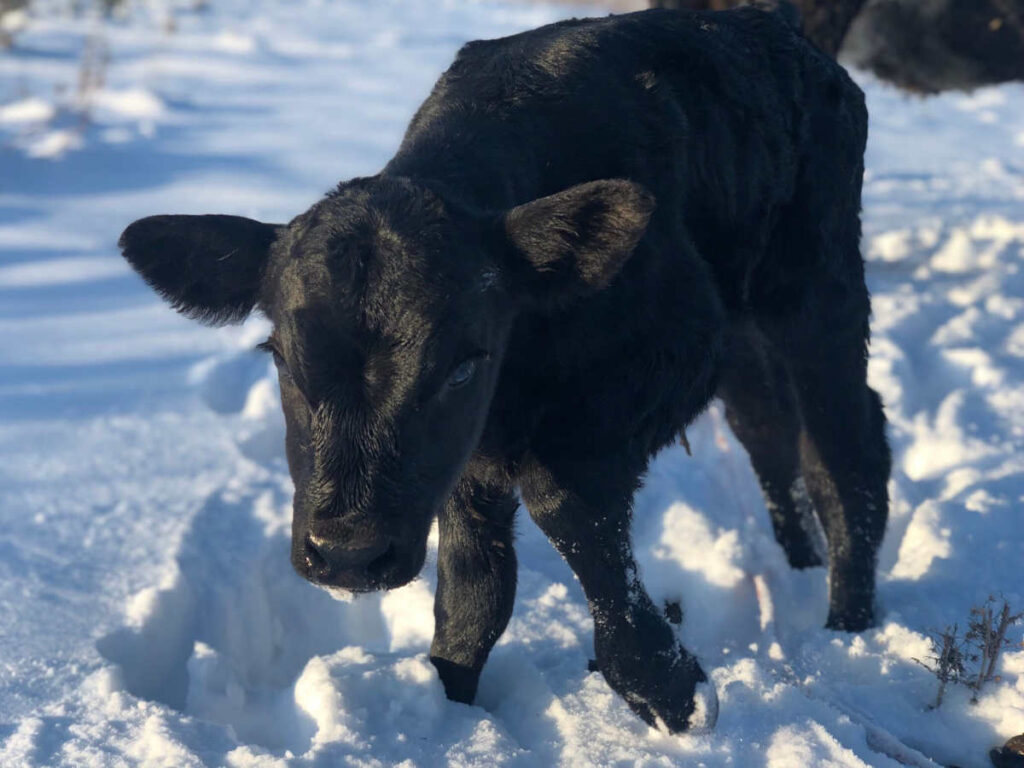
The birth of Martha marks an important milestone. Almost three years ago, Martha’s mother, Mercy, was the first calf born on our farm. With the arrival of Martha, she also gets the title of the first dairy cow that we have raised ourselves.
Other “firsts” include: our first time milking a cow1 who had never been milked before. And our first time getting to watch an animal birth.
A Bovine Birth Story
In about 3.5 years of farming, we have never actually come upon an animal in the act of giving birth (until now). In most cases, we’ve walked out in the morning just in time to find the baby sitting on the ground while the new mother makes a tasty snack of the placenta.
So when Frances looked out the window and saw Mercy lying on her side with “something” sticking out her rear end, she hurried out to make a closer inspection.
The “something” turned out to be a bubble of embryonic sack with a clearly distinguishable foot inside it.
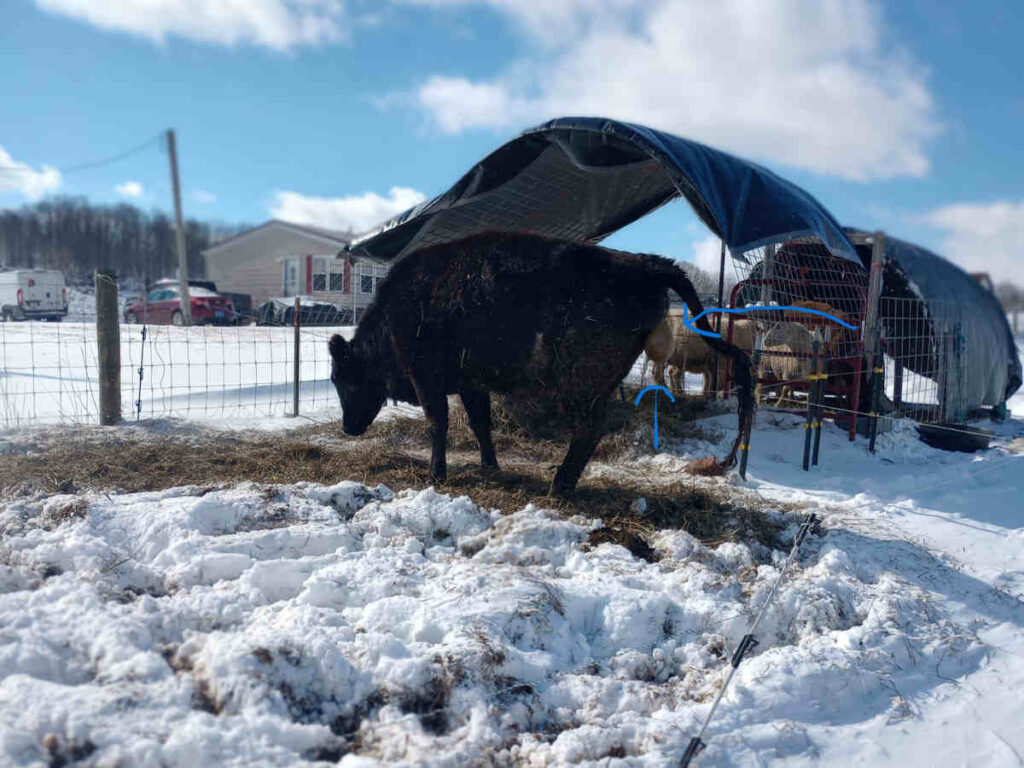
Reader, what would you do, if you saw a leg sticking out of the back end of your due-any-day cow?
Frances’s first instinct was to jump to the conclusion that if she was actually seeing the labor, something must be going wrong…
“Ahhh it’s a foot!” “Where is the rest of the calf?” “Is the foot even supposed to come out first?” “There’s no way a whole calf can come out of that rather small opening.” “We should never have bred this delicate creature to an Angus bull; The calf is probably unnaturally gigantic and stuck fast inside her.”
She stood agape as these thoughts and others filled her mind.
Well, Mercy made it clear that the presence of a somewhat stressed out human spectator was quite unwelcome. Frances therefore applied the following useful life principle:
“The wishes of a female in labor should never, ever, ever, in any circumstances, be trifled with.”
She took her preconceived notions about birth being complicated with her, and retreated to the house.
There we googled “cow in labor with one leg sticking out,” peered anxiously out of the window, and contemplated which nearby vet we should call when it inevitably turned out that the calf was stuck fast.
We also considered what we might do ourselves, if fate thrust us all unwilling into the role of “Cow Midwives” (Matthew said something about getting ready to pull out the four-wheeler and a sturdy rope . . . oh, ah, he actually meant essential oil diffuser and warm compress).
We should have had more faith in Mother Nature, not to mention Mama Mercy!
In less than 30 minutes, the amazing, improbable, but actually perfectly natural thing happened.
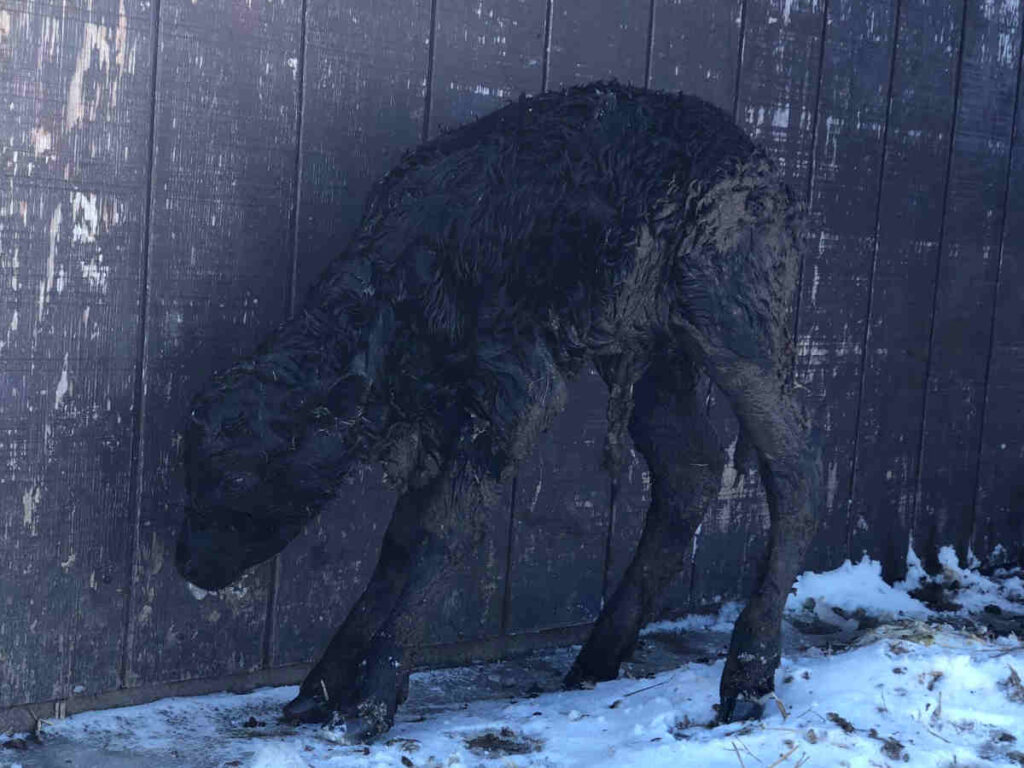
Mercy, in a rhythmic process that would have impressed doulas, midwives, and natural birth advocates everywhere, had been alternating between standing up and moving around, and lying on her side clearly pushing. She stood up one last time, and there on the ground where she had been lying, was a perfectly healthy calf.
Not even any loud mooing involved.
It was absolutely amazing.
And in a poetic coincidence that we did not plan, the birth actually took place within fifty feet of where we first found Mercy herself, one spring morning during our first year on the farm.
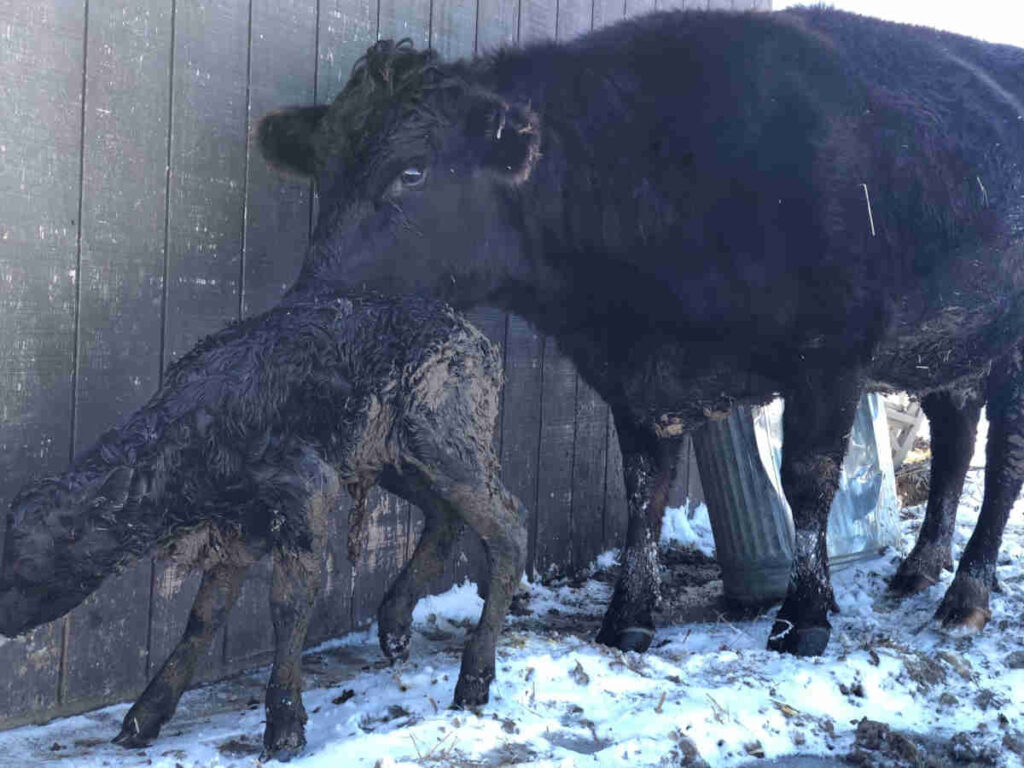
So to answer the question at the top of this post: what should you do if you see a leg sticking out of your heavily pregnant cow?
Probably nothing. At least not for quite a while.
The Taming of Mercy
Cows and women differ in important ways, but they also have much in common. One of these similarities is that, just like humans, cows begin to produce milk after giving birth to a new baby.
So for the dairy farmer, there are two aspects to a bovine birth. One is the safe arrival of the calf, and the second is a smooth beginning to the task of milking the new mother.
Is anyone still considering that comment about it being our first time milking a cow who had never been milked before? Wondering how that might go? We did too, for quite a few years actually.
You see, while we did make an effort to befriend Mercy as a calf, our relationship with her was unavoidably “strained” due to the fact that we were competing with her for access to her mother’s milk. She steadily grew bigger, beefier, and more suspicious of her human overlords.
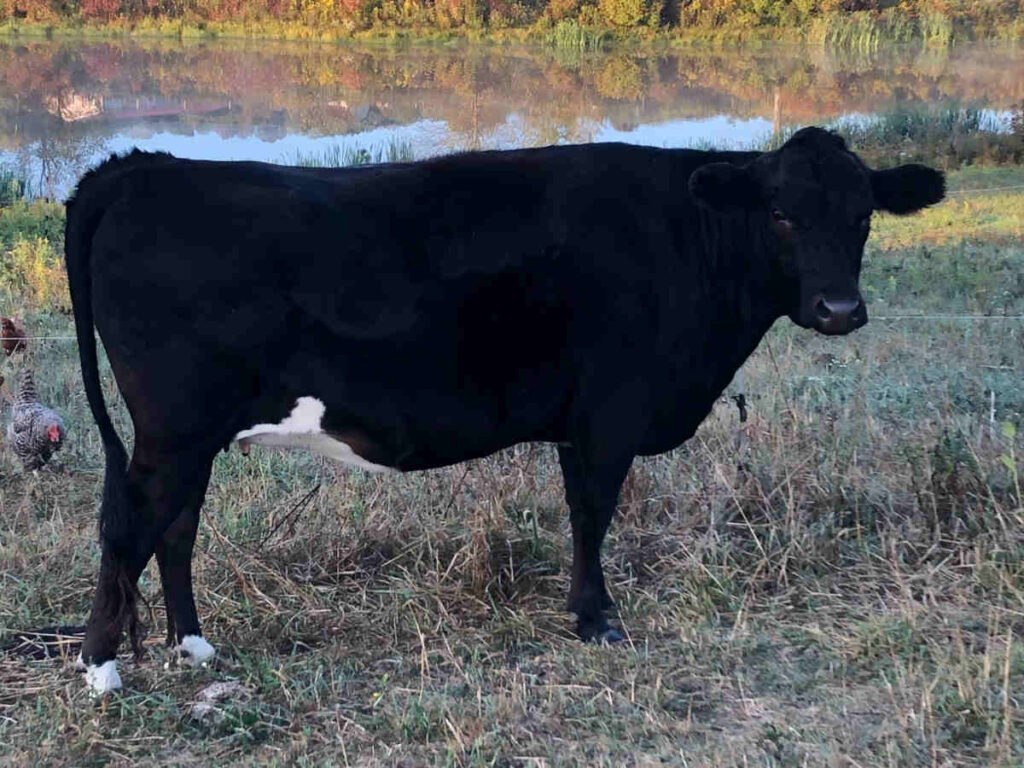
As we chased her around our farm, we frequently questioned how we might one day pull up a chair and milk this “wild animal” without getting our brains kicked out.
This situation was further complicated by the fact that Martha made her appearance a solid nine days before her due date. We had been counting on quite a bit more time to “practice” convincing Mercy to come into the milk shed. Another part of the game plan which we had not had a chance for had been to get her accessorized with a halter and a long rope.
When we first started farming, the task of getting a halterless and rather jumpy animal to comply with our wishes would probably have taken. . . just about all day long.
We would probably have experienced the heights of frustration and the depths of despair, as well as questioning if farming was really something we wanted to do with our lives anyway.
So when, the morning after Martha’s birth, we were faced with the necessity of getting Mercy in for milking, we did not approach without trepidation.
We’ll say in that in farming, things often take about five times as long as we think they will. But with this particularly task, we were in for a pleasant surprise. Mercy may never have been milked herself, but her mothers and grandmothers had for many generations back. And maybe the fact that we are finally getting a bit better at handling animals had something to do with it too.
The fact is, we were able to get a rope around Mercy and firmly lead (drag) her into the headlock without undue frustration on the part of any party involved. Once we had her restrained, she shocked us by behaving perfectly calmly, and standing completely still while Frances milked her.
This was the very same animal who had once led us a merry chase up and down our street, and generally managed to make a habit of running in the opposite direction to wherever we were trying to send her during various cow herding operations.
It was as if she knew that she was born to be milked. The instincts of a domesticated animal are simply amazing.
(We will admit out that she is not perfect. Four milkings in, and getting her into the barn is still very much a two person job, with Matthew pulling hard on the rope and Frances “encouraging” from behind. But what’s a little tough love between two farmers and their cow?)
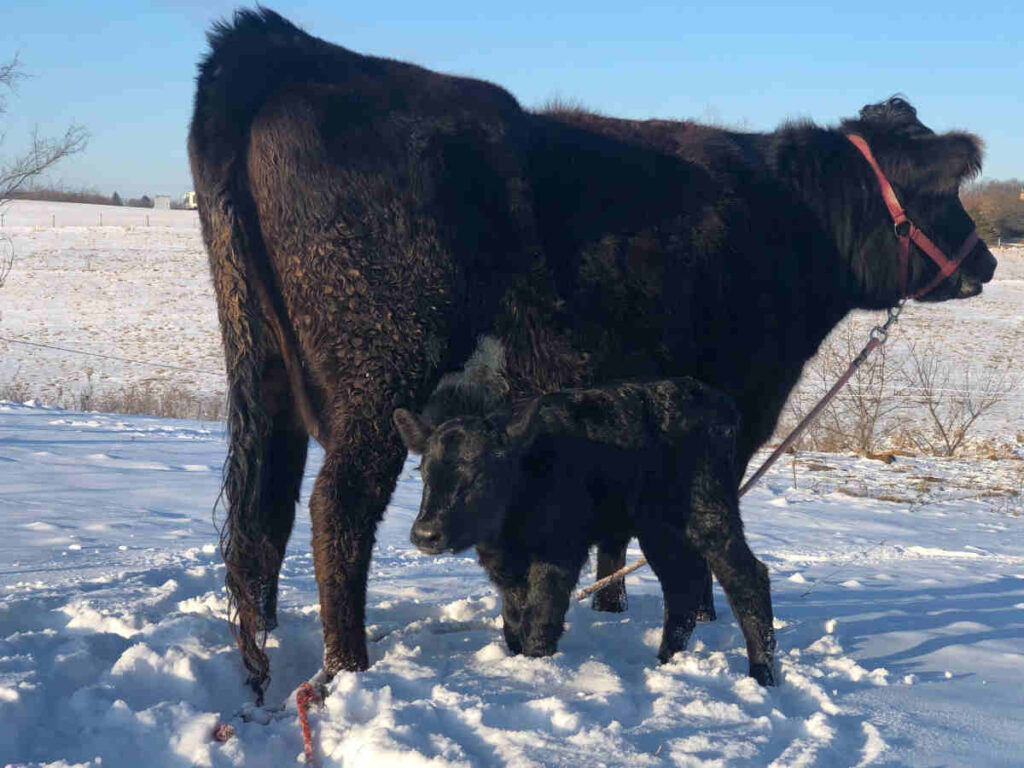
The Naming of Martha
The fun part of any new animal birth is the naming. We tend to put slightly more effort into choosing names for our cows than other animals, and won’t necessarily choose the first ridiculous sounding name that pops into our heads (cough, cough, JimBob, cough, cough).
The addition of this particular calf presented a slight naming dilemma. Because she’s half Angus, she isn’t destined for the dairy herd, so a classic cow name like “Blossom” doesn’t fit. But the names of various cuts of meat just seem . . . masculine. After trying unsuccessfully to come up with a feminine version of “burger,” we found ourselves a bit at a loss.
Inspiration struck when we realized she had been born on President’s Day. From this realization it took only a small mental leap to land on “Martha,” the name of George Washington’s wife.
Welcome to Friendly Beasts Farm, Martha!
- Technically speaking, the correct term for Mercy is “first calf heifer.” Female bovines do not officially graduate to the status of “cow” until they give birth for the second time. But for the purposes of simplicity, we will refer to her as a cow throughout this post. ↩︎