
Six Lessons Learned from Our First Milk Cow
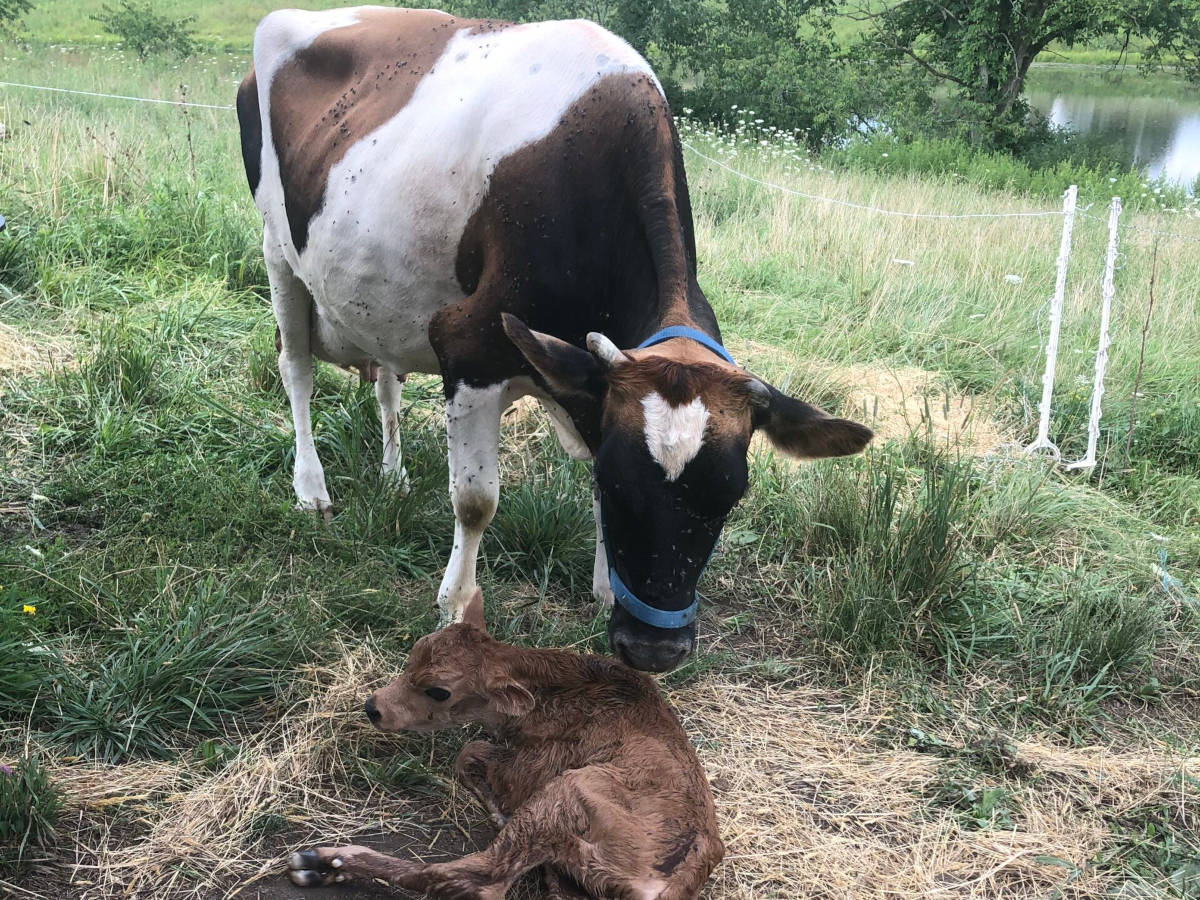
Today we’re taking a trip back in OUR homestead history to make an important introduction. Reader, we’d like to you to meet Gemma. She’s ¾ Jersey, ¼ Friesian, and has her own strongly held opinions on what she wants to do (which are unlikely to coincide with yours).
Of course, there are stubborn cows spread all over the country. What makes this particular bovine noteworthy is that fate handed her the highly dubious honor of being our very first milk cow.
Being the first milk cow of two newbies is certainly not the dreamy fate that momma cows probably tell their babies they can expect one day if they are good.
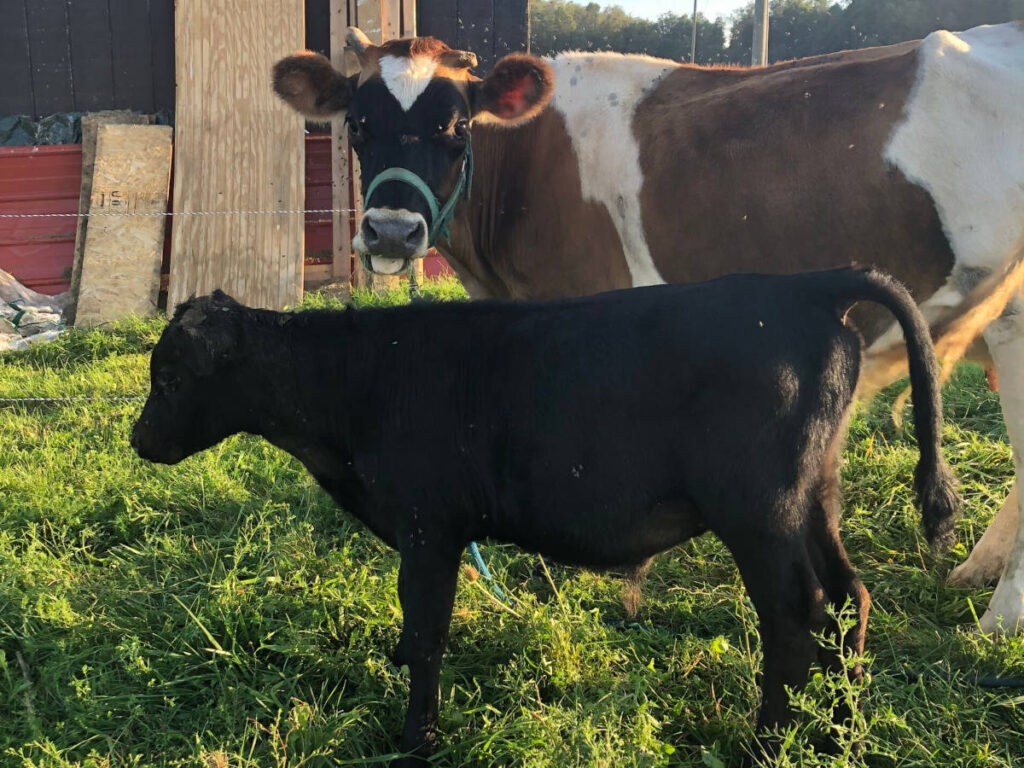
Between our own inexperience and her intractability, we certainly had our struggles with Gemma. But today we’re looking on the bright side, and considering her sojourn here in terms of everything we learned while she was with us.
So for your information (and entertainment), here are six lessons learned at the hands (or rather hooves) of this rather obstinate creature.
1. Cows are Big
No surprises here, you may be thinking!
But really.
You’ve seen lots of cows before. Maybe you’ve even come up close to one.
We guarantee no one really knows exactly how big cows are until they have tried to convince (a slightly obstinate) one to step kindly into the milk shed and allow them to lock her head into position for milking.
It goes a it like this:
Milking time! We’re so excited!
Huh, she doesn’t want to come into the shed. Let’s make her.
Oh wait. She weighs about 800 pounds.
Maybe if we both pull really hard on her halter she’ll walk this way? Ok you push from behind and I’ll pull. Alright that’s not working either… hmmm.
Not to sound totally naïve but our efforts were certainly hampered by a lack of cow-handling confidence. We had to contend with the real fear that she would suddenly turn psychotic and break every bone in our bodies with one swipe of her massive head.
The first lesson that Gemma contributed to our farming formation was that she was bigger than we were, and we couldn’t force her to do anything she didn’t want to.
Our education in bovine negotiations included an introduction to the properly forceful use of the halter, stick, and electric prod. We also learned more diplomatic methods, such as the strategic use of treats, and even finding ways to remind her who controlled her supply of food and water.
2. A Herd of Cows is Easier to Handle than Just One.
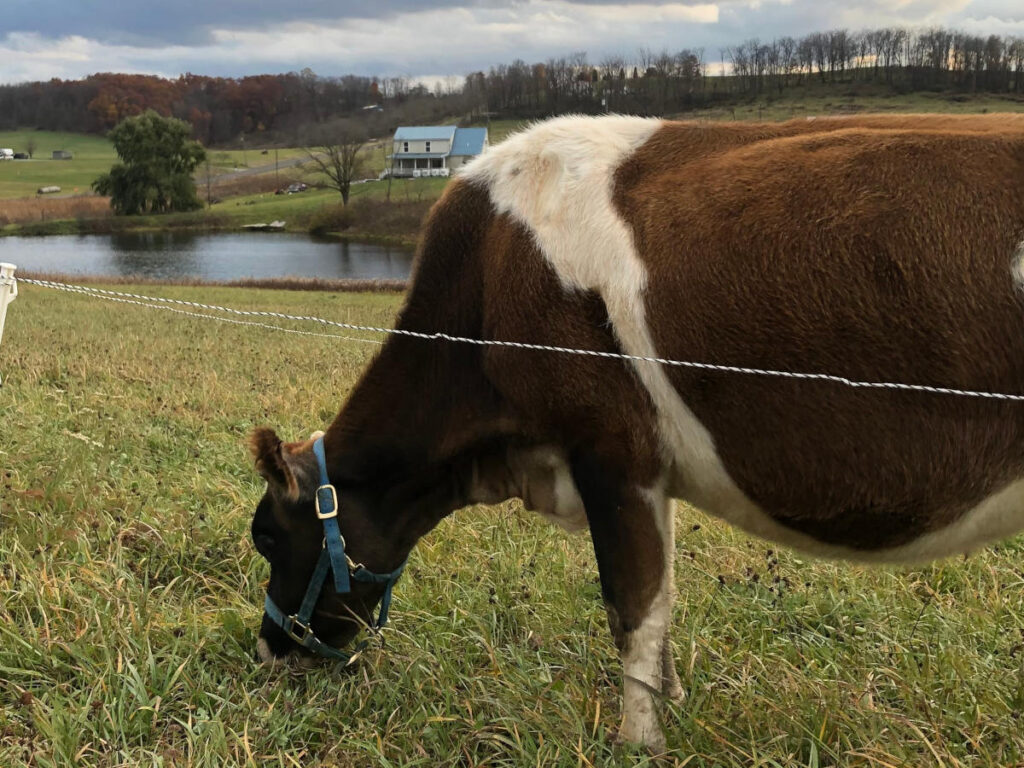
Poor Gemma had to learn everything all by herself and all without a strong bovine role model to look up to. As we’ve slowly grown our herd, we’ve learned that cows who can live with other cows (even just one or two) and watch them at work are much more likely to be cooperative.
Case in point: Gemma learned how to walk over the bridge on our farm by . . . spending an entire morning on one side of it and contemplating the sight of her food and drink on the other. We eventually added some more forceful persuasion with some steady tugging from our four-wheeler.
Our second cow, Clover, learned to cross the bridge in about five seconds by watching Gemma walk over it.
Of course, an important variable by this point was that we were (a lot) less inept in our cow handling. But we still think that even a very small herd (two or three cows) is easier to work with than a solo cow or cow/calf pair.
3. Having Your Own Supply of Milk is Dangerously Addictive
While we spent a ridiculous amount of time trying to get Gemma to do what we wanted, we couldn’t complain about the flavor of her milk. We certainly thought it was the most delicious we’d ever tasted. And even though she wasn’t the world’s most productive cow, she still gave us a greater supply than we’d ever have thought to buy.
So much did we enjoy the milk, that when we had to “dry Gemma off” before calving, and faced the prospect of two months without a milk supply, we couldn’t handle it!
“Can’t you just buy milk for two months?” You ask.
Well, we could. But why buy milk when you can buy a second cow?
4. Don’t Buy a Three-Quartered Cow
Three quarters of a cow?? Where can you buy that?
In case you are envisioning headless cows roaming our pasture, we’ll hasten to enlighten you. Gemma came to us in possession of all essential body parts. A three quartered cow means a cow with one non-functioning teat. Gemma, instead of having four working teats like most cows, only produced milk out of three of her teats.
Now, a malfunctioning teat is often a red flag to a prospective cow owner, as it may indicate that the cow has a history of issues with mastitis, or udder infections. In Gemma’s case, however, the loss of her teat was not due to a history of infection, but to a physical injury sometime in her youth. When combined with a discounted price, her three-quarteredness did not seem to be an instant deal-breaker.
What we did not consider (but should have) is that clumsiness with one’s teats is (apparently) just as likely to be a recurring issue as infections of the teats. We discovered this fact the hard way when Gemma, about two years after we bought her, stepped on her own teat so hard that she actually severed the tip of it.
WHO EVEN DOES THAT??
Of course she didn’t pick the teat that was already not working to be at the receiving end of this act of exceptional clumsiness.
A second consideration against buying a three-quartered cow is that you put yourself in a “one strike and you’re out” type of situation. Bad things can happen to cows’ teats. This is a fact of farming. However, a three-quartered cow might have a future on your farm, while a two-quartered (one-halved?) cow really is not worth keeping around. If something bad happens to your four-quartered cow and she loses a teat, you could still keep her and find it worth your while to milk her.
When Gemma lost a second quarter, she was no longer a good prospect as a milk cow.
While we had congratulated ourselves at the time on getting a small discount on our first milk cow . . . we would not consider buying a three-quartered cow again.
5. Cows Pick Favorites and Can Predict the Future!
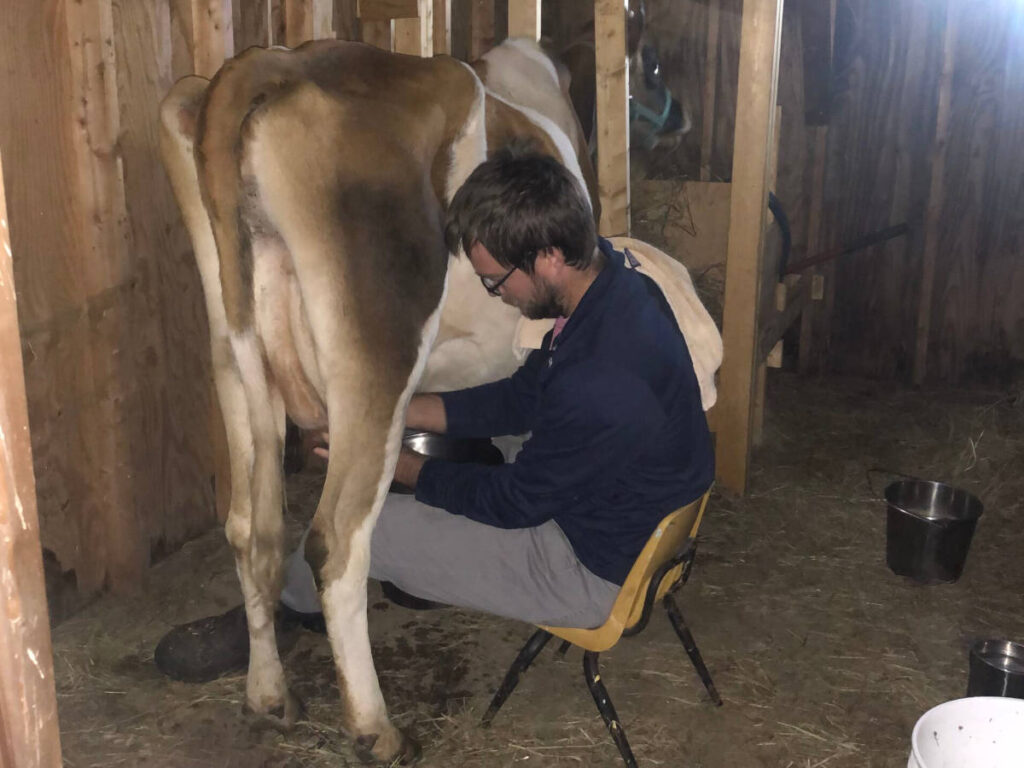
Who would have thought that a cow would care in the least which human being happened to be squeezing her teats every day? We wouldn’t really have expected her to notice the difference.
But we’ve heard the same from other friends with farms. Cows do seem to pick favorite people (often with a sexist leaning towards women over men). In our case, Gemma showed her preference for Frances by giving slightly more milk and cream on the days that Frances milked her. She made things fair by giving Matthew a bit more attitude.
Her instincts in this case turned out to be one hundred percent accurate. For Matthew would be the one, about three years after their first meeting, to shoot her squarely between the eyes.
“Et tu, Brute?”
Well, she didn’t say that because she never trusted him from the beginning.
Also because she met her end much more abruptly than Julius Caesar and never knew what hit her.
6. Retired Dairy Cows DO Make Delicious Beef
There is a myth in circulation that the meat of a retired dairy cow will be tough and good for nothing but hamburger.
We are now in a position to correct this misconception from firsthand experience. It is NOT TRUE!
To avoid toughness, we let the meat hang (in a friend’s large walk-in cooler) for about two weeks before we cut it into smaller pieces up and froze it.
The results have been some of the most delicious, tender, and flavorful been we’ve ever tasted. Some ground beef, of course, but also lots of steaks and roasts. To be completely transparent, we will admit to the occasional “strongly flavored” mouthful. But we’re sure that has more to do with the novice status of the butchers than anything inherently wrong with Gemma’s meat.
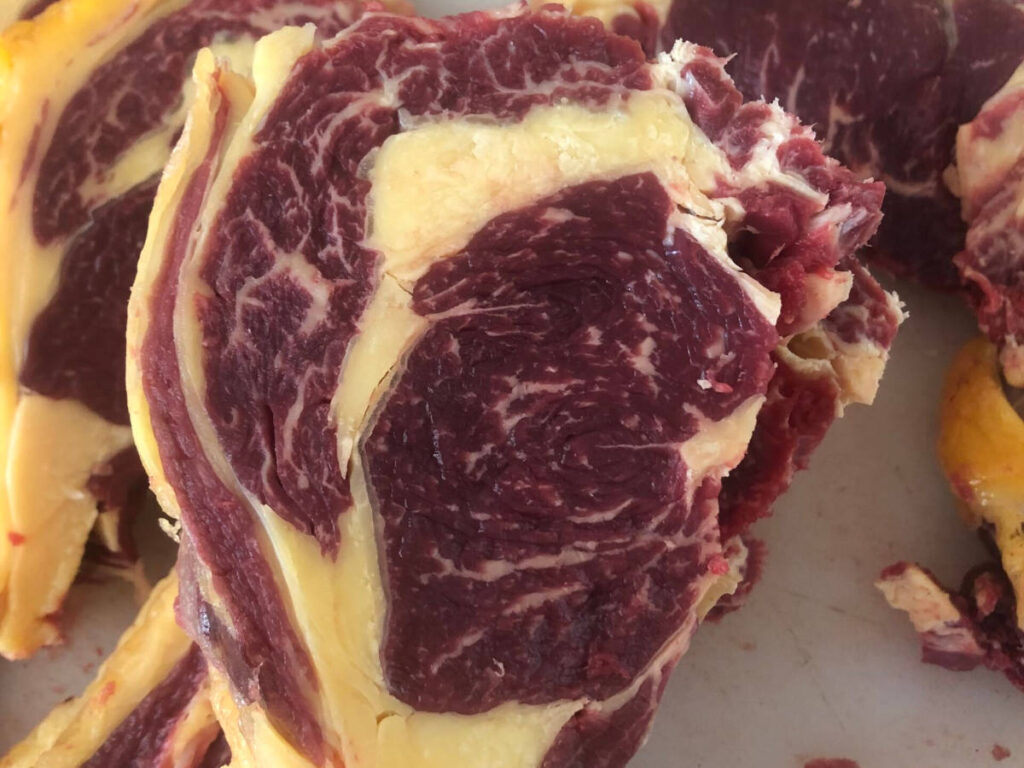
Six lessons learned, and a tasty ending to boot! Gemma may not have lasted as long as we hoped in the dairy herd, but we still consider our first dairy cow a great investment.

Poor Gemma! I would make a terrible homesteader. But you two definitely have the right attitude and temperament. Love hearing about your learning experiences!.
The milk, the steaks!! I am dying over these!! I bet they taste incredible!! Wow!! Excellent job with the homesteading – so inspiring! Love reading your posts too – I feel like I’m right there! Matt looks right at home! 🙂