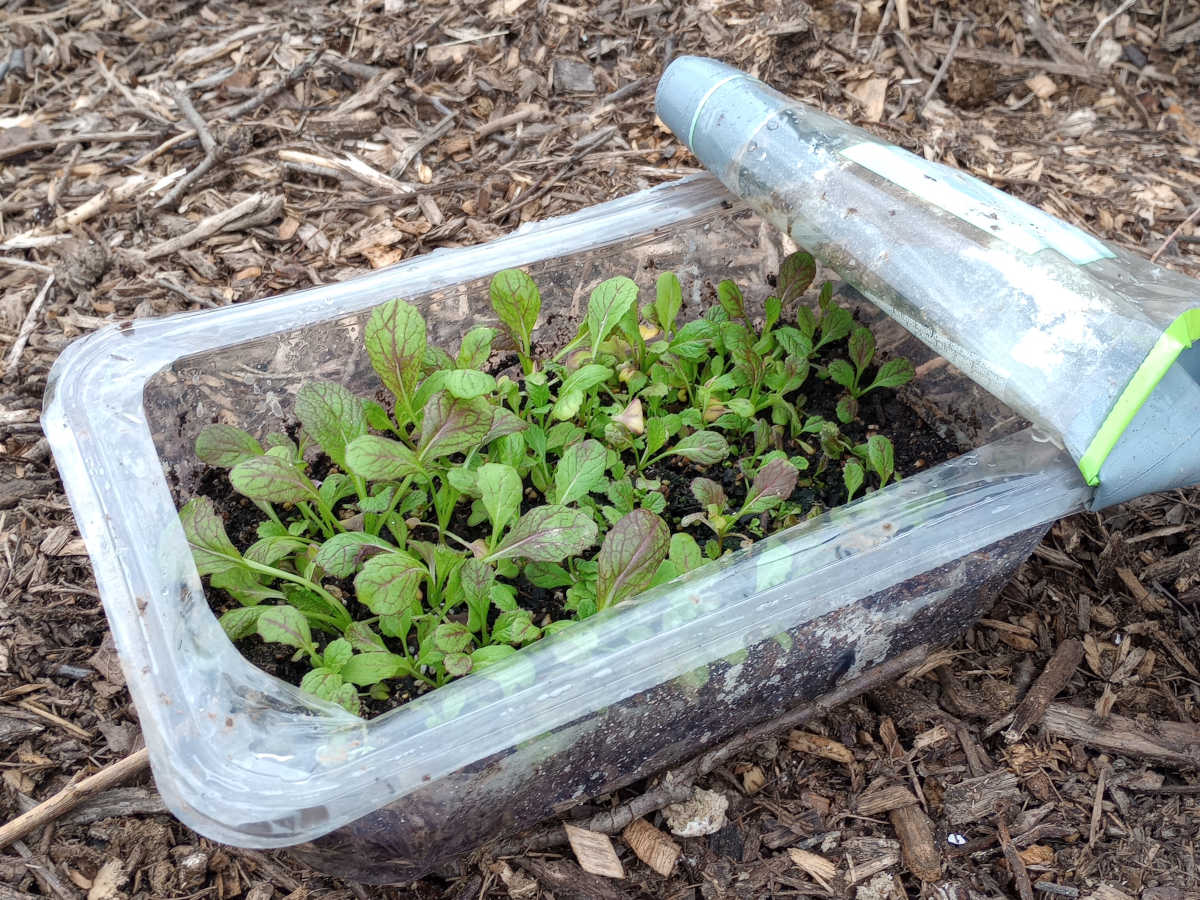
Our Winter Sowing Results
Planting season is in full swing in the garden, and in between stuffing ourselves with ridiculously delicious asparagus, we’ve been hard at work planting all kinds of things.
- Seeds
- Baby plants
- And even . . . drumroll . . . our very own winter-sown seedlings.
To refresh your memory, waaay back in January we spent some time planting seeds in recycled plastic containers, and speculating on whether this innovative gardening technique would deliver everything it promised. Here we are to share the results.
If you’re curious to hear the what happens when you stick seeds outside to meet their fate in the middle of winter, read on!
Our Winter-Sowing Results
For a refresher on winter sowing and how you do it, see our post here.
We’ve been opening up the containers and planting things out over the past several weeks.
The final conclusion is: it worked! Not 100 percent success, of course. But if you have found a gardening technique that is 100 percent successful, do tell!
What we can say is that winter sowing succeed in the following areas.
- Very little time and effort.
- Harvesting earlier than ever before (Note: early harvesting is not promised by the official proponents of the winter sowing method. It certainly seems to have had that effect for us. But of course there are many variables in gardening.)
- Getting some seeds started that we’ve never successfully germinated, like dill and cilantro.
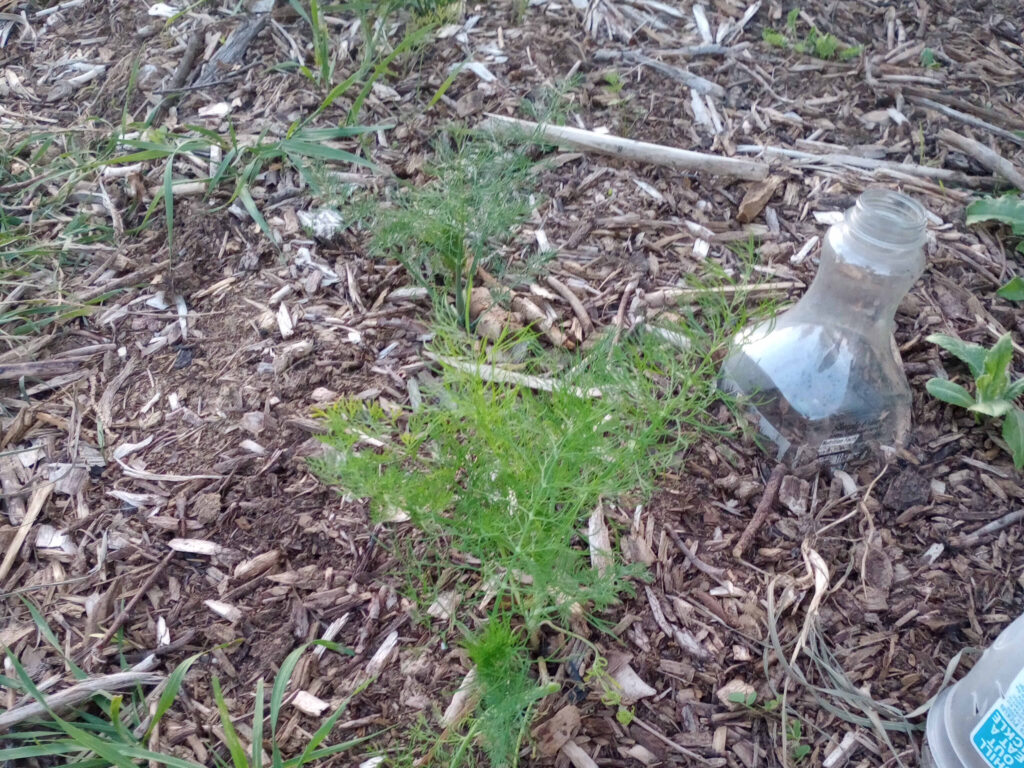
Some Winter Sowing Success Stories
Time for some more pictures of our successes:
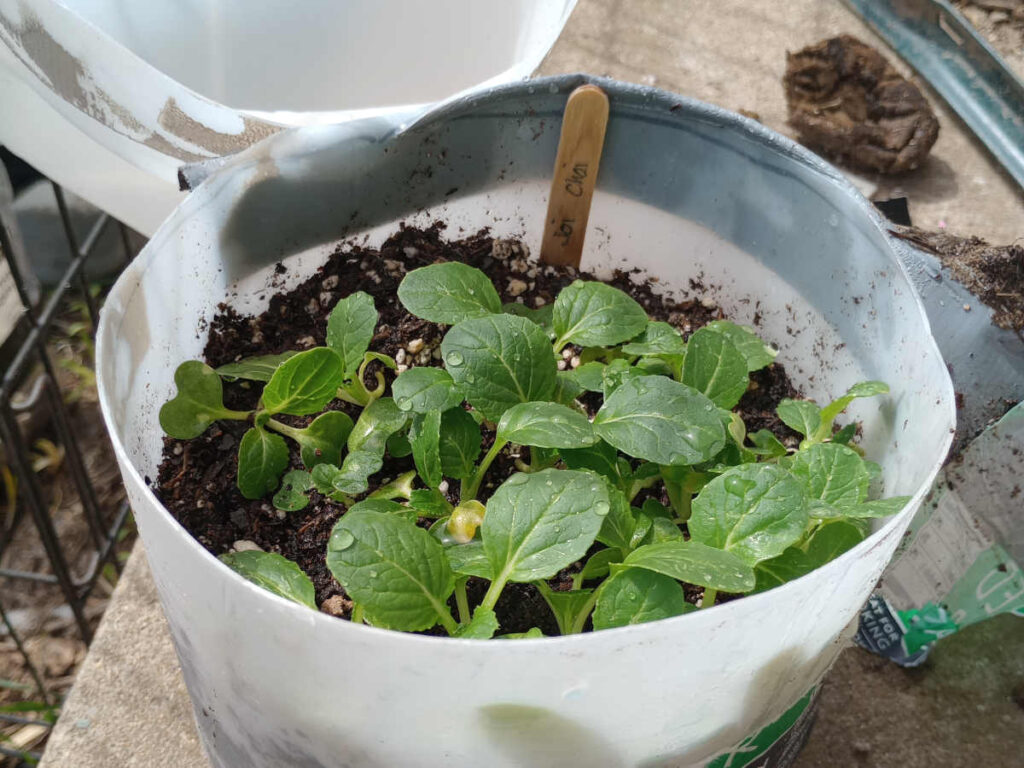
The Bok Choy has been amazing.
It looked like this in late March when we opened up the container:
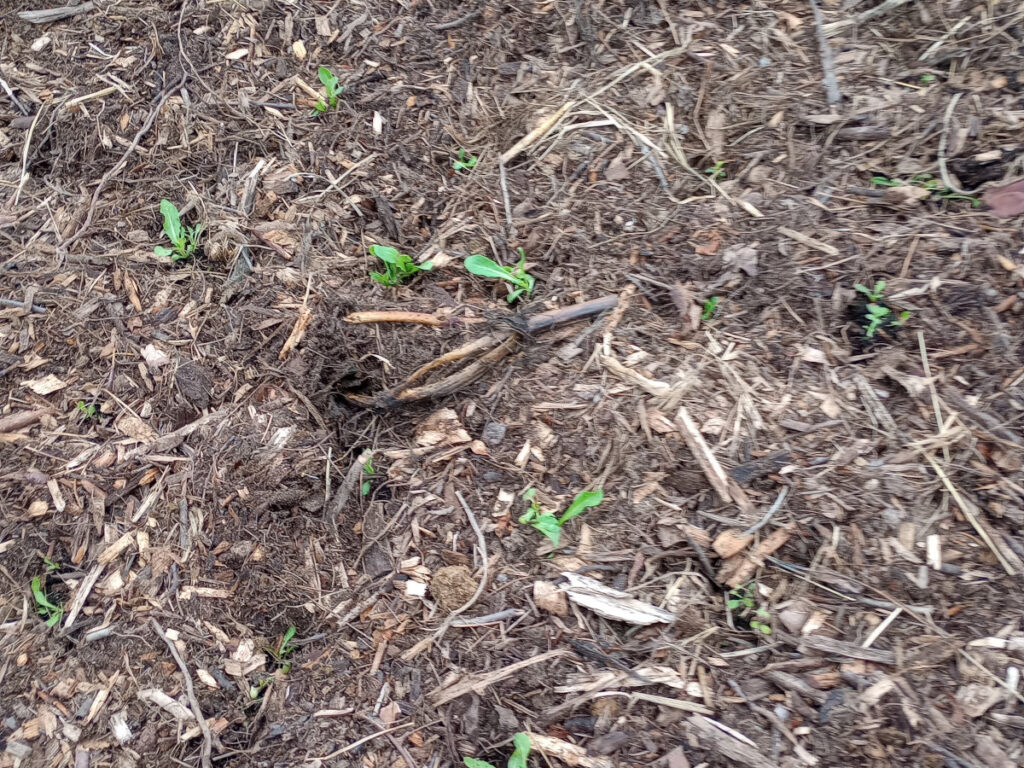
And like this when we planted it out:
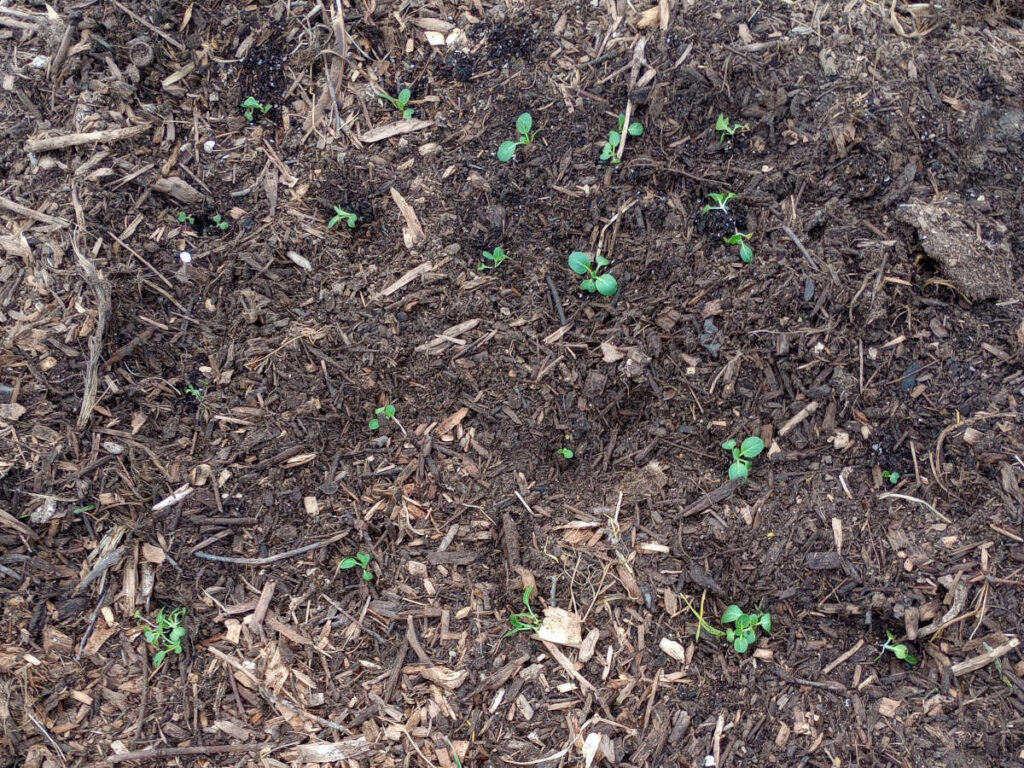
“That doesn’t look like very much Bok Choy,” you may be thinking . . .
. . . but look at it now!
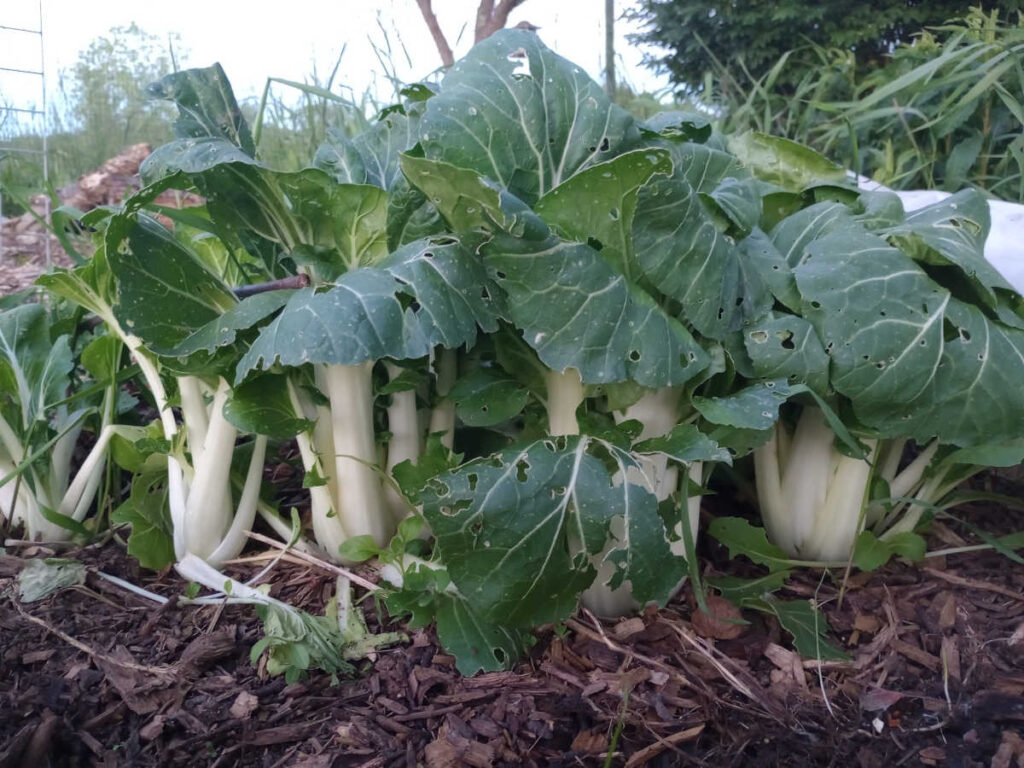
Last time we successfully grew Bok Choy, it was late June before we were able to harvest it. But we’ve been enjoying this winter sown Bok Choy for a couple of weeks already.
If you’re thinking Bok what? Check here to learn more about this hardy Asian cabbage, along with a recipe for our favorite way to eat it.
The lettuce did well too.
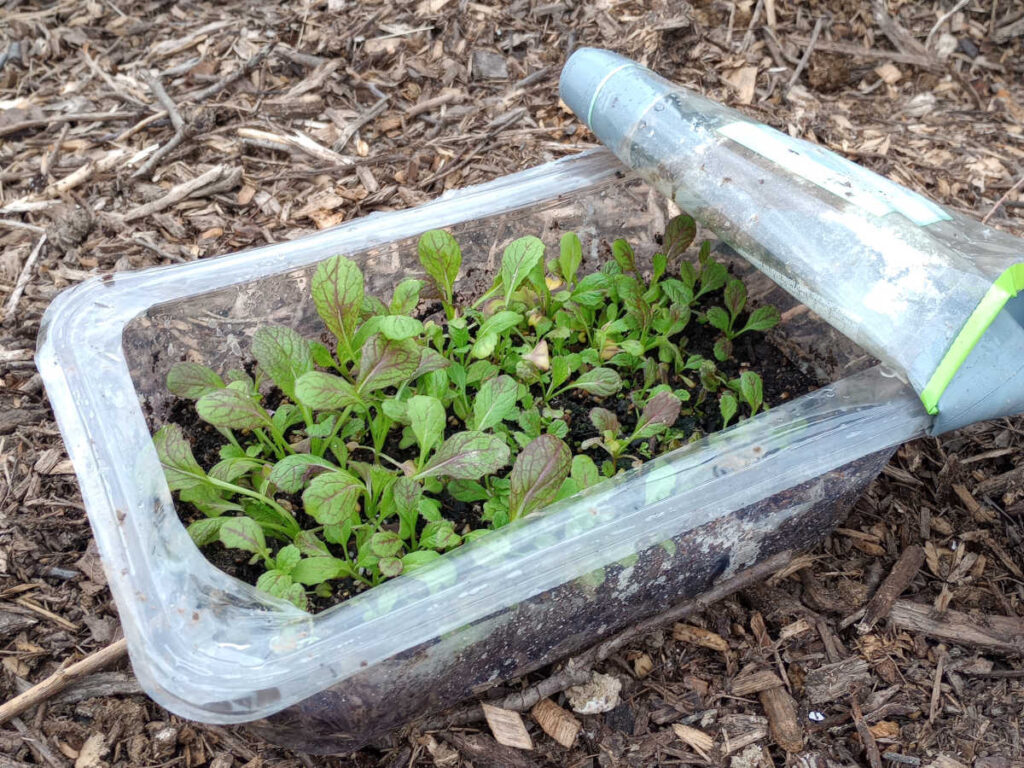
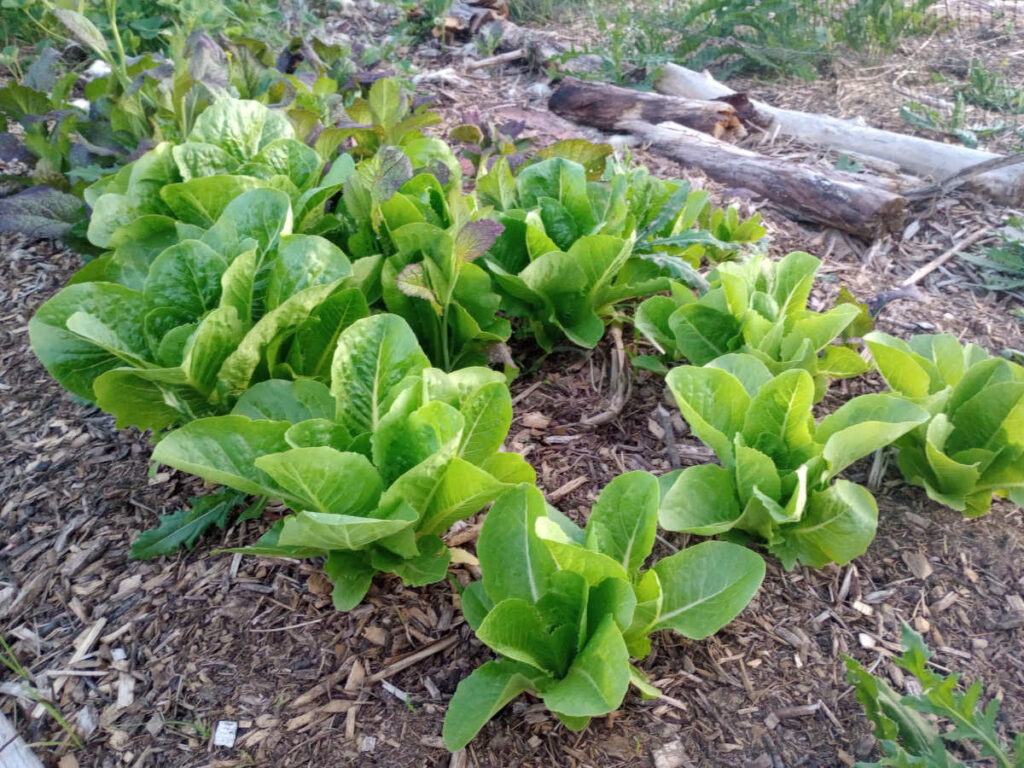
There’s nothing like eating a salad in May, and fondly remembering the freezing cold January day when you spilled potting soil all over the kitchen floor.
Our Winter Sowing Mistakes
Remember: we did not claim 100 percent success. Some of our containers mysteriously never sprouted. But we were able to troubleshoot some mistakes, and plan accordingly for next year.
First: in our over-eagerness to while away the January days, we planted some heat loving crops too early. A container of marigolds, for example, sent up sprouts with the first warm days of spring. But even with the protection of the containers, these seedlings were wiped out by the next frost. Seeds that are not frost tolerant can be started in containers following the above method, but wait until the weather is warmer or pull them inside on cold nights.
On the opposite end of the spectrum, we also learned that overheating must be avoided. The sunny spot you choose for your containers is fine in the winter, but on a sunny spring day, your cozy mini greenhouses can quickly become death-traps for baby plants. As the weather warms up, it’s also important to keep an eye on your containers and open them up or move them to shade as needed. Some plants we fried. Others made it. Next year, we hope to avoid this issue.
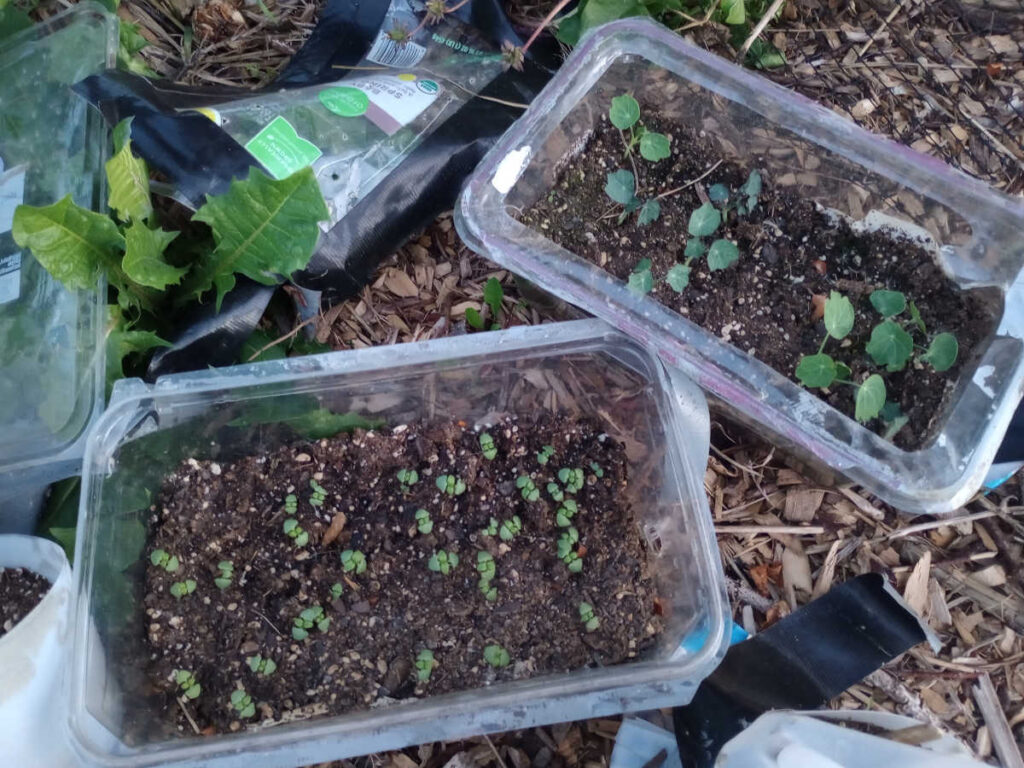
A Winter Sowing Mystery:
Finally, a picture of our most puzzling result.
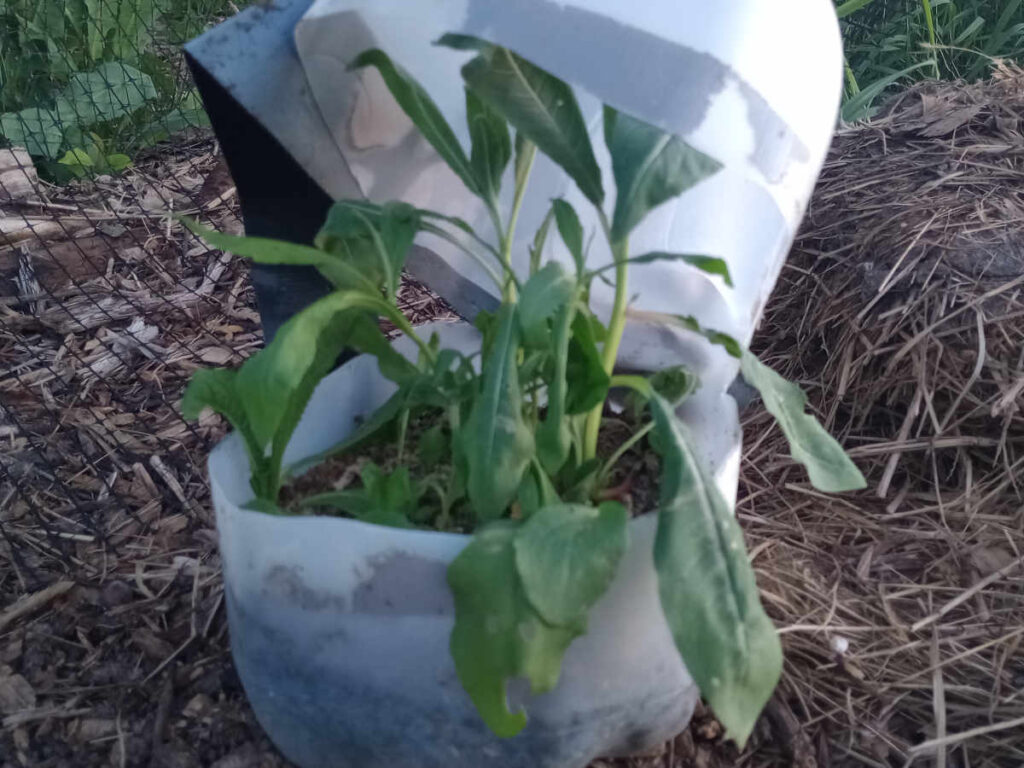
The label says basil.
Reader, this is not basil.
We actually have no idea what it is or where it came from. Could weed seeds have fallen into one of our containers? One of the great unsolved mysteries of gardening.