
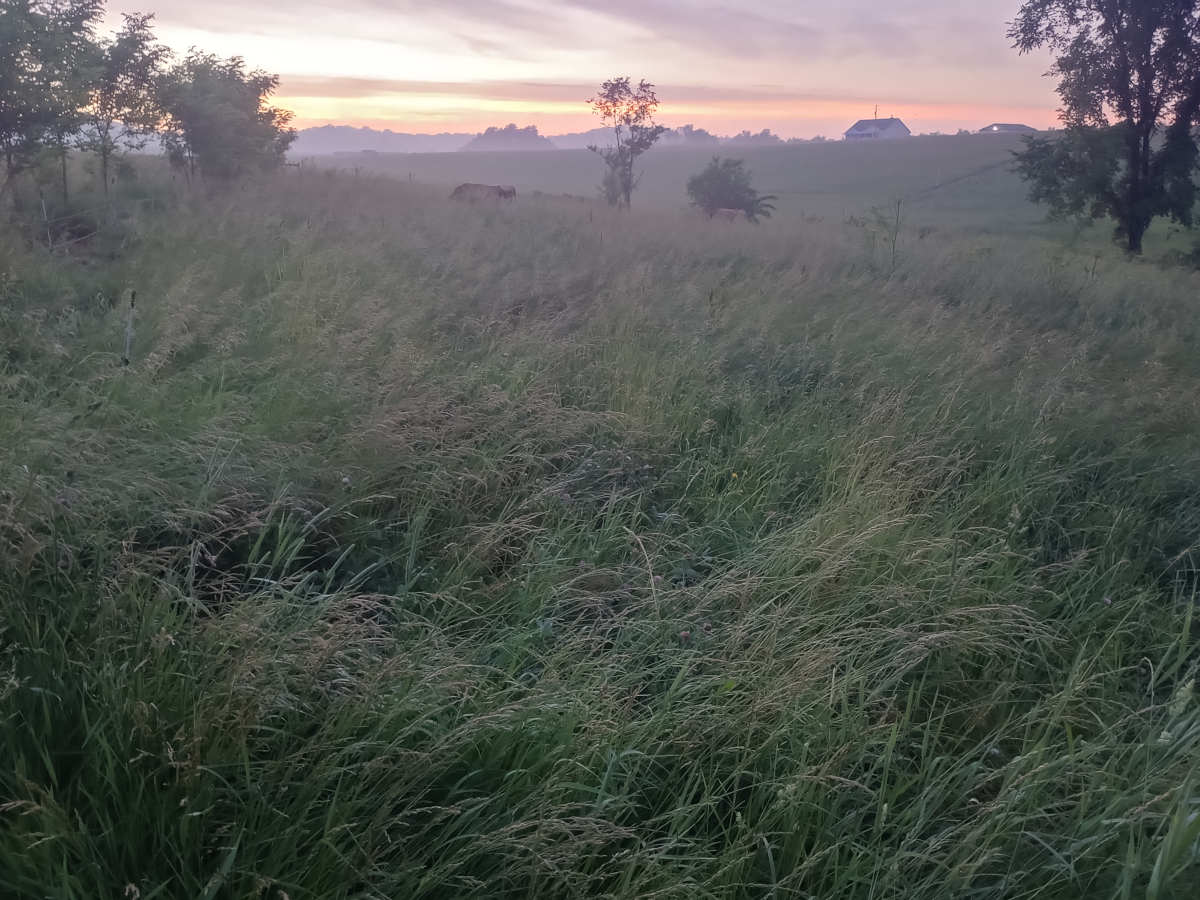
Homesteading with the Masters Episode 4 – In which C. S. Lewis endorses regenerative agriculture…and we note that it might actually work!
We always think it’s fun to find a famous author weighing in on matters agrarian. Today we present a Homesteading with the Masters quote from a man who liked animals so much that he actually invented a fantasy world filled with talking ones. It’s C. S. Lewis.
Alongside creating Narnia, C. S. Lewis was one of the most important Christian thinkers of the twentieth century. He also had a great interest in animals. He admitted to a young reader that he liked mice and wouldn’t set mousetraps in his Oxford rooms despite seeing “lots” of them. He even speculated about the theological possibility of pets making it to heaven with their owners, and dedicated a whole section of his work The Problem of Pain to the issue of animal suffering.
Now, we cannot say that we see eye-to-eye with the famous author in his views on mice, although we suppose for a two-foot-tall talking one, we might make an exception (despite finding the idea of such a mouse somewhat terrifying).
We must also admit that we entertain strong doubts as to the possibility of animals continuing to exist in the next life. We might even go so far as to say that, fond as we are of our faithful farm dog Tilly, eternity might be. . . too long . . . to spend with her.
However, we were delighted to come across the following quote, in which C. S. Lewis reveals a down-to-earth take on the role of domesticated animals, ties the idealization of wild animals to atheism, and even offers some guidelines on the ideals to which animal owners can aspire.
“The beasts are to be understood only in their relation to man, and through man, to God. . . . Atheists naturally regard . . . the taming of an animal by a man as a purely arbitrary interference of one species with another. The ‘real’ or ‘natural’ animal to [atheists] is the wild one, and the tame animal is an artificial or unnatural thing. But a Christian must not think so. Man was appointed by God to have dominion over the beasts, and everything a man does to an animal is either a lawful exercise, or a sacrilegious abuse, of an authority by Divine right. The tame animal is therefore, in the deepest sense, the only natural animal – the only one we see occupying the place it was made to occupy.” (C. S. Lewis, The Problem of Pain)
It’s a great point. It’s easy to think of wild animals as “nature” and put “farm animals” in a different category. It’s even easy to fall into an unspoken regret that all animals cannot roam wild and free.
But the Christian worldview is that man is the climax of material creation. Animals are not simply another result of random evolutionary process, equal in dignity to man. On the contrary, God specifically placed animals under human dominion.
Therefore, as Lewis suggests here, the commonplace scene of your humble farmer milking a cow and bringing it to fresh pasture every day is actually more natural, closer to the Creator’s plan, than the poetic sights of wild birds in flight, wolf packs howling at the moon, or buffalo roaming the plains.
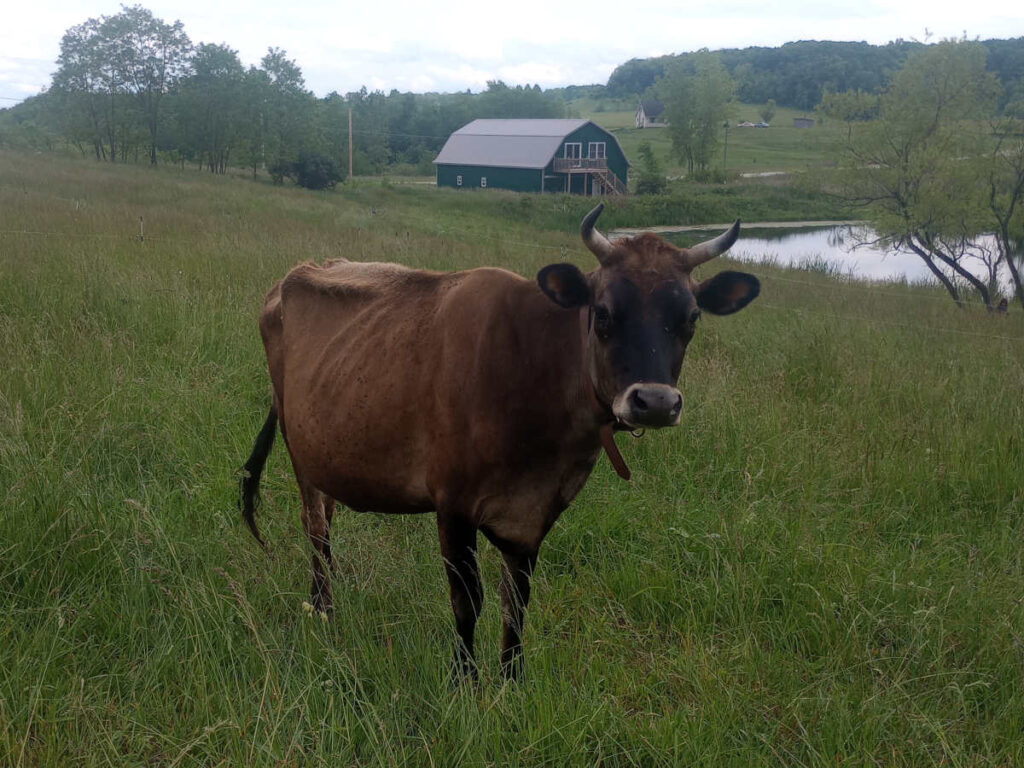
Of course, we won’t deny that wild animals hold important roles in building flourishing ecosystems. But considered in the light of these words from C. S. Lewis, their existence lacks the higher purpose fulfilled by their domesticated cousins.
Lewis also makes the important point that man’s ownership of animals can become abuse or tyranny. It’s easy to think of modern day examples where animal ownership devolves into an unscrupulous “for profit” enterprise, detrimental to the health of both animals and humans involved.
We’d suggest that regenerative agriculture is the type of animal management that would have made C.S. Lewis smile over his cup of tea. We’re talking about the human-scale farm where animals are kept in a way that respects their nature and inclinations, yielding healthy food to their hardworking owners and benefitting the ecosystem of which they form an essential part.
Some Notes from the Farm Fields
Since C. S. Lewis was not a farmer, we’ll boost his endorsement of regenerative agriculture by sharing one example in which our efforts to manage our animals seem to be going according to plan.
It’s certainly not as easy as it would be if they were the very reasonable talking animals found in the far off land of Narnia. We’ve written before of the challenges of keeping animals restrained while still allowing them to live fulfilling lives.
The struggle continues.
A recent attempt to free range our chickens for a few hours a day resulted in about half the flock making a beeline for our back yard and vegetable gardens and leaving a trail of poop all over our deck.
Why??
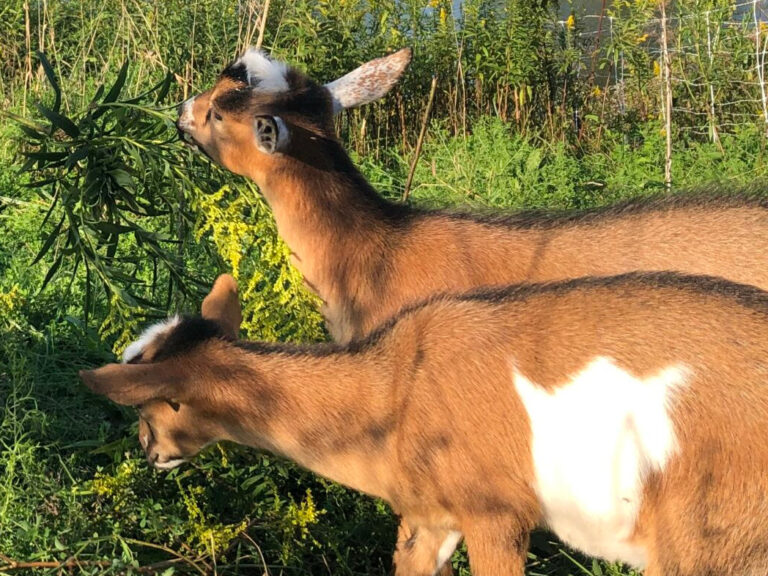
But we can also report some heartening success in our regenerative grazing efforts.
Last summer we explained our methods of intensive rotational grazing.
This summer we’re here to report that it actually seems to be working!
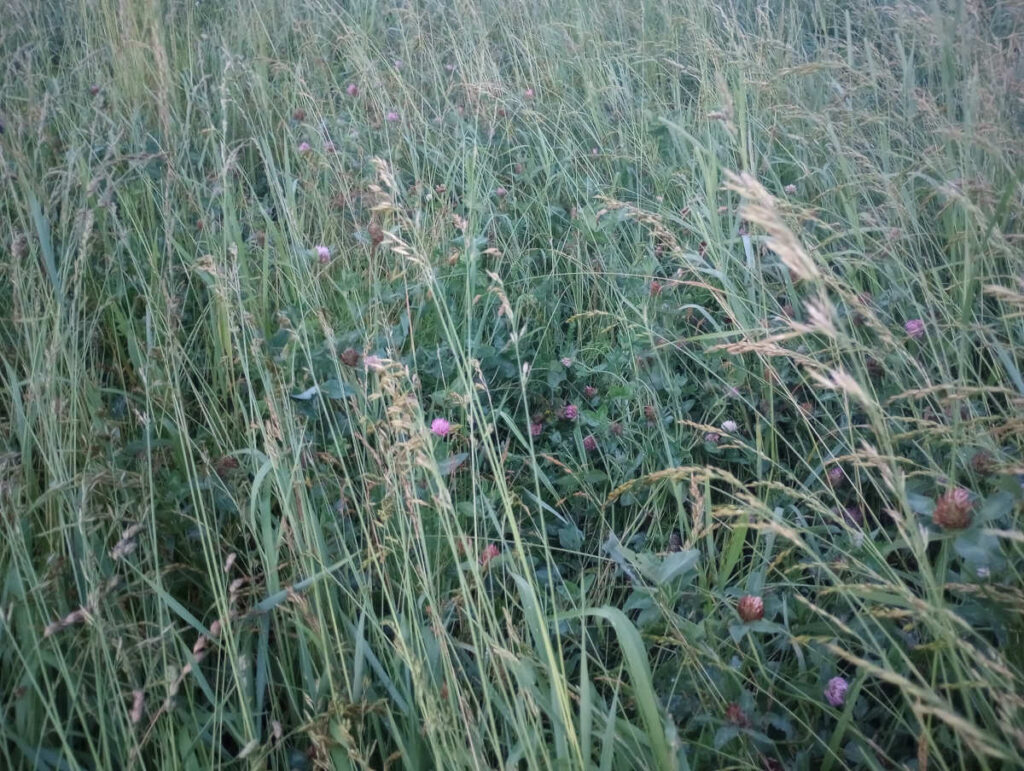

We are coming up on five years of moving our cows (and now sheep) to fresh pasture every day. We can say that the abandoned land that we found when we got here is finally turning into decent pasture if we do say so ourselves.
This spring, we have to actually had to force our way through four-foot-tall grass, and have experienced the completely new problem of actually losing sight of our sheep while herding them because the grass was so tall and thick.
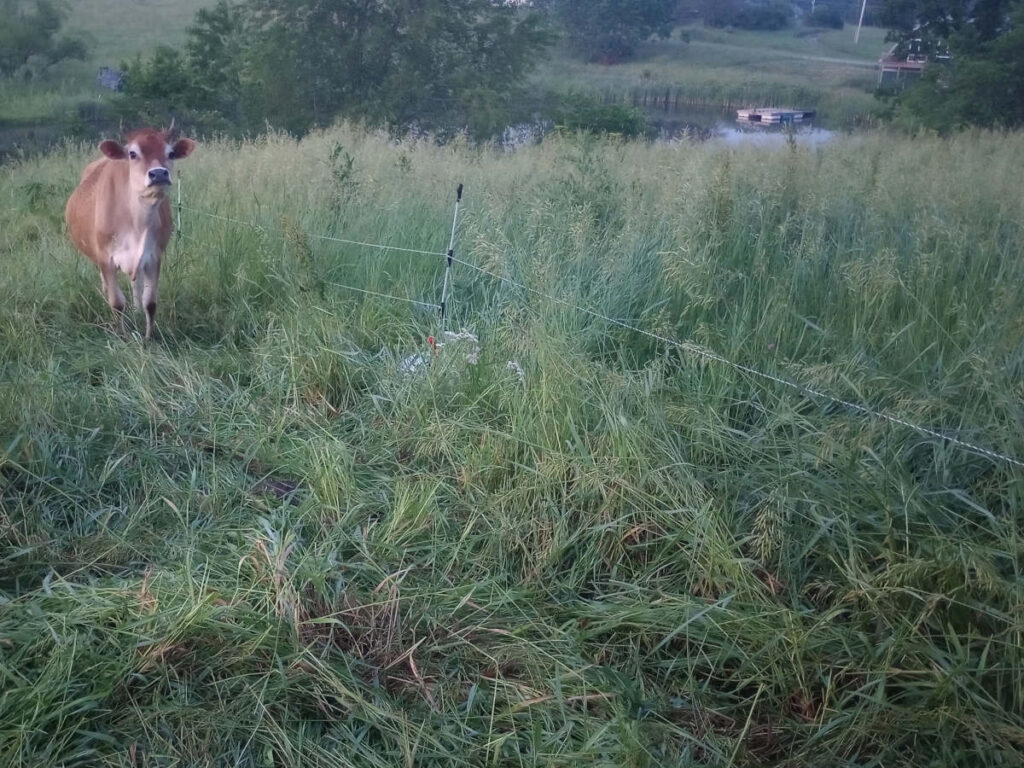
It only keeps getting better from here.
At least that’s what we’ve been told.
We can see why it will.
By the time our animals are finished with a section of pasture, they have trampled and eaten the grass. The trampling is particularly noticeable now we have so much grass to talk about.
The trampled grass now forms a thick mat of mulch. As the new shoots emerge, they are shaded from drying out, and as the trampled grass decomposes it will add to the organic matter boosting the next rounds of growth.

Things are snowballing in the right direction.
Our animals now get to enjoy the better pastures that they helped us to create, and they can thank us for being such good owners by providing us with increased quantities of meat and milk.
The idea that a tame and humanely managed animal occupies a fitting place in the natural order certainly makes sense to these farmers!


I was thinking of you and there it was the blog post! Thank you that was fun to read.