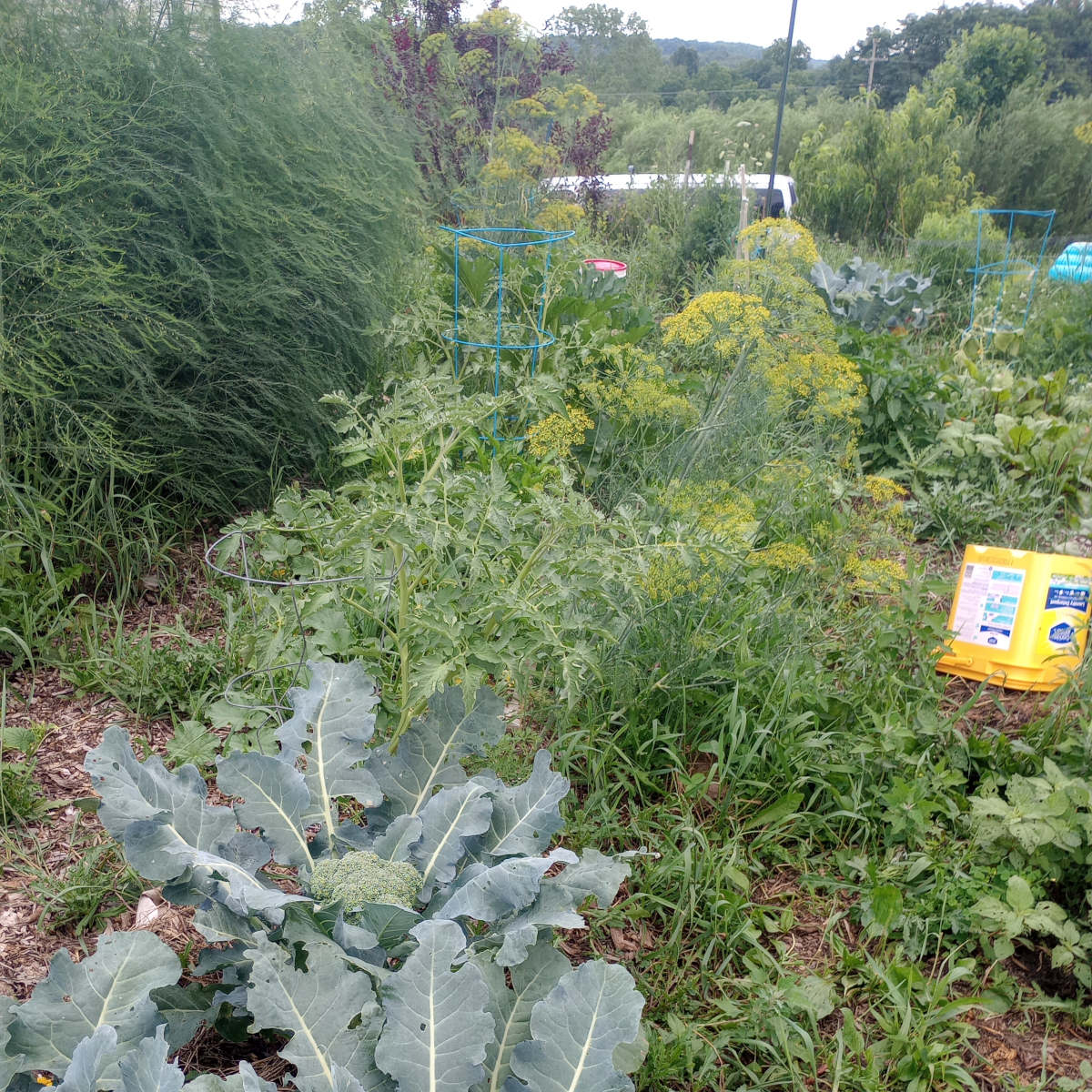
Summer 2026 Seasonal Update
This post contains affiliate links. As Amazon Associates, we earn from qualifying purchases. That means if you click on one of the links below and choose to make a purchase, we make a small commission at no extra cost to you. Thank you for supporting this blog.
And just like that, here we are in the waning days of summer 2026. Here’s a round up from the farm, garden, and kitchen 2026. We bring you news of baby chicks, ladybugs, and microgreens.
Farm: Incubation . . . The Natural Way!
We’ll begin this story with a quick primer on chicken reproduction for those among our readers who may be confused.
First: chickens will lay eggs regardless of whether they are kept with a rooster.
Those eggs will only be fertile if a rooster is present with the flock.
Yes, you can eat fertile eggs. They will only develop if kept in warm, humid conditions.
In nature, eggs hatch when these warm, humid conditions are provided by a mother hen sitting on the eggs. This behavior is called “going broody.” The length of time required to hatch out the eggs varies from species to species. For chickens, it takes 21 days.
A pause to compare avian versus mammalian reproductive methods.
Mother mammals carry a baby inside themselves, usually for somewhere between six and twelve months. Then, they have to produce milk for that baby for anywhere from several months to several years (depending on the species and/or child-rearing philosophy involved).
A chicken?
Just sits there for three weeks.
Is it just us, or does the life of chicken mothers seem to be a WHOLE lot easier?
Anyway, in today’s farming world, it’s a bit unusual to run into a broody hen (one that wants to undertake the “sitting still marathon” of hatching out some eggs). The instinct has largely been bred out of modern chickens. In a commercial egg enterprise, a chicken who will fiercely guard her eggs, or take a break of several weeks from laying is clearly an inconvenience. The job of hatching out eggs has been handed over to mechanical incubators, which are admittedly more predictable and easier to control, if less charming.
So imagine our excitement when, a couple of weeks after introducing a rooster to our “ladies,” we realized that one of them was, in fact, sitting on the eggs every time we went out there.
We must take another break in our narrative to explain that this particular chicken is a special one for several reasons.
First of all, she belonged to the very first flock of chickens that we first purchased when we moved to our farm. That means that she is the longest lived of all our farm animals has reached the ripe old age of five years old, which, for a chicken is some serious longevity.
Second, this particular chicken distinguished herself right away by being our only one to lay blue eggs, and further, by laying her very first blue egg on the Marian feast of the Assumption. This feat won her the prize for “most liturgical layer.”
Somewhere in the midst of all this excitement, our then-three-year-old named her “Neest.” Yes, Neest, not Nest. We don’t know why, and it certainly isn’t catchy, but the name stuck, giving her the further distinction of being our only hen with a name.
When Neest’s “classmates” were relocated to the freezer last summer, Neest received a stay of execution due only to the pleading of our children who remained fond of her.
She became a free-range chicken/mascot for the winter until she managed to re-insert herself into the chicken coop, and lo and behold began to justify her existence by laying eggs with the best of them this spring. Of course, we wouldn’t normally know which chicken was responsible for which egg, but since she’s the only one who lays blue eggs, we were sure.
So at this point, Neest certainly has a privileged status on our farm, and when she decided she wanted to hatch out some eggs, we felt we really should give her a chance.
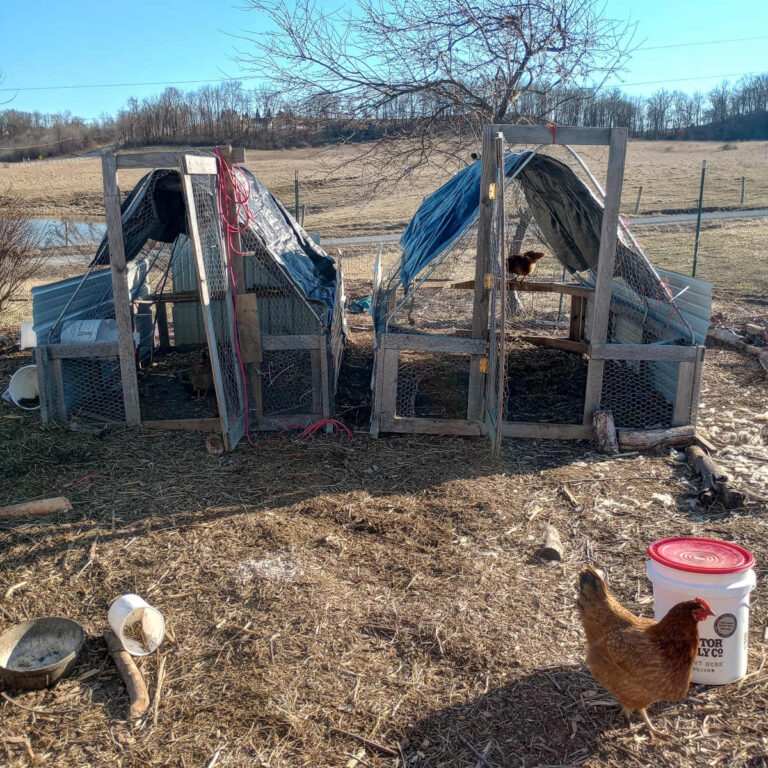
We segregated her and the eggs from the rest of the flock (mostly to stop the other chickens kicking the eggs around and mixing them up) and set her up in a dog crate under a tree. Sure enough, she proceeded to sit there for three weeks.
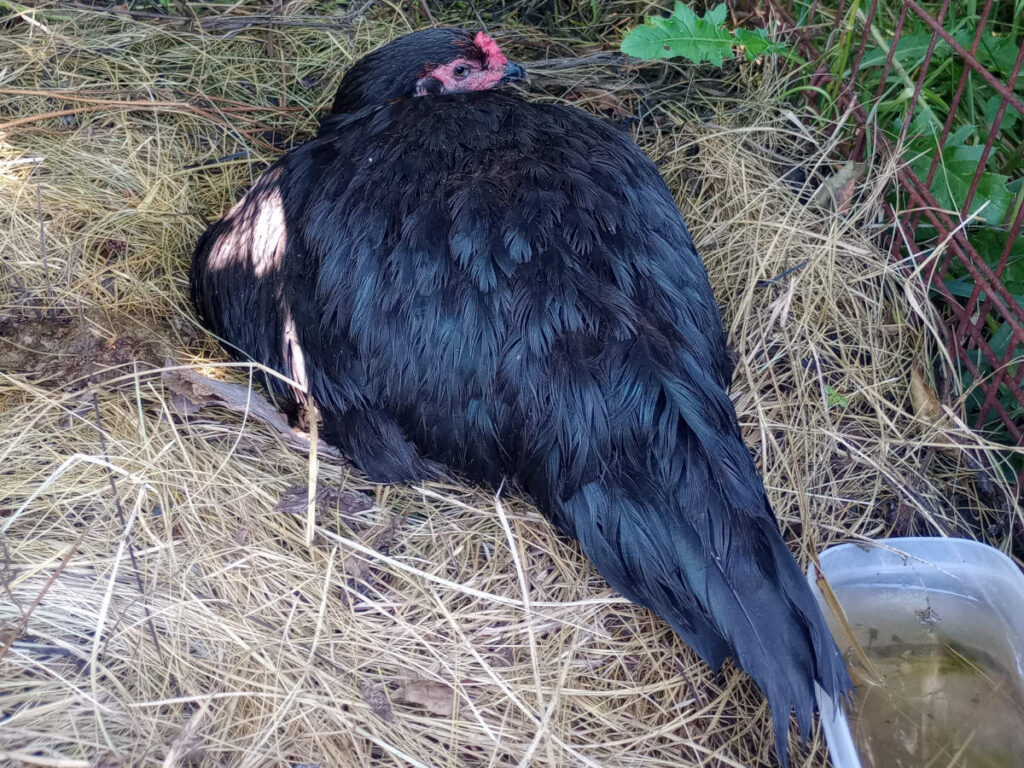
This feat doesn’t sound that impressive until you actually watch it being done. Chicken reproduction may be easier than human, but it certainly requires patience! She would occasionally get up to eat or drink, but she didn’t do much of either.
It sometimes happens that a chicken will abandon the “sitting marathon” before the chicks hatch out. But not Neest! She stayed the course and is now the proud mother of two chicks. Admittedly not the best success rate as she started out with twelve eggs, but still, not bad for a first time!
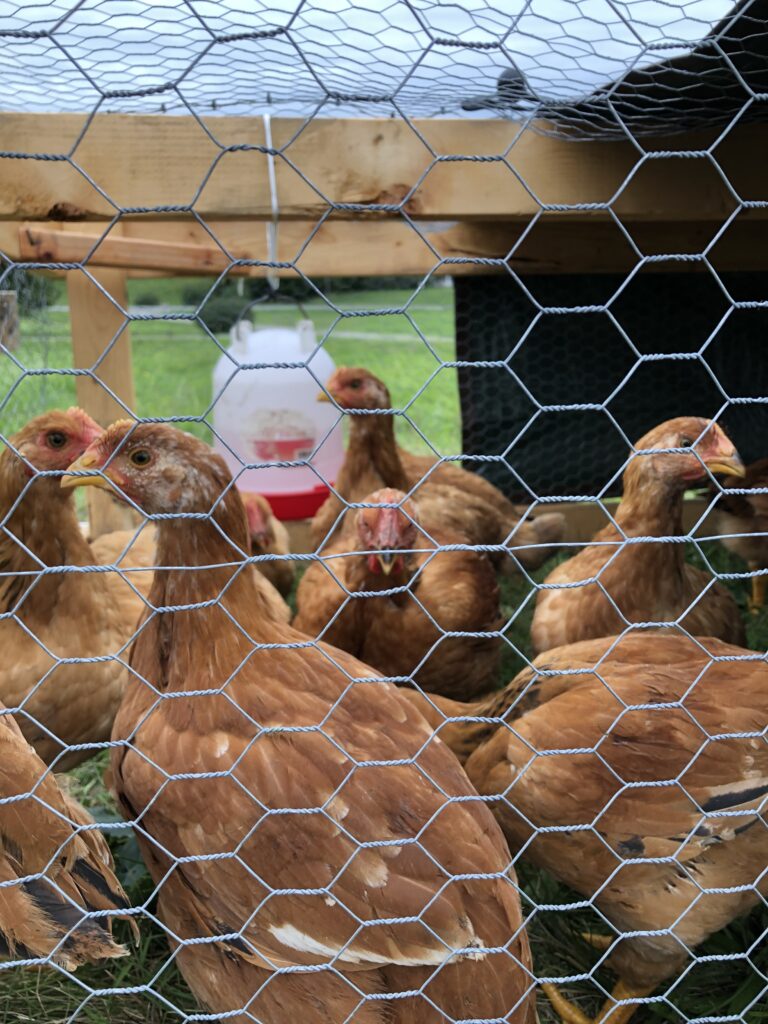
Normally introducing baby chicks to an older flock would be a risky thing for the chicks. But with Neest there to protect them, we were able to reunite them with their flock and now they’re all one big chicken family.
Garden: The Good Bugs have Arrived!
It’s ironic that we actually reached out to a local CSA this spring to supplement our gardening efforts, feeling that our efforts to grow vegetables were simply not keeping pace with the growing appetites of our family.
It’s a good thing they never called us back.
We’re in the middle of our best garden season ever, and actually have more vegetables than we can eat,
There are probably several factors at play here.
First is the fact that it has actually rained consistently this summer. Coming off two years of drought, it’s quite a shock to find plants actually . . . growing . . . in our garden.
Another significant factor is that the aforementioned growing appetites are beginning to make a noticeable contribution to weeding efforts.
We also added to “team garden” a countless number of insect allies.
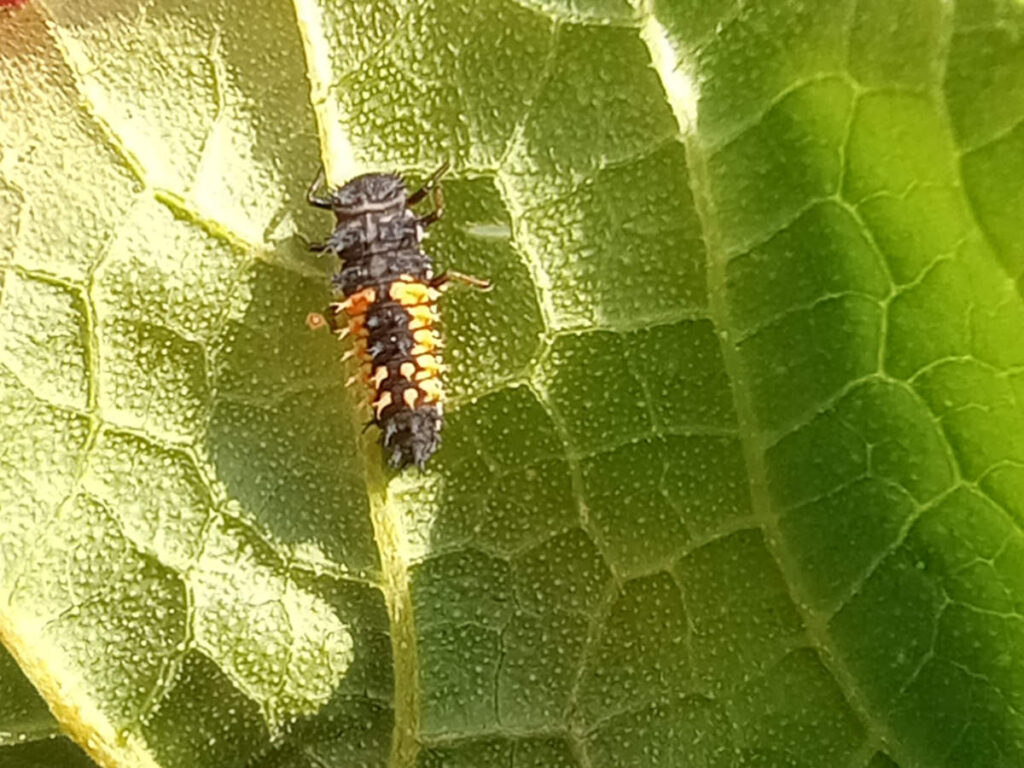
For the first time we are regularly finding ladybugs, lacewings, spiders and more in our gardens. We’re not quite sure what made them finally arrive. Maybe it’s a redeeming feature of all the weeds we can never quite keep up with. Or maybe word finally got out about the all-you-can-eat bad-bug buffet we are (apparently) hosting. Or it might have been the dill plants that we strategically located all around our garden.
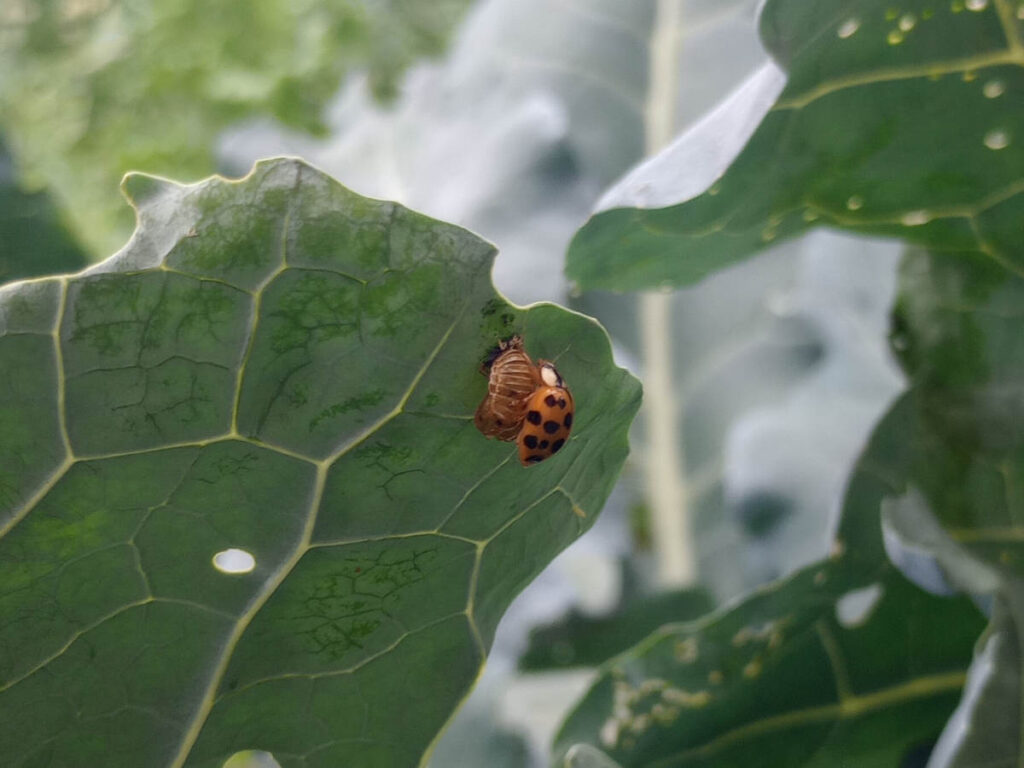
The garden gurus have been promising that after a few years of sustainable gardening the ecosystem will finally arrive at a balance where good bugs show up and the bad guys don’t have the last word.
We’ve doubted it.
But picking a round of cabbage worms off our broccoli is usually not enough to solve the problem. This year, we picked some off and braced ourselves to be overrun anyway. . .
Surprisingly, they didn’t really come back. Instead, we found lacewing eggs under many of the leaves. Lacewing larvae are known to be voracious predators of garden pests.
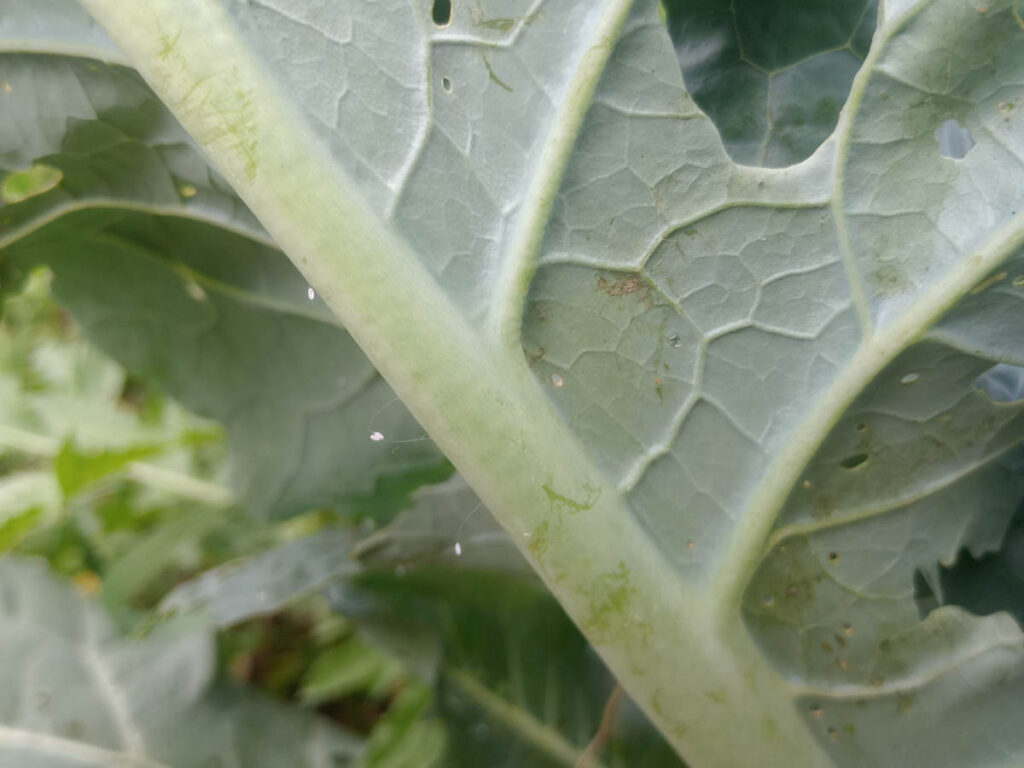
We also actually witnessed the amazing spectacle a wasp carrying off and destroying a cabbage worm.
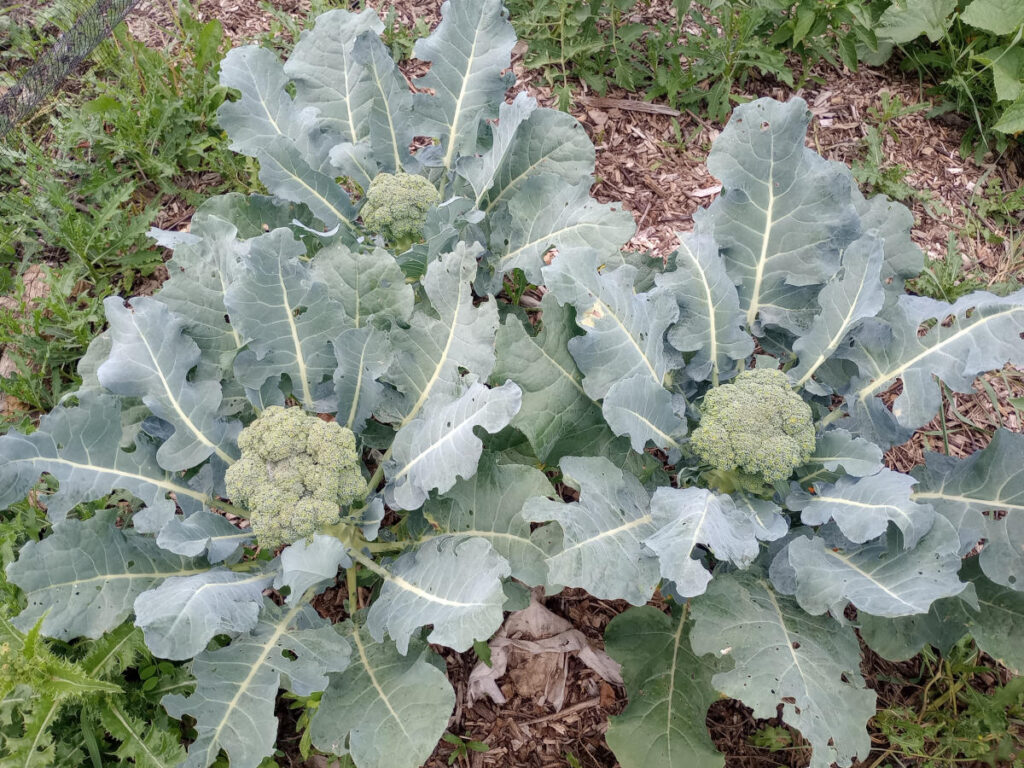
Now to be honest, going into the fall, the bad bugs do seem to be having more of a heyday out there, and the goodies seem to be on the retreat for some reason. Also, the wasps are displaying a distressingly greater interest in stinging the gardeners than killing the cabbage worms.
Nevertheless, a marked improvement on previous years.
We are cautiously optimistic that we’re getting closer to the ever-elusive gardening equilibrium!
In the Kitchen: Sprouts
We have seen references to microgreens a few times and been both curious and dismissive. Why bother with such stupid tiny plants?
But our curiosity was just great enough to prompt a reading of this book. We’ve now seen the light.
It’s written by a former New York comedian who got hooked on sprouts and now goes by “Sproutman.” His arguments are enough to convince the most hardened heart that adding a few sprouting systems to the kitchen is a great idea.
Yes, they are stupid tiny plants.
But several hundred tiny plants adds up to about a pound of food. The seed costs less than a dollar and you can grow them in about a week, with no fancy grow lights, adding only water.
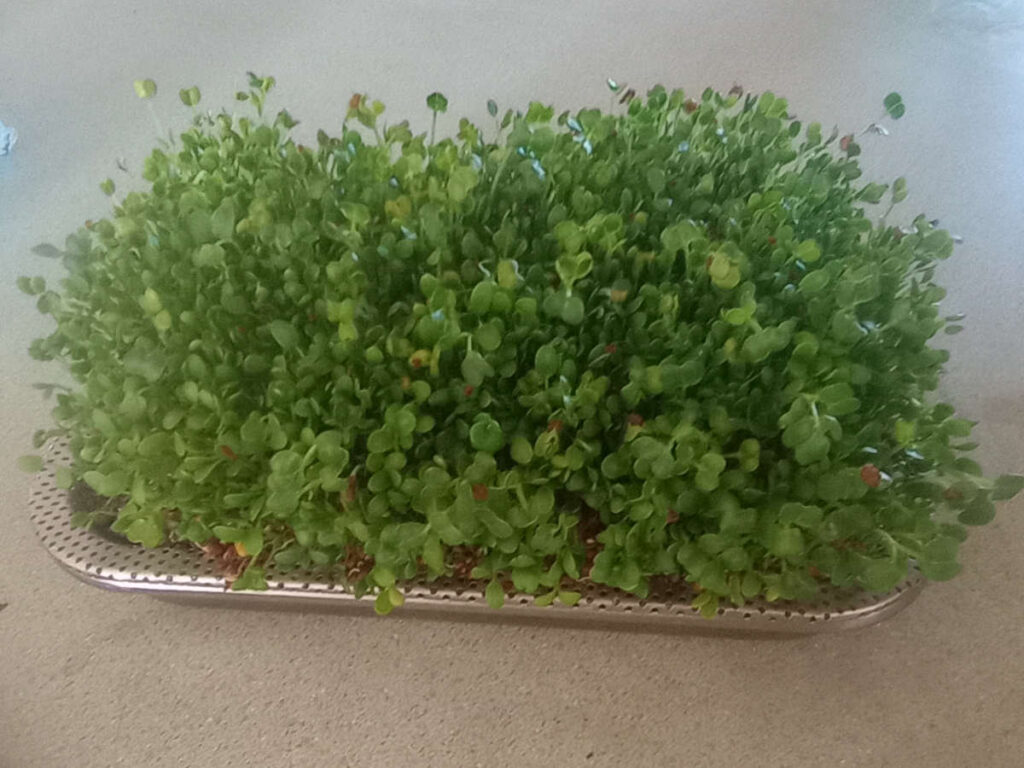
Get a few trays in circulation and boom! A consistent supply that you can keep going all year round.
Maybe it’s our love of gardening (which by the way we do enjoy), that makes us so keenly aware of the benefits of growing microgreens.
No bugs and no soil. No weeds.
Boxes of prepackaged salad are now obsolete in this home!
There is no reason why anyone can’t do this.
You need water, very little space, and basically no skill.
Here’s our very easy method, adapted from Sproutman’s own.
Soak the seeds in a mason jar overnight.
Keep them in the jar with a sprouting lid for a day or two until you see small tails (actually roots!) form.
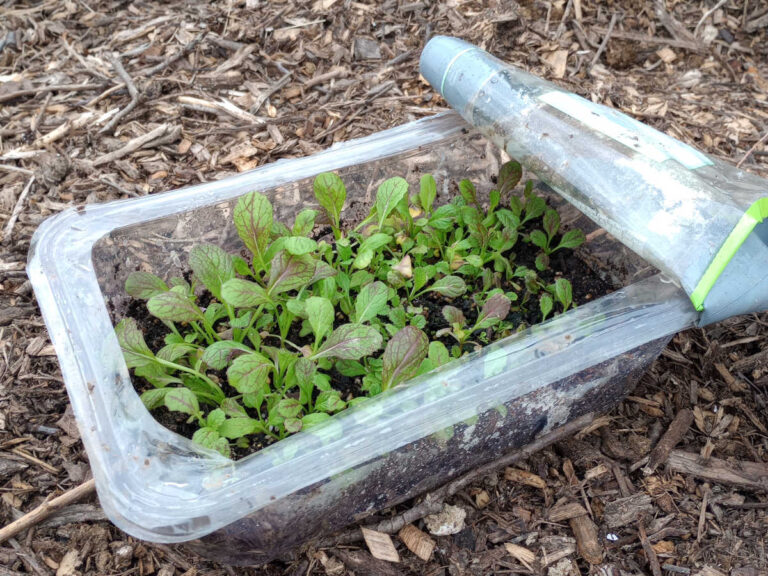
Empty them into growing trays (we have these ones) and hose down twice a day with the sprayer attachment to your kitchen sink.
Once the roots are long enough you can add water to the bottom tray and they’re pretty much hands off from that point.
Pull them out by the handful to harvest once the first set of leaves fully opens.
We’ll repeat that it only takes about a week from soaking the seeds to harvesting your first salad!
Oh and by the way, sprouts are several times more nutritious per pound than the mature vegetables.
We actually brought our grower on a road trip, and were able to enjoy fresh homegrown food in the middle of Indiana.
It’s one of those great ideas that has us wondering: why haven’t we been doing this all along??
Reader, if you too like the idea of fresh homegrown veggies all year round, we heartily encourage you to give sprouts a try!