
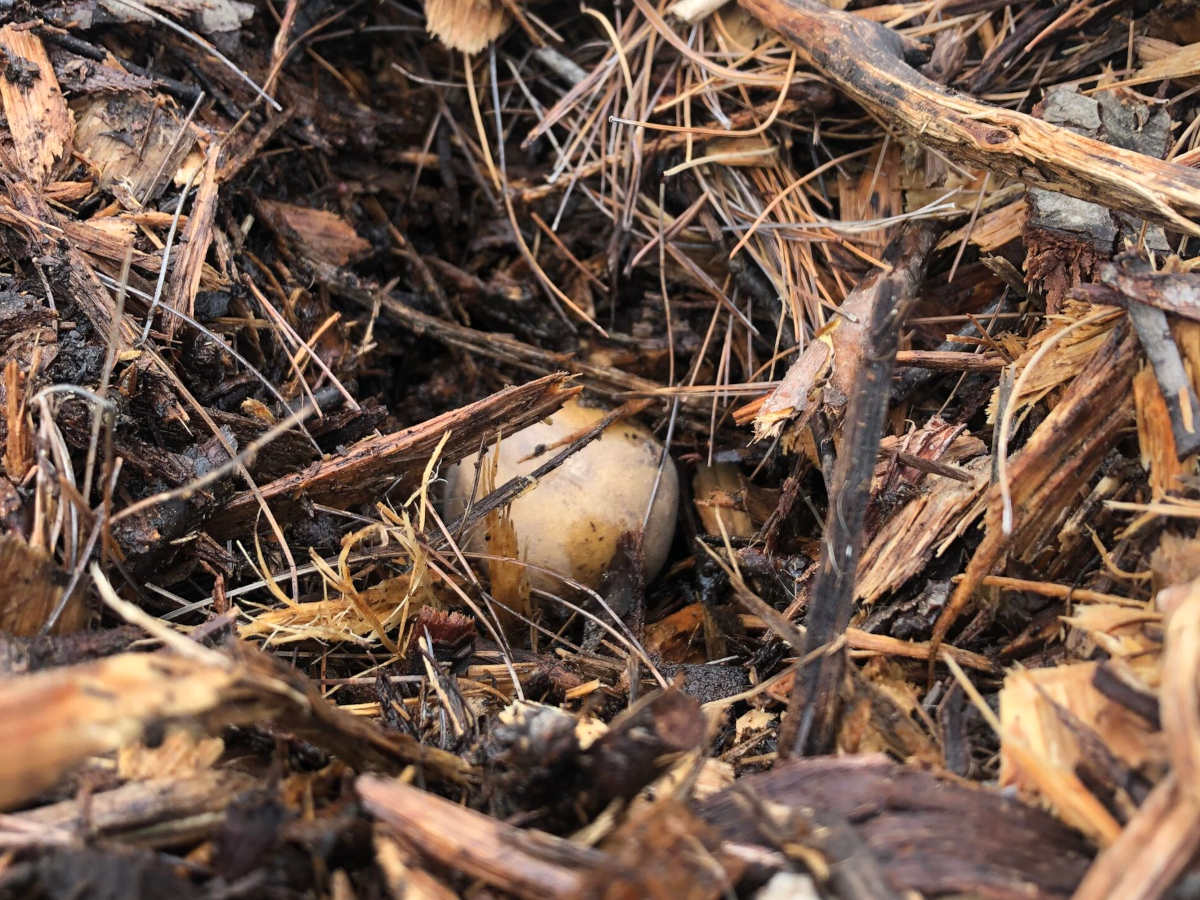
An Experiment in No-Dig Potatoes
Potatoes may be one of the most endearing vegetables known to man.
Think about it . . . what other vegetable has a nickname?
But we call potatoes “spuds” in a jolly way without thinking twice about it.
There’s one downside to our delicious potato pals. Growing them is associated with the laborious work of tilling up soil and digging trenches.
But. . . you’ve guessed it . . . there’s good news here! No-dig potato advocates promise that it doesn’t actually have to be so hard.
Simply place your seed potatoes on the surface of the soil, they say, and cover them with several inches of organic matter. Apparently, the “stringy” parts of the roots can push down into the soil and feed the plant, while tubers form in the looser organic matter.
For the successful no-dig potato grower, harvest time can become an exercise in uprooting entire potato plants with a gentle tug, while pitying your toiling neighbor who may be digging away in the next garden over.
Your yield may not be as great per plant as if you were sweating over your spuds. But the yield will be greater per amount of effort you put in. Which, in our case at least, is the most important metric.
We’re always on the lookout for an easier way to accomplish our gardening tasks. It was enough to watch one video of Charles Dowding effortlessly planting his potatoes, and pulling them from the ground with the lightest touch imaginable. We were eager to try this method for ourselves.
We’ve also been blessed with a mountainous pile of free woodchips, and a fantastic local greenhouse that sells seed potatoes for the unbelievable price of $1 per pound. So we’re in a position to try this potato-growing method with very little financial investment.
Little to be lost, and spuds to be gained!! What are we waiting for?
How to Plant No-Dig Potatoes
On to the details of exactly how we planted our no-dig potatoes. The jury is (obviously) still out on how well it worked, but it really was unbelievable simple.
We have several new garden beds that we’ve prepared over the last 18 months or so with the classic no-till method. We place cardboard on the ground to kill the grass, and spread a deep layer of woodchips over the top.
When it was time to plant our potatoes, we simply parted the woodchips until we made soil contact, dropped in a potato, and pulled the woodchips back to cover it by several inches.
It should be noted that one member of the household decided it would be easiest to use a shovel to move the woodchips around. Another protested that doing so would call into question our credentials as strictly “no dig” potato growers. She insisted on pawing away the woodchips by hand, as was rewarded for this dedication by a splinter under the fingernail.
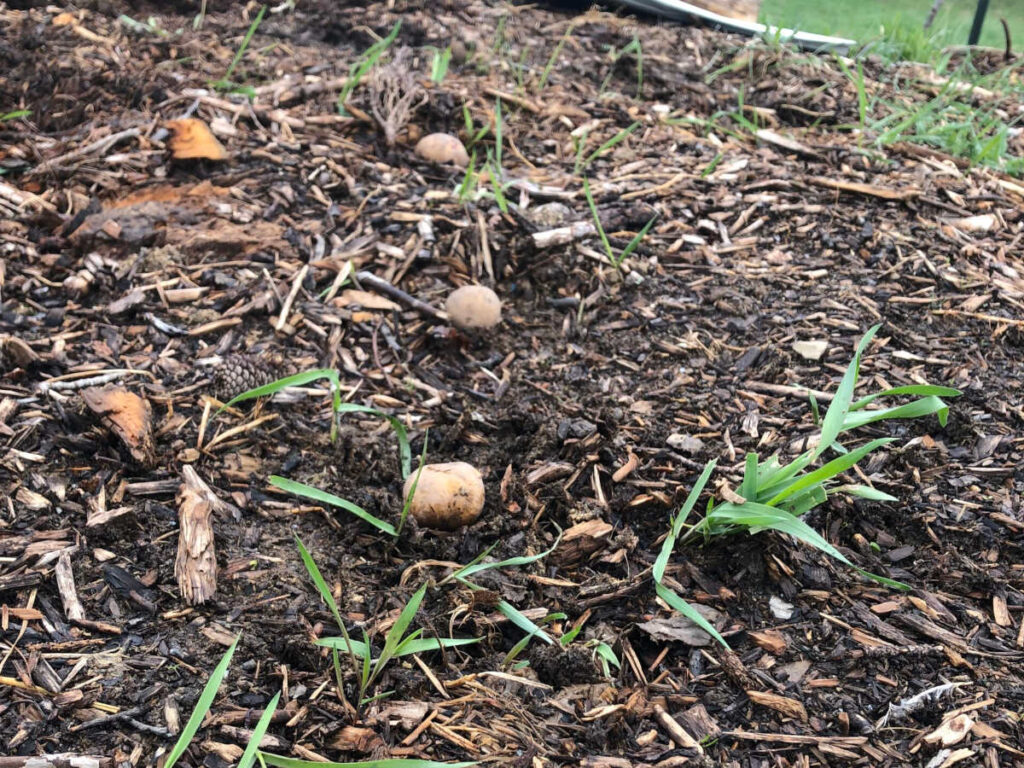
So we’ll let our readers decide whether potatoes can actually be “no-dig” or if “dig-a-little-bit” is a more accurate description.
A Scientific Experiment
We were curious to find out just how little effort we could put into planting our potatoes, and so we planted our twenty pounds of seed potatoes in several different situations to see which would fare best.
A. A bed which we had prepared with the woodchip-cardboard method 18 months ago. We had added a significant amount of cow manure late in the winter.
B. A bed which had been prepared about the same time and in the same way, but missed out on the addition of cow manure
C. A bed which we had prepared only a few months ago (the cardboard had not fully disintegrated yet, and we placed the potatoes on top of it).
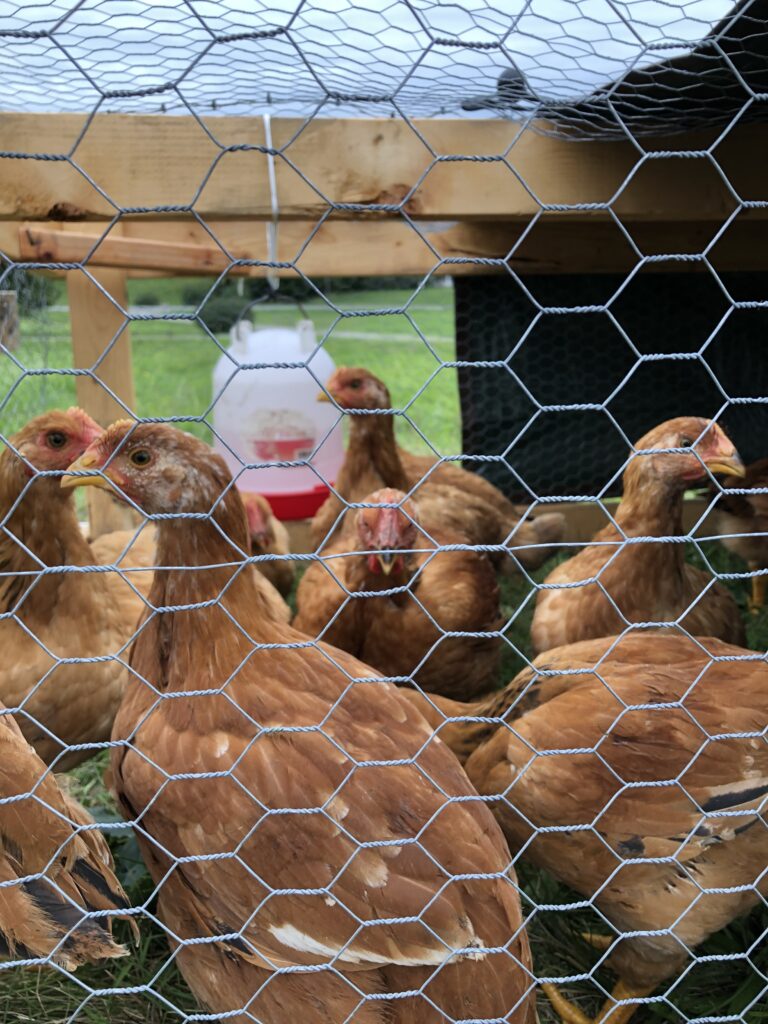
D. On top of bare ground where the woodchips had been pushed aside by our chickens living there for a few months. We laid the potatoes on the surface and then covered them with woodchips
It will be fun to see which method works best . . . or if it doesn’t really make a difference.
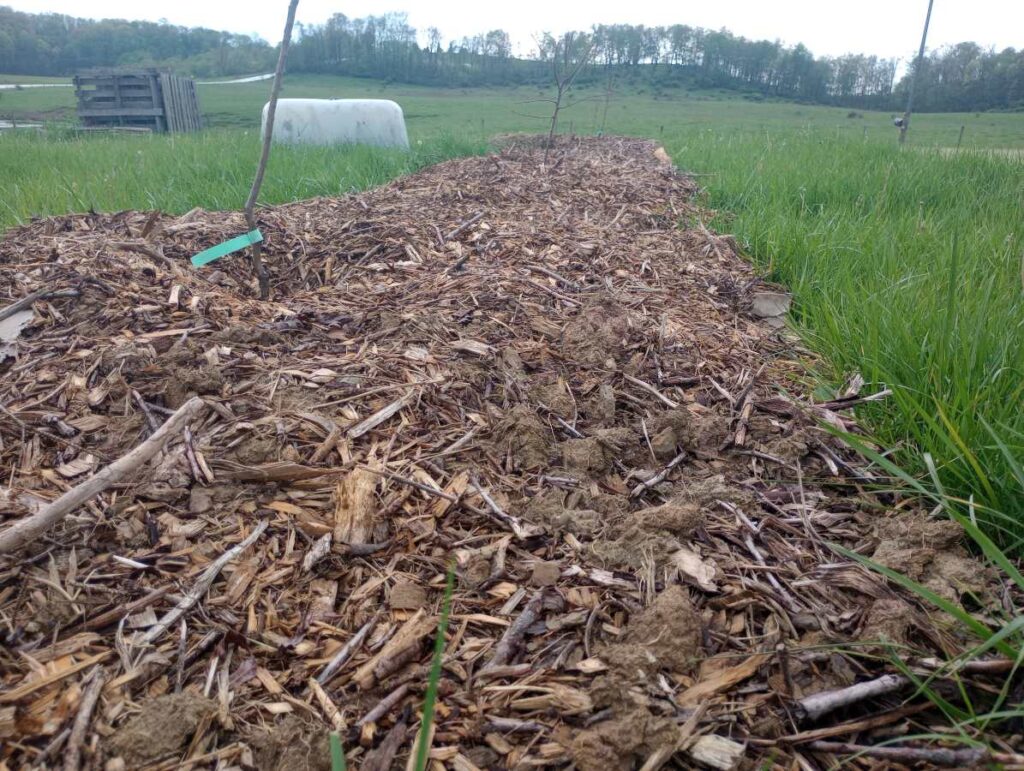
Also we must mention that our methods were not perfectly scientific. By the time we made it to bed D, the enthusiasm of certain family members was definitely flagging, and the planting of the last few potatoes may have been somewhat rushed.
Which bed will do best? Or will the whole thing be a total failure? Stay tuned for an update at harvest time.



Oh I can’t wait to find out!!!