

How to Merge Two Flocks of Chickens: A Primer on Chicken Social Skills
We’ve written before about our struggles to convince our chickens to lay their eggs in reasonably convenient places.
But that is not the only challenge that awaits the novice chicken farmer.
Orchestrating the social dynamics of multiple chicken flocks is not for the faint of heart. Read on for a story about how to merge two flocks of chickens.
An Introduction to Chicken Social Behavior
Newsflash: chickens are not very kind animals. In fact, they deserve a high place in the meanness rankings.
If you, like us, were homeschooled, you might be looking for a chance to make up for the lack of “socialization” you experienced in your childhood. If you’re pining to experience an atmosphere akin to the social dynamics of a stereotypical public high school cafeteria . . . head to the chicken coop. You’ll find more mean girls than you’d ever want to be around.
In chicken world, it’s survival of the fittest, biggest, meanest, and the ones that look the same as everybody else. “Birds of a feather flock together” is an accurate saying, and birds not “of a feather” tend to be the first to get picked on by everybody else. So do newcomers.
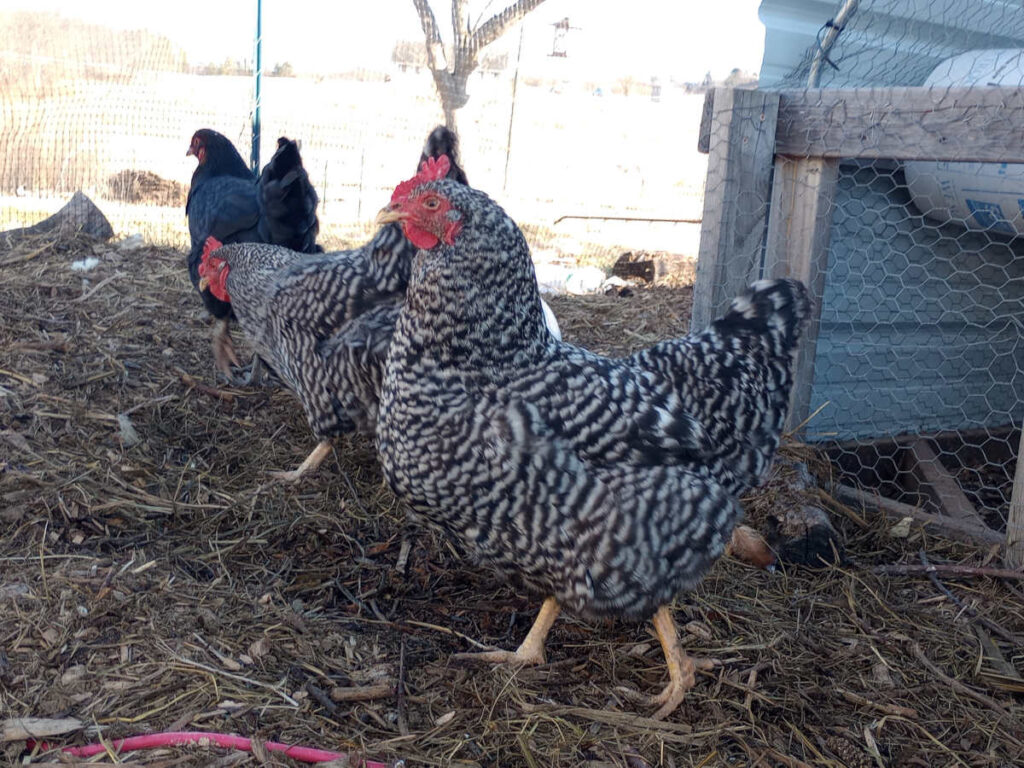
Once a flock bonds and they establish a pecking order, they get along without much drama. But do anything to upset the delicate balance of the chicken social order and your contentedly clucking biddies will be transformed before your eyes into miniature velociraptors.
This is NOT an exaggeration.
They puff their neck feathers out until they look just like little dinosaurs, and they go after each other with exactly zero consideration for continued longevity of their opponents in what might seem to us to be a petty dispute.

We considered placing “coexist” signs around our chicken area. But chickens don’t exactly walk around barefoot in tie-dyed shirts strumming on guitars and talking about how we should all forget our differences and try to get along. Only the barefoot part, actually. So we decided the signs had poor prospects as a method of stopping chicken fights.
We needed an actual strategy. The time comes in every chicken farmer’s life when they must introduce new chickens to each other. You might need to consolidate flocks, add young blood to an aging flock, or find a home for those fantastic free chickens you were able to scoop up from your neighbor. So here’s what we did.
What Not To Do When Introducing Chickens
We’ll start our advice with a list of “don’ts” for any beginner or future chicken owners out there, including our past selves.
Do NOT lightly dismiss the warning that strange chickens may fight each other to the death as an exaggerated approach that will unnecessarily complicate your life.
Never, ever, ever, under any circumstances stick a new and strange chicken unannounced into the midst of an established flock and hope “it will be ok.”
It won’t.
Do NOT “throw in” a bunch of young chickens that are significantly smaller than the established occupants and expect them to be able to fend for themselves.
If you follow any of the above ill-advised courses of action, you may find yourself in the uncomfortable position of breaking up a chicken fight. Worse, you may be burying what’s left of the losers in your vegetable garden.
How to Merge Two Flocks of Chickens
So what do you do, when life thrusts you into the role of making an introduction between several chickens who are giving each other sideways looks and getting ready to spring into dinosaur mode.

We found ourselves in this position this spring. We have two flocks of aging chickens. We needed to combine them into one coop to make space for some new blood.
We have attempted sudden introductions in the past and they’ve always led to the shedding of chicken blood.
This time we followed a gradual introduction method.
First, we parked the two coops side by side in our garden. We fenced in the garden so that it became one big chicken run, which was also a “neutral” area, considered the territory of neither one flock nor the other.
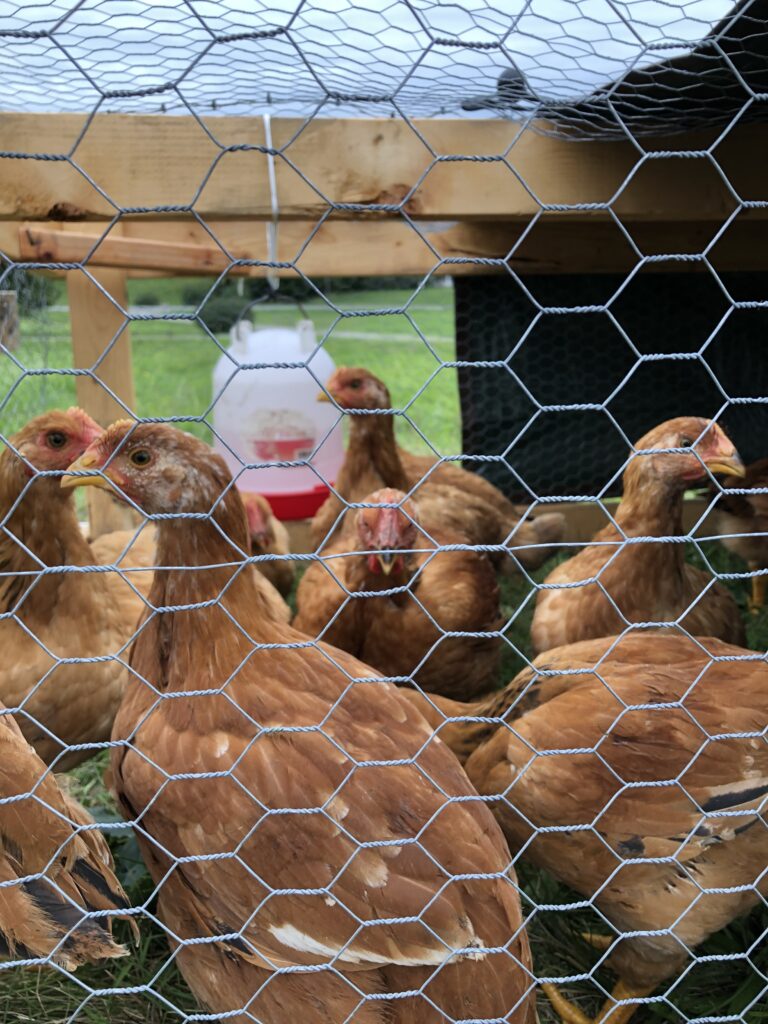
Over about a week, we alternated between letting one flock out in the run and keeping the other flock enclosed. During this time, the chickens got used to seeing each other. Several fights broke out through the chicken wire, but they couldn’t get at each other enough to do any real harm.
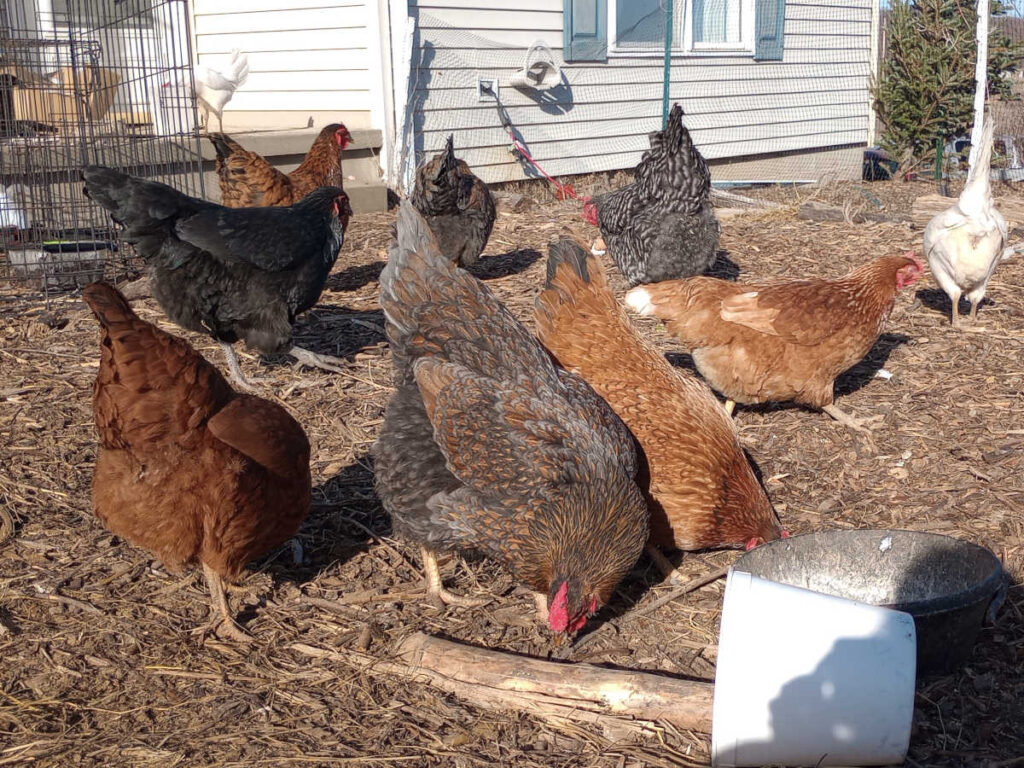
Once the fighting calmed down, we opened both coops at the same time and let the chickens mingle.
We also provided plenty of feeding bowls and spread them out to minimize fighting at feeding time.
It worked!
No deaths, and not even that much ruffling of feathers.
Three Key Principles for Chicken Integration
To summarize: here are our three tried and true principles for merging two flocks of chickens.
- Allow a generous amount of time for them get used to the sight of each other while keeping a protective barrier between strange chickens.
- Have plenty of neutral space for them to work out their differences.
- Remove grounds for competition. Chickens will compete for food and for roosting spots at night. To be fair, people get upset too, if they happen to find strangers going through the fridge or sleeping in their beds. So did the three bears. So make sure there are enough spaces for all the chickens to eat and sleep.
You can now consider yourself an expert in the world of chicken diplomacy. Celebrate by eating an omelet.


Wow, who knew!! This is super valuable and important information to share! Excellent read right here! I love this blog!!! 🙂
Thanks! Glad you enjoyed it!