
Fall 2025 Seasonal Update
Aaand just like that it’s time for the fourth seasonal update in a year’s worth of seasonal updates (find the others here, here, and here).
You might even say that this seasonal update is unseasonably late. And halfway through an unusually cold and snowy December, we’d have to agree that it feels more like winter than fall. We can only offer technological difficulties (a broken laptop), combined with a busy season of homestead butchering as our excuses for the lateness of this update.
Nevertheless, we will point out that winter doesn’t officially start until December 21, so we will sneak this update into these very last days of fall and call it punctual.
Anyway, without further ado, here’s a roundup of a few things we’ve been up to this season: on the farm, in the garden, and in the kitchen.
On the Farm: Oh Look, It’s a Big Green Barn! No, Wait, It’s a Big Green . . . Fridge??
Back to that homestead butchering we mentioned.
Our steer, Chuck, met his end two weeks ago.
We have to say that we might actually, finally, be getting the hang of this large animal butchering thing. Chuck’s passing (from field to freezer) has certainly been the most peaceful of any so far attempted on this farm.
We can point to four factors that seem make butchering go smoothly. Butchering is peaceful for us when . . .
- It does not involve bringing ¼ of a cow at a time into our rather medium-sized kitchen
- It does not involve smearing grease and little scraps of meat over just about every inch of every surface of the aforementioned kitchen . . . for several days in a row.
- It can be accomplished without frantic haste
- We can identify the various cuts of meat with reasonable confidence.
The butchering of Chuck was our first ever butchering in which all four of these criteria were met.
To what do we owe this newfound sense of peace and order in the messy task of taking an animal and turning it into cuts of meat?
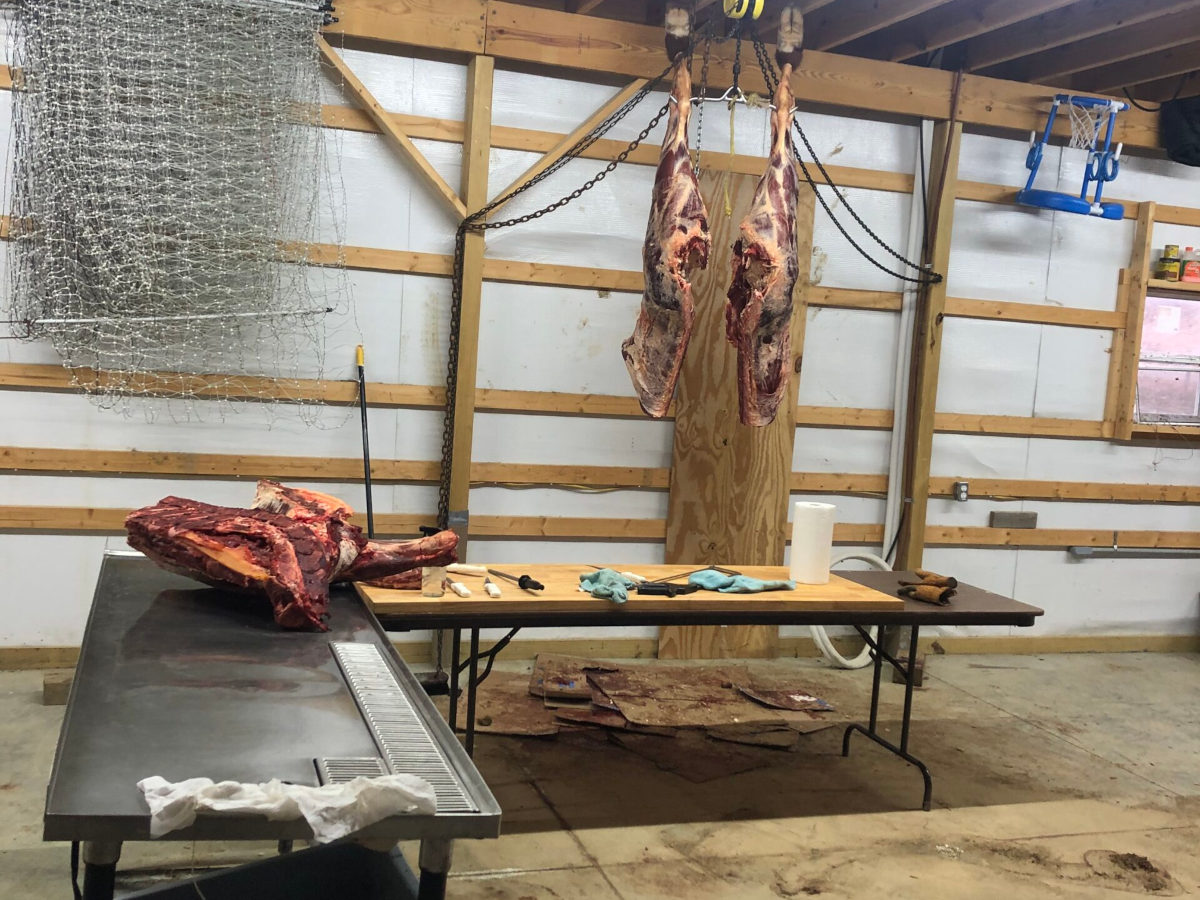
The single biggest difference between this butchering experience and our previous efforts was the availability of our big green barn, and the settled cold temperatures.
None of this 50 degree day in December nonsense! Not for the last two weeks, anyway. The cold weather essentially turned the lower level of our barn into a giant fridge. This meant that after killing, gutting, and quartering Chuck one Saturday morning, we were able to hang the (very large) pieces of him from the rafters.
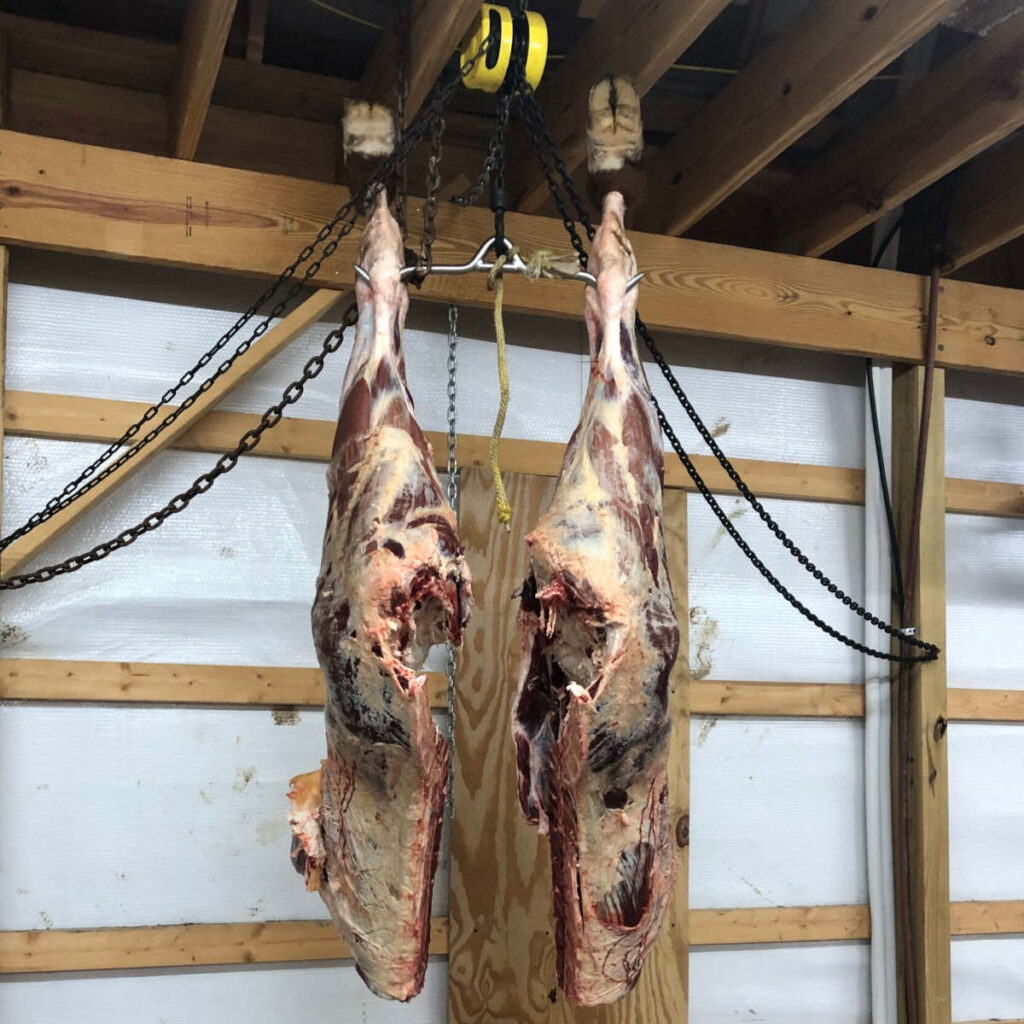
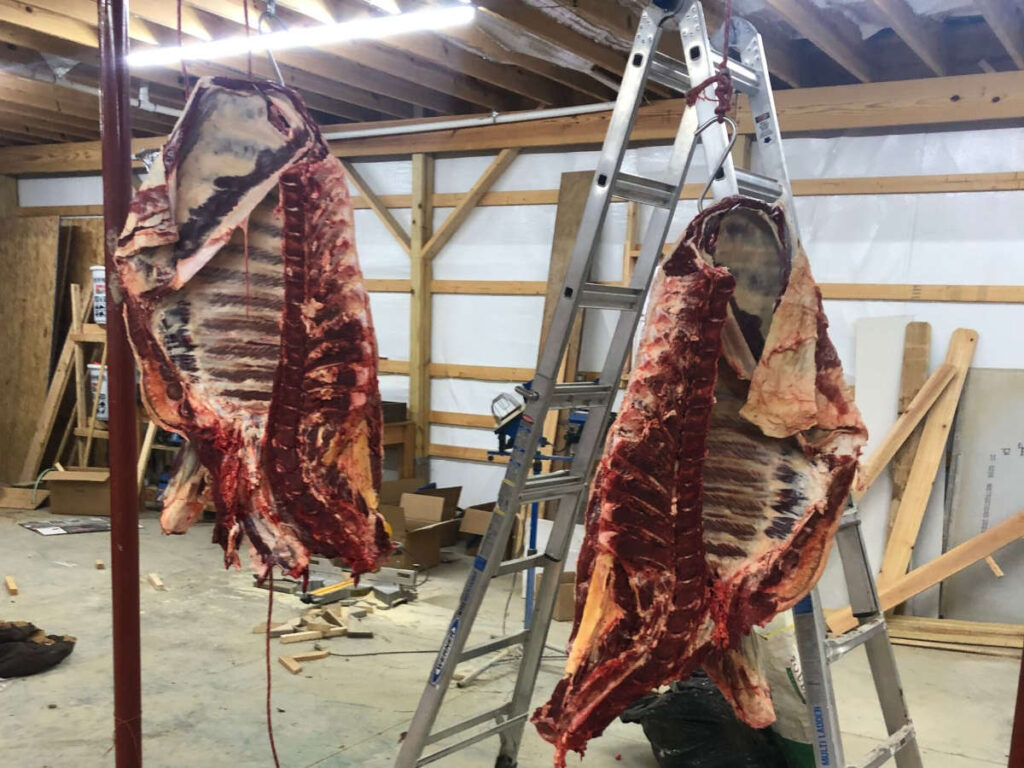
Not only did we not have to worry about the meat spoiling if we didn’t deal with it quickly enough. We could actually look forward to the fact that the quality would improve with some aging.
Add to this more relaxed timeline the fact that we had three previous bovine “victims” under our belts. We certainly felt much less like we were groping around in the dark (with very sharp knives no less!) to find our ribeye steaks.
We are grateful to be going into winter with a plentiful supply of beef in our basement.
In the Garden: Willow Tunnels
Fall has been a quiet time in the garden.
Drought conditions late summer definitely sapped our motivation for gardening, as well as getting our summer seedlings off to a too-slow start for them to amount to much.
The last survivors, which made it through to Thanksgiving, were a few patches of fast-growing lettuces (arugula and mustard) which continued to supply a few salads a week through most of the fall. Collards, broccoli greens, and cabbages also receive honorable mention for longevity.
One thing we have learned by trial and error is that tender lettuces plants can survive pretty cold temperatures (down into the twenties), but if they end up with snow and ice sitting on them, that will be the end of homegrown salads for the year.
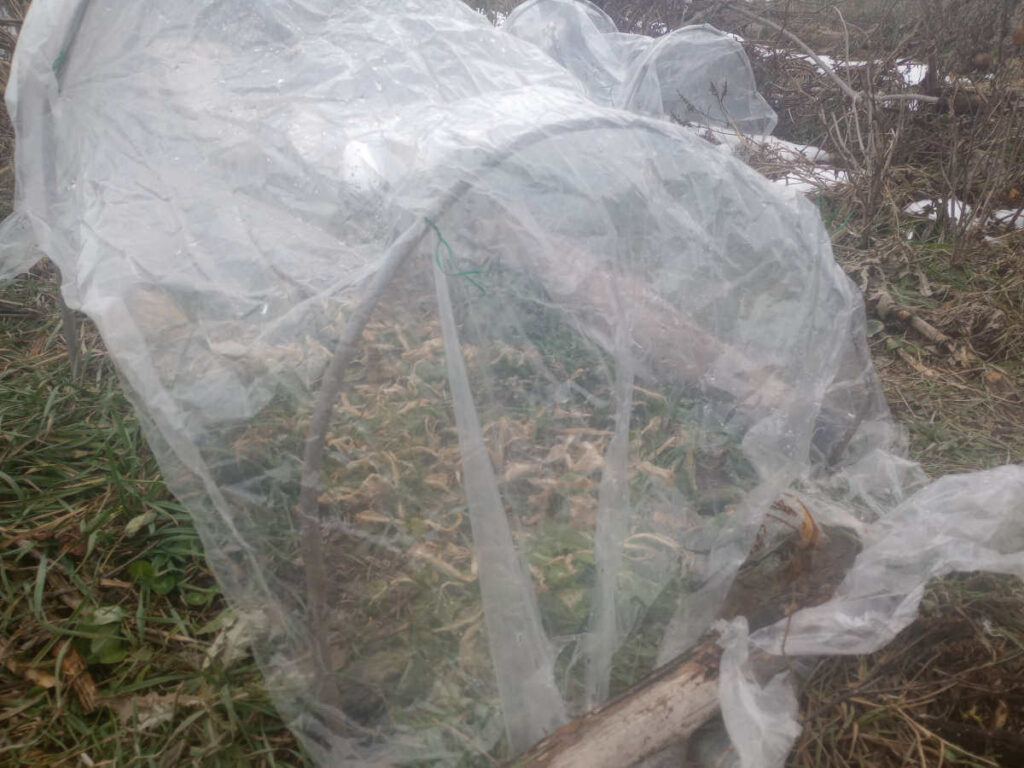
We took protective action with some quick and easy gardening “infrastructure” that we discovered this spring as we were combatting some late frosts. Willow branches!
It turns out that willow branches are very good for making low tunnels to protect your crops.
We (sadly) do not have much in the way of trees on our property, but we do have a fairly large patch of young willows, and we’ve been finding many uses for these wonderful plants, from making furniture to tanning animal skins, weaving baskets, and more!
We had tried several times to make low tunnels with metal conduit and it was always a pain to work with.
But take a willow branch (or stick, really) of about ½ diameter, and poke one end into the soil as deep as you can. It’s flexible enough that you can bend it over pretty and push the other end in, where it will hold in place. Then use a large sheet of plastic to cover the whole thing (leaving gaps for venting on hot/sunny days.).
These “homegrown” willow shelters seemed to do a good job of keeping our garden going just a bit longer.
In the Kitchen: “Dutch Babies” are (were) Back on the Menu
Dutch babies! Not infant humans from Holland. More like a giant pancake that you bake in a skillet, making it much quicker and easier than actual pancakes and more appropriate for quick a weekday breakfast.
I can’t believe we’d never heard of these until about a year ago!
This Sourdough Dutch Baby is our favorite recipe. Put all the ingredients in the blender the night before, and you can just add melted butter, blend, and bake in the morning.
The primary ingredients in are eggs and milk, so it’s certainly a good breakfast for making use of farm resources.
The one drawback (which at certain seasons is a major perk), is that it takes a lot of eggs. We 2.5 times the recipe linked above to have enough for everyone, and that means using 10 eggs.
10 eggs in one breakfast is a serious perk when the chickens are growing strong and certain family members are unenthusiastic about eating eggs in other forms.
But Dutch Babies can’t be on our breakfast menu during slow times in the egg production department.
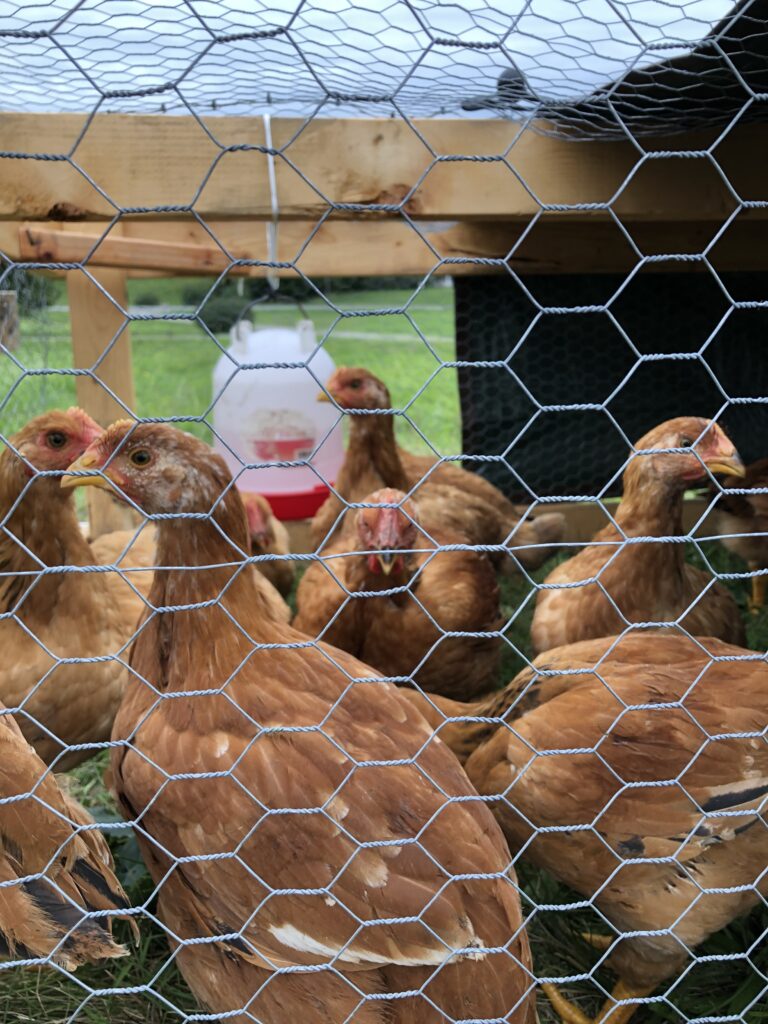
What put Dutch Babies on the menu this fall was the addition of new blood to our chicken ranks this summer. Young chickens, we were told, would lay much better through the darker, colder, months, and such has proved to be the case. Our new chickens kept us in Dutch Babies multiple times a week until the end of November
Since the cold really hit at the beginning of this month, they have slowed to a not-Dutch-baby-friendly level of production. But we hope they’ll chug away long enough to keep us going until warmer days make eggs plentiful once again.

Enjoy reading your updates. A good way to stay connected since we don’t see each other very often. Admire you all so much for your homesteading. Much love.