

What’s in a Farm Name? The Thoughts Behind “Friendly Beasts Farm”
Today, we’re taking a break from the story of how we became farmers for a seasonally appropriate explanation of the meaning behind our fun and catchy farm name. If you’re on the edge of your seat waiting for the next installment of the farm story, don’t worry! We’ll be back with that soon. But our farm is actually named after a Christmas Carol, so now is the perfect time to talk about that.
The Literal Meaning of “Friendly Beasts Farm”
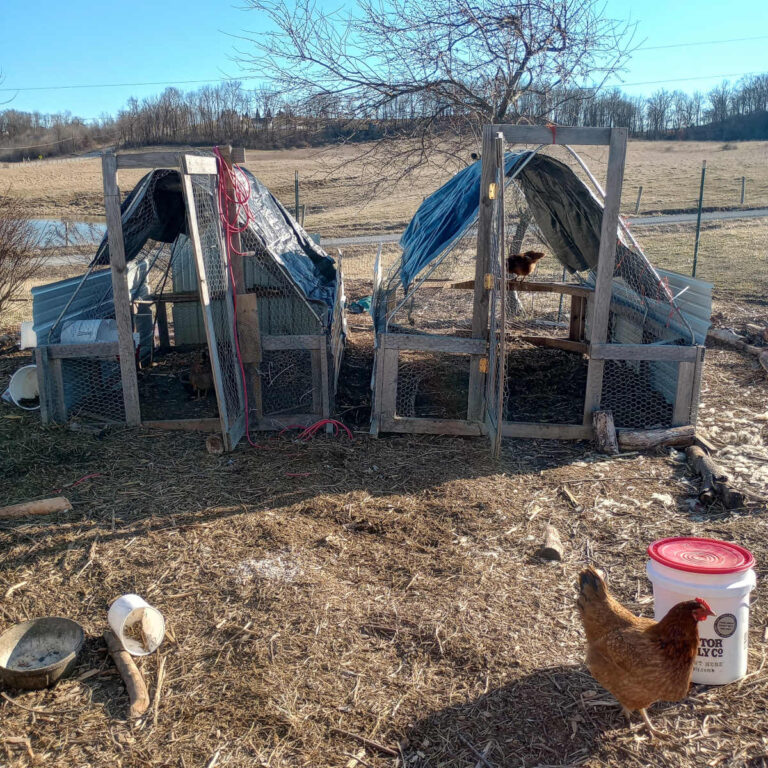
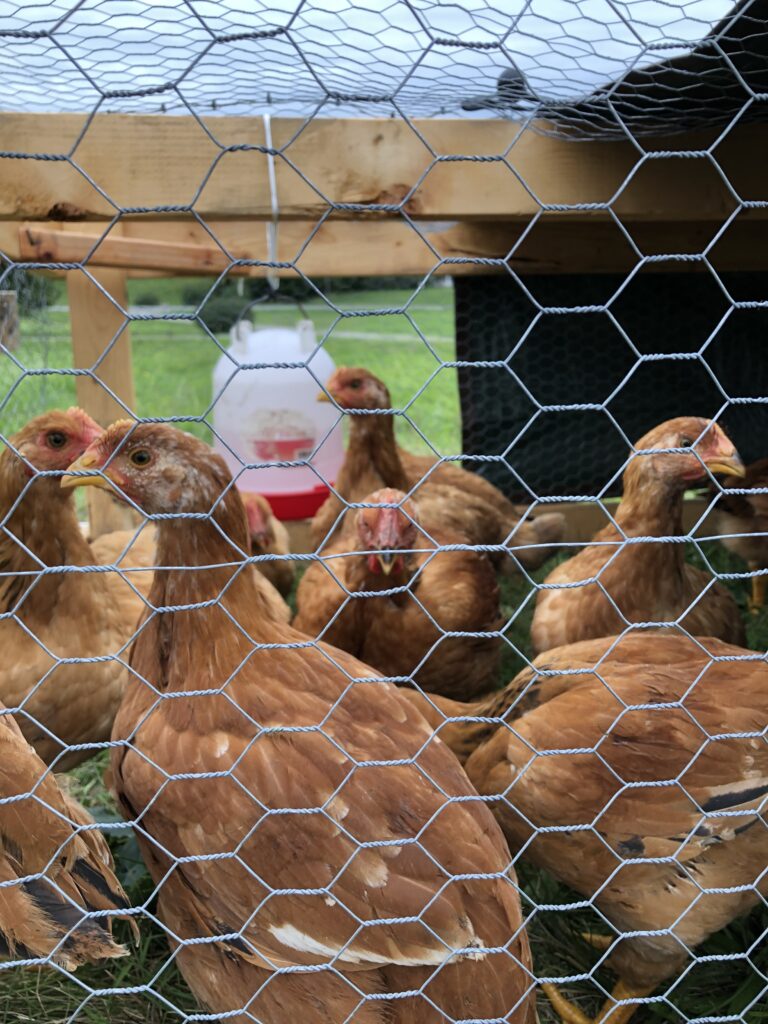
Before we get to the more festive aspects of our farm name, we’ll start with its literal meaning. Despite the fact that our animals often seem bent upon finding a thousand different ways to test our patience, they are the centerpiece of our farming efforts. Meat, milk, and eggs are mainstays of our diet. It is animal manure that is slowly bringing the clay soil to life in our vegetable garden. And it is primarily through the impact of animals of various species that we are striving to regenerate our land and create a thriving ecosystem. Our animals are our most important coworkers on the farm.
We don’t exactly aim to be “friends” with our animals (we prefer the title “lords and masters”), but we do have a policy that they must be “friendly beasts” in the sense of being generally alright to be around. One specific rooster found himself in consistent violation of this policy. To add insult to injury, he was supposed to be a hen. He made a flavorful (if rather stringy) dinner. We savored his absence during our daily rounds of chores even more.
Friendly Beasts Farm and Christmas Carols
Moving on to the more poetic aspects of our farm name, it was inspired by the title of the traditional Christmas Carol: “The Friendly Beasts.” The carol begins:
Jesus our brother, strong and good
Was humbly born in a stable rude
And the Friendly Beasts around Him stood
Jesus our brother, strong and good
The carol goes on to give a poetic description how each of the animals in the nativity scene made a contribution to the comfort and safety of the baby Jesus. Their gifts include a “manger for his bed,” “wool for his blanket warm” and more.
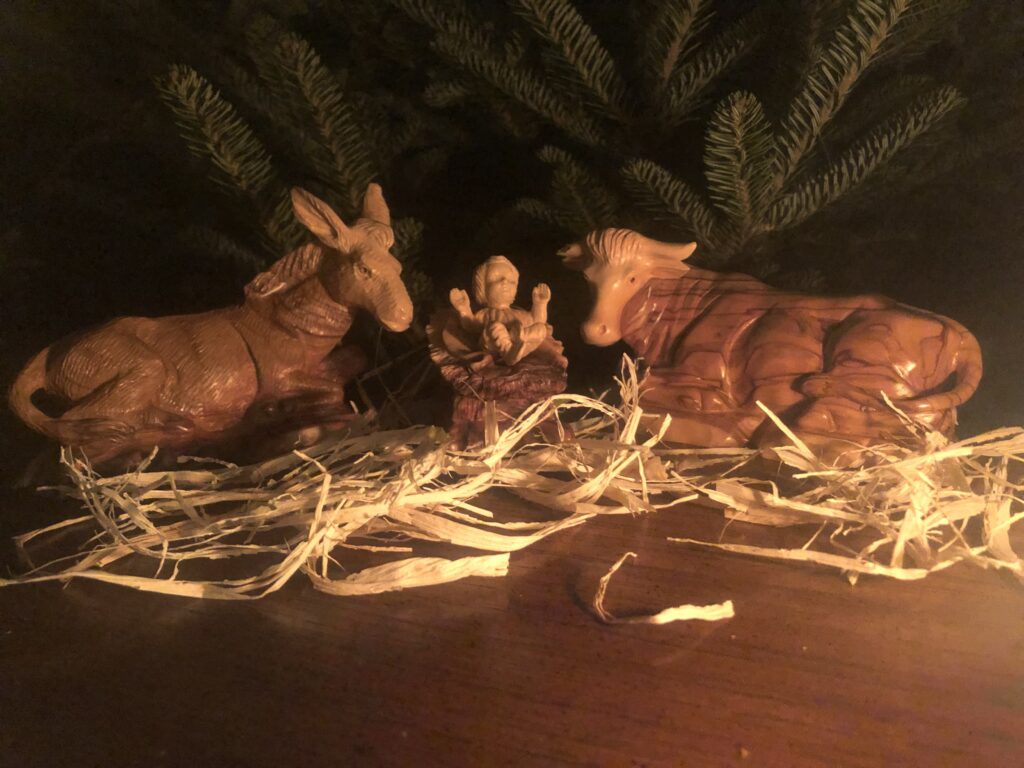
Let’s remember that there has only been one person ever who got any say at all in how or where He was born. He also had an unlimited number of possible options. The fact that the Creator of the Universe specifically chose to spend his first days and nights among a few farm animals is food for thought for farmers. [1]
Since becoming farmers, the Christmas story of a tiny baby in a manger surrounded by animals has become a hundred times more vivid. From the perspective of a parent and a farmer, the idea of having a newborn baby in close proximity to a large animal is completely insane. Oxen and donkeys are BIG, and newborns are tiny. For Mary actually to lay her baby down in the manger, the ox and the ass must have been either physically restrained or supernaturally well-behaved. Either is possible. But this carol draws out the beautiful idea that the animals might have had a miraculous sense of reverence for the events unfolding before them.
There are many lessons that have been drawn from the scene of the newborn God lying among the animals. One that “The Friendly Beasts” Carol emphasizes is the way in which each animal can contribute its unique gifts to the comfort and nourishment of human beings. In doing so on Christmas night, these humble beasts did nothing less than give glory to God Himself. This observation can lead us to the broader truth that domesticated animals are made to serve human beings in amazing ways. They can reveal some of the awe-inspiring beauty of God’s plan for the natural world.
What does all this mean for a very small farm in Ohio?
Well, we don’t have any supernatural methods of animal management in our toolbox. And we and our animals are all products of a fallen world. So our farm absolutely does not have the serenity of the Christmas scene. Things here could not accurately be described with the phrase “all is calm.”
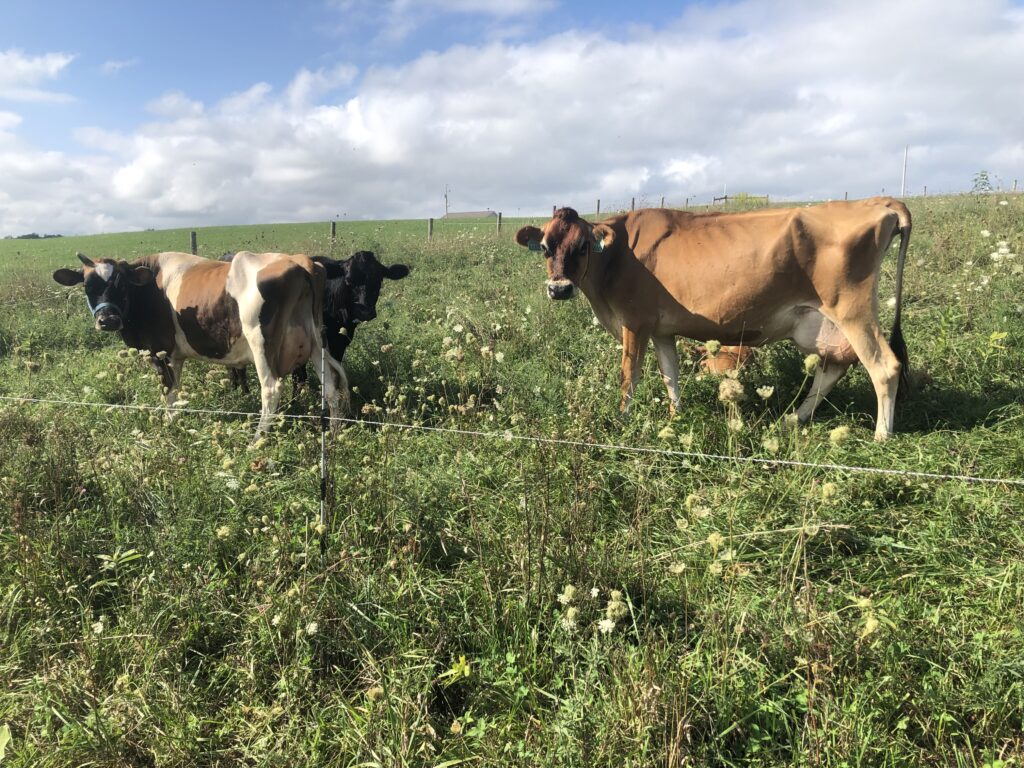
But though the glory is fragmented, we still glimpse it amid the muck and frequent frustrations. The fact that a cow can eat grass all day and transform it into delicious milk and beef is a glorious thing. Add to that the fact that she simultaneously fertilizes the field so that it all grows back even better, and you have a design so wondrous that it can only come from the mind of God. There is something miraculous about humans and animals co-operating to the benefit of both that is hard to put into words. But you know it if you have ever braved the chill and darkness of a winter’s morning to milk your cow, and been rewarded by her keeping you warm and providing you and your family with some of the best food known to man. (Note: depending on the cow and the morning, she may also greet you with a display of attitude that will have your two-year-old scrambling to take notes on how to defy you.) An evening walk through the pasture, the sight of chickens scratching in cow patties and reducing the fly population, the way vegetable crops shoot up from last winter’s manure, all these can be reminders of the miracle of farming.
To us has fallen the challenging and life-long task of piecing these fragments of glory together in our small corner of the world. We strive to manage our animals and plants in a way that respects their God-given natures and contributes to a thriving ecosystem and a source of abundant and wholesome nutrition for humans and animals alike. Animals greeted the newborn God two thousand years ago. Today, our Friendly Beasts still sing of His glory.
[1]We know some people may wish to point out that the Gospels don’t actually specify that there were any animals present at the first Christmas. To this objection we respond that we have hundreds of years of Christian tradition on our side, as well as St. Francis and the prophet Isaiah.

That’s lovely. Thank you very much. God bless you all (including the friendly beasts).